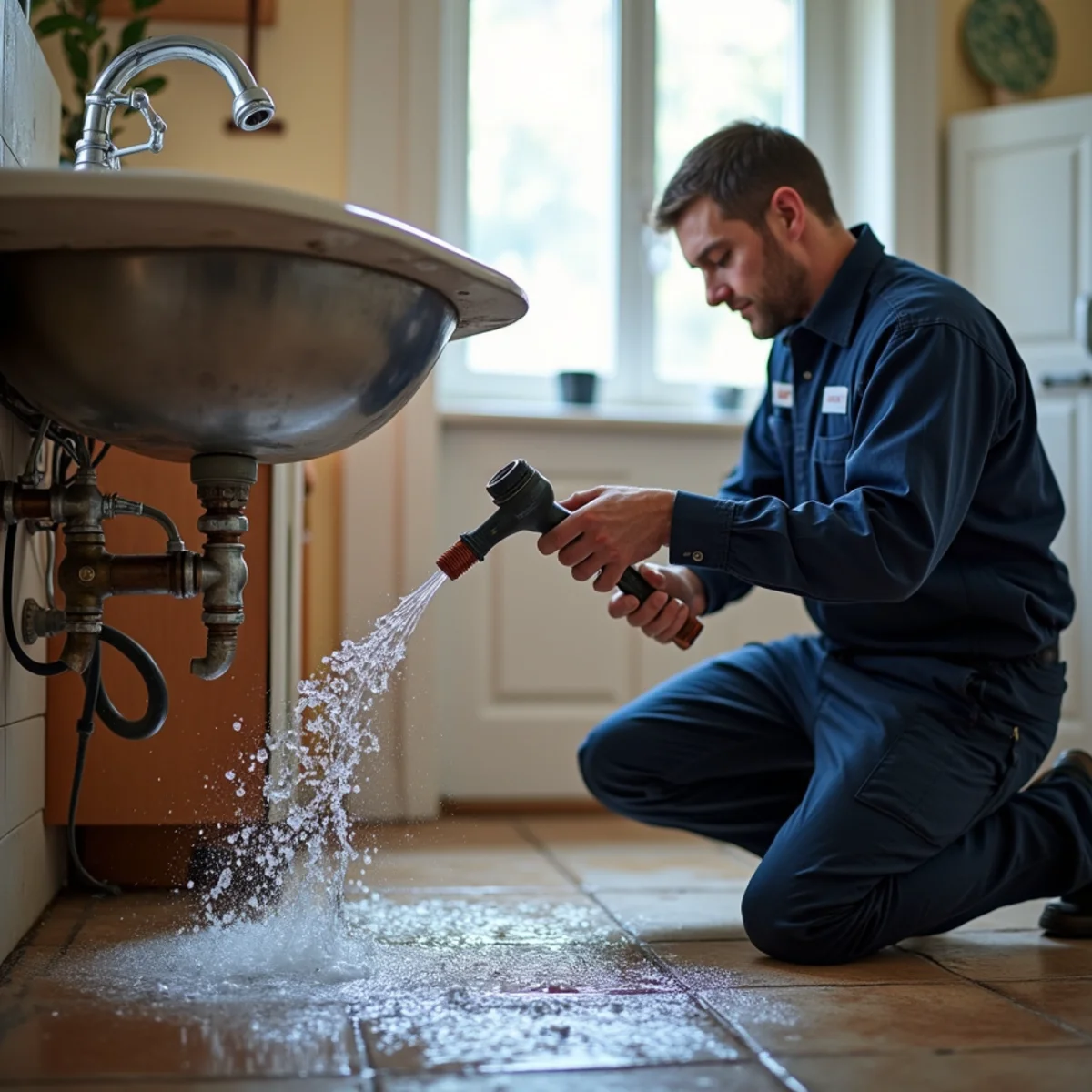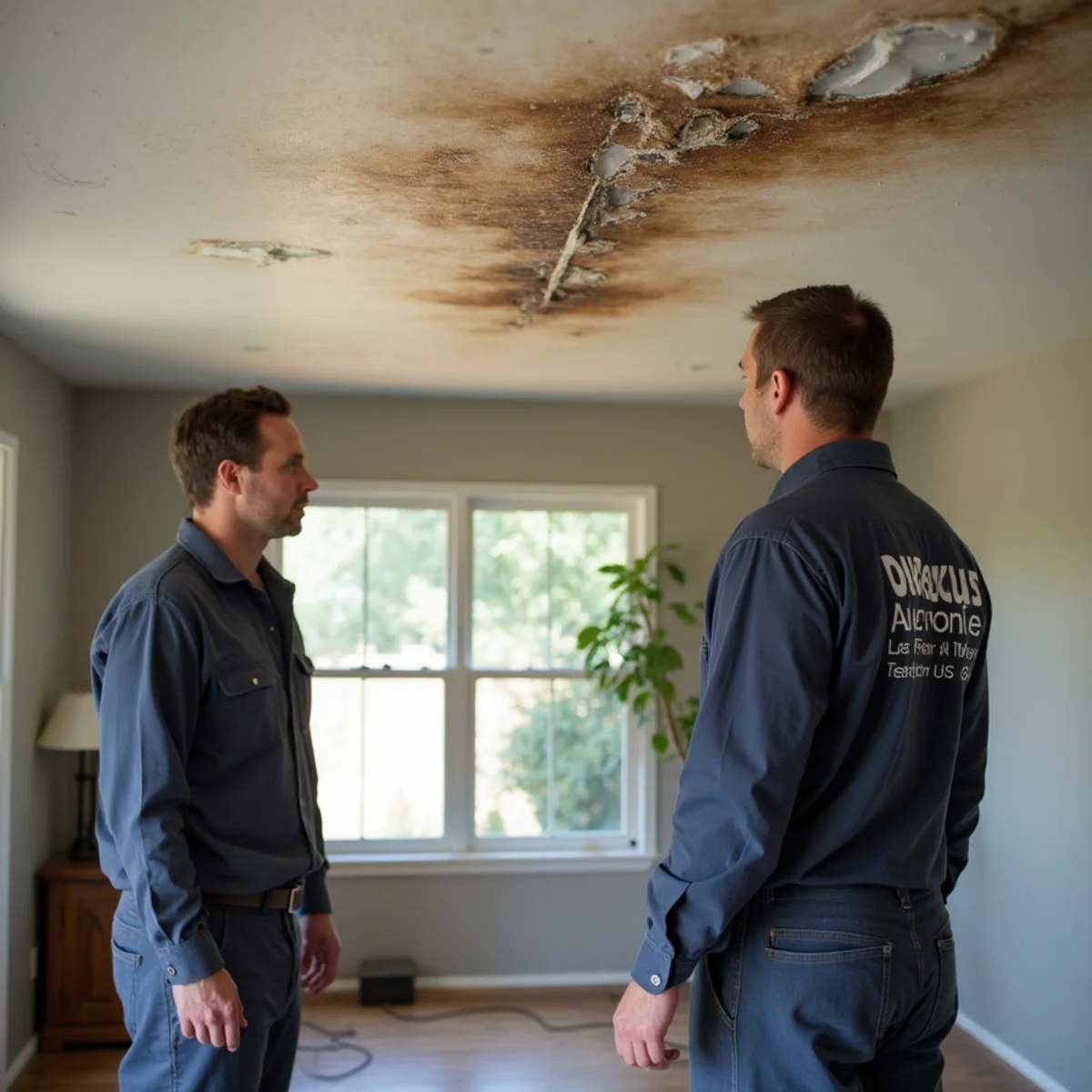
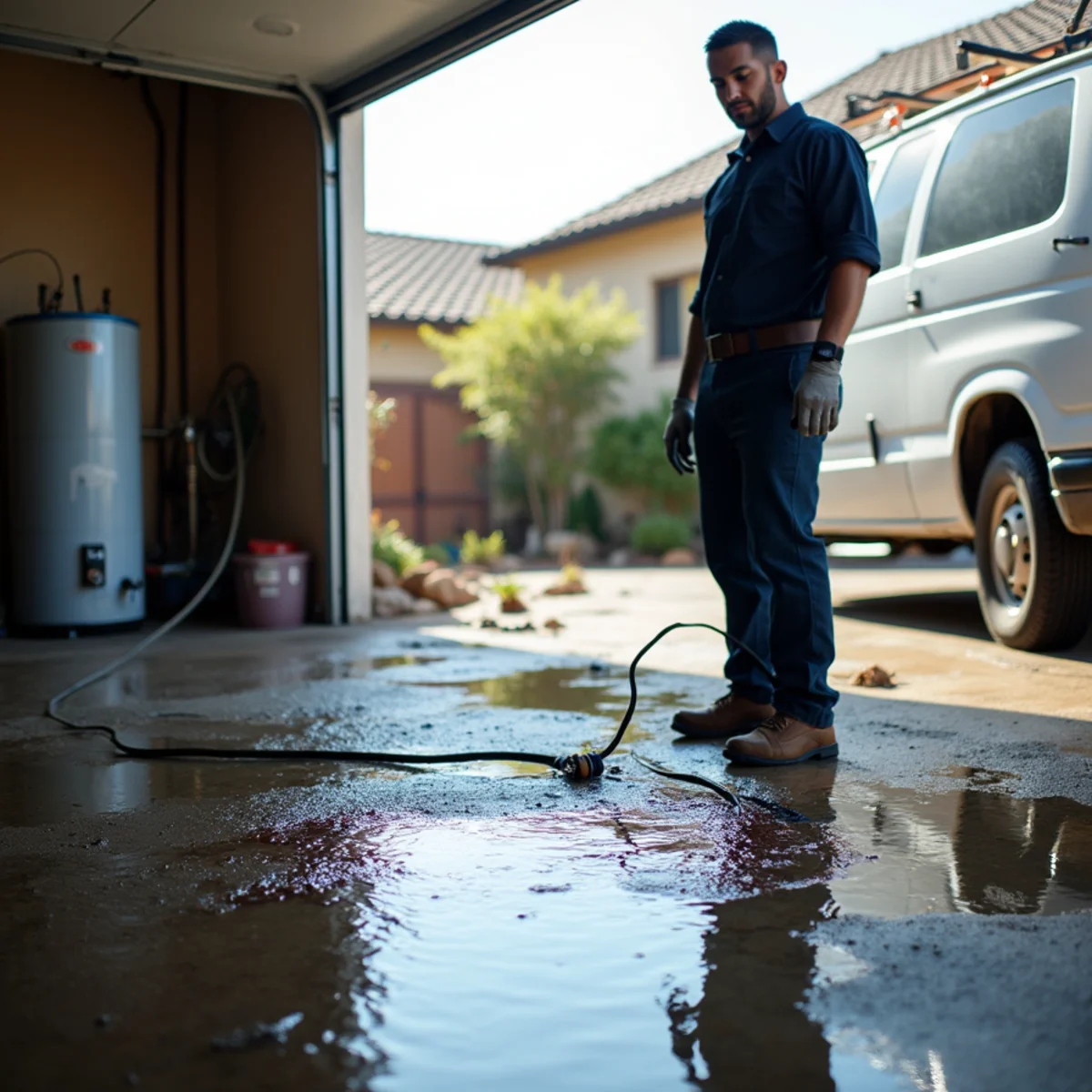
Shut off the cold-water supply to the heater first — the valve on the pipe entering the top of the tank — then cut the gas or electricity feeding it. A failed water heater does not just dump its 40 or 50 gallons and stop. As long as the supply line is open, it keeps refilling and leaking, so closing that valve is the one move that actually ends the flood.
A garage flood feels less urgent than water in the living room, but it rarely stays in the garage. The slab under most Concord garages slopes toward the interior door or a shared wall, and water finds that path into the house within minutes. We have dried plenty of Concord living rooms whose only crime was sharing a wall with a garage water heater. Here is how to shut it down safely and hold the damage before our water heater leak cleanup crew reaches you.
Shut It Down Safely, in This Order
A water heater carries three hazards at once — pressurized hot water, and either a gas flame or a live electrical element. Shut them down in the right order and you neutralize all three.
Do not try to drain or move the tank while it is hot. Your only job right now is to stop the water and cut the energy source.
- 1. Close the cold-water inlet valve. It sits on the pipe entering the top of the tank. Turn it clockwise until it stops. If it is stuck or missing, use your main house shutoff instead.
- 2. Cut the energy. For a gas heater, turn the gas control knob to off and close the gas supply valve on the line. For an electric heater, switch off its dedicated breaker.
- 3. Kill power to wet outlets. Garages have outlets and freezers plugged in low to the ground. If water reached them, shut those breakers before wading in.
- 4. Open a hot-water faucet inside to relieve pressure and stop the tank feeding more water toward the leak.
Contain the Water Before It Reaches the House
With the supply off, move to containment. A garage heater failure usually means standing water spreading across a slab that pitches toward the house, so your priority is blocking that path.
Work from the interior door outward.
- Dam the interior doorway with rolled towels, a rubber mat, or bags of soil from the yard to keep water out of the living space.
- Lift everything off the floor. Cardboard boxes wick water upward fast, ruining contents the flood never directly touched. Get them onto shelves or into the driveway.
- Sweep or squeegee standing water toward the garage door and out onto the driveway if the grade allows.
- Unplug and move the washer, dryer, freezer, or fridge if they are in the flood zone and you can reach the plugs safely.
Why Garage Heaters Fail — and the Concord Quake Angle
Most tank heaters last 8 to 12 years. In the East Bay, hard water speeds that up: mineral scale settles in the bottom of the tank, corrodes the steel, and eventually the tank splits at a seam. When it goes, it often goes all at once.
There is a second Concord risk worth knowing. California's Health and Safety Code section 19211 requires water heaters to be strapped and braced against earthquakes, because a heater that walks off its connections in a shake can shear the gas and water lines. Homes in established neighborhoods like Ayers Ranch often have heaters original to the house sitting in the garage, quietly aging past their service life. If yours is unstrapped, book an inspection once the cleanup is done.
Watch for These Hazards
A flooded garage hides a few dangers people walk right into. Slow down and check for them before you spend time on cleanup.
- Scalding water. A freshly failed tank can leave 120-plus-degree water on the floor. Let it cool before you handle it.
- Gas smell. If you smell gas, do not touch any switch — leave, and call the gas utility from outside.
- Electric shock. Never stand in water near a live outlet or a plugged-in appliance.
- Hidden saturation. Water under the wall plate between the garage and the house soaks the drywall of the next room. It reads dry on the garage side while the living-room side is wet.
What Happens Next
Once the water is off and contained, the work is drying the structure completely before it molds — and in Concord's climate that clock runs fast. A crew will extract standing water, pull baseboards and drill weep holes to dry the wall cavities, and set air movers and dehumidifiers on the slab and shared walls.
If the tank itself needs replacing, that is a plumber's job; our work is making sure the water it left behind does not turn into a mold problem in the wall your garage shares with the house. Call (201) 277-9344 and we will map the moisture the same day.
Pro insight: read the leak before you blame the tank
Where the water is escaping tells you what you are actually dealing with. Rusty water pooling from under the tank means the steel has corroded through, and no repair will bring it back — that heater is finished. Clear water dripping from a fitting on top, or running from the small copper pipe that ends near the floor, is a different story. That pipe is the temperature-and-pressure relief line, and when it discharges it usually points to overpressure or a failing expansion tank, not a dead tank — a repair, not a replacement.
The step nearly everyone skips is the drain pan. A garage heater is supposed to sit in a shallow pan plumbed to carry a leak outside or to a drain. Check whether yours has one at all, and whether its line is connected and clear — a missing or clogged pan line is exactly why a slow weep becomes a flooded garage overnight. Once everything is dry, have your plumber add or repair that pan; it is a small fix that turns the next failure into a stain instead of a claim, and our water heater leak cleanup crew points it out on nearly every call.
Frequently asked questions
Related pages
Water Concord
IICRC-certified water damage restoration, based in Concord and serving all of Contra Costa County. We answer 24/7 — if you’re dealing with water damage right now, call (201) 277-9344.