
A hidden leak does quiet, compounding damage. It saturates subfloor and framing you never see, undermines slabs, feeds mold inside wall cavities, and wastes hundreds of gallons you are paying for. Because the water is out of sight, the temptation is to wait — and waiting is exactly what turns a small repair into a large one, since the damage spreads the entire time the leak runs.
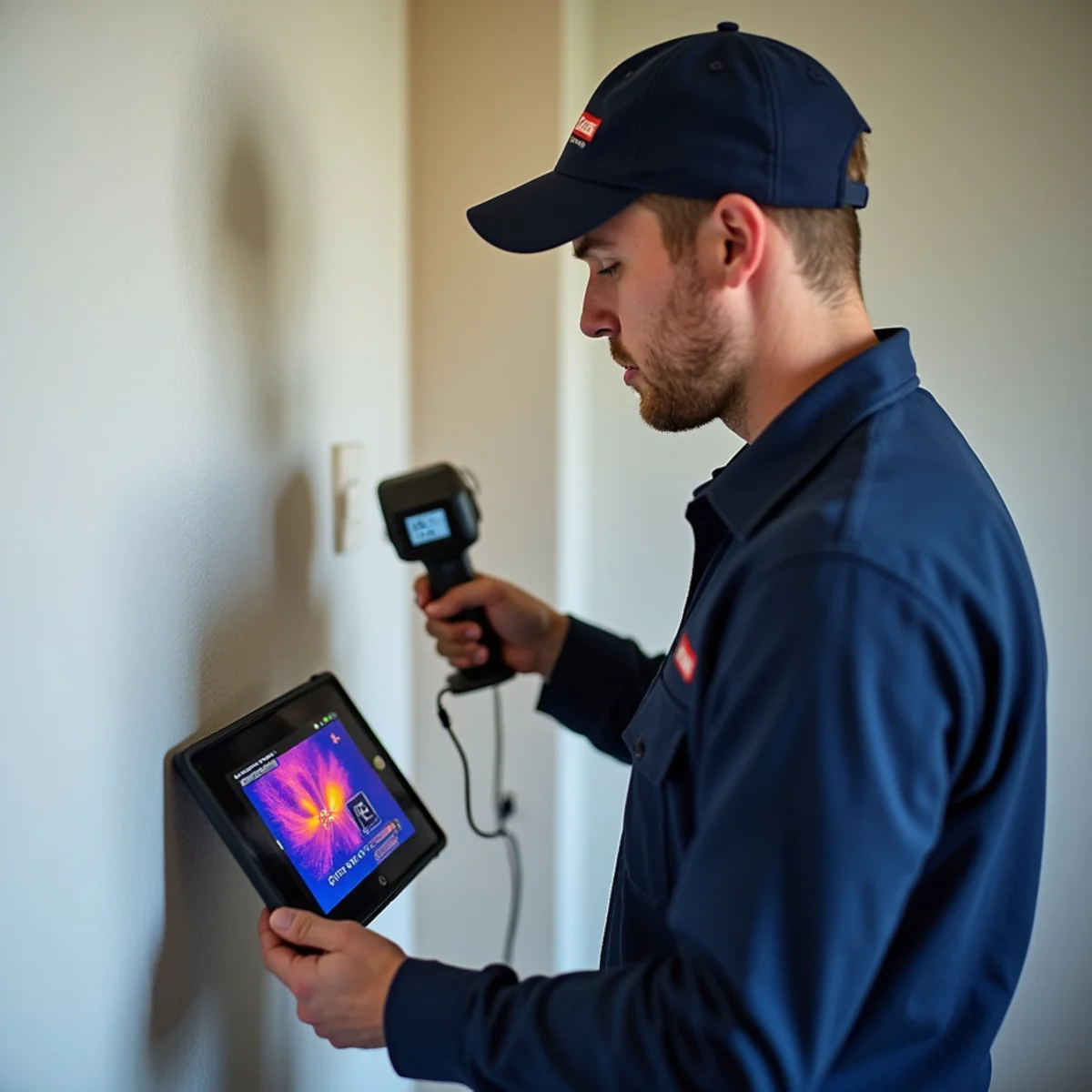
Water Concord finds the leak without tearing your home apart. We use acoustic listening equipment, thermal imaging, and moisture meters to pinpoint the source before anyone opens a wall or breaks concrete, so the repair is small and targeted. If water has already caused damage, we move straight into water damage restoration so it is handled in one pass.

Signs of a hidden leak
Hidden leaks leave a trail of small clues before they cause visible damage. Call for detection if you notice:
- A water bill that climbed with no change in how you use water
- The sound of running water when everything is turned off
- A warm or damp spot on the floor, common with a slab leak
- A water meter that keeps moving with all fixtures shut off
- Unexplained damp patches, stains, or a musty smell in one area
- Cracks in a slab or flooring, or a patch of yard that stays soggy
- The water heater or pump cycling on when no one is using water
Finding the leak before the demolition
The old way to find a hidden leak was to open walls and break concrete until you hit water — expensive, destructive, and slow. Non-invasive detection flips it: we locate the leak precisely first, so any repair opening is as small as possible. On a slab leak, that can mean a single access point instead of a torn-up floor — exactly how pros find slab leaks without tearing up the whole floor.
We combine several tools because no single one finds every leak. Acoustic sensors pick up the sound of water escaping a pressurized line; thermal imaging reveals the temperature difference a leak leaves behind a surface; moisture meters trace where water has traveled; pressure testing confirms whether a system is losing water and isolates which line.
Our leak detection process, step by step
Detection is a process of narrowing down, from symptom to pinpoint.
- Interview and history. We start with your clues — the bill, the sounds, the damp spots — and the age and layout of your plumbing.
- Meter check. We watch the water meter with fixtures off to confirm an active leak and gauge its rate.
- Pressure testing. We isolate supply lines to determine whether the leak is on the pressurized side and which line is losing water.
- Acoustic and thermal scanning. Listening equipment and infrared imaging narrow the location behind walls, under slabs, or in the yard.
- Pinpointing. We mark the precise spot so any access opening is small and targeted, not exploratory.
- Repair coordination and damage check. We help arrange the repair and meter for any water damage that needs drying or restoration.
Why Concord's plumbing springs hidden leaks
Concord's housing age is the story here. Half the city's homes predate 1979 and roughly a quarter were built before 1960, putting much of the local plumbing at the end of its service life. The 1950s-to-70s tracts were plumbed with galvanized steel and early copper — materials that corrode from the inside and weep through pinholes you never see coming.
The East Bay's hard water accelerates it, corroding pipes faster than soft water would. Much of Concord is slab-on-grade, hiding supply lines in or under the concrete — so when an aging line fails, it leaks straight into the slab. If you own an older Concord home and your bill is creeping up, learn to read the hidden-leak symptoms worth catching early before the damage surfaces.
From detection to repair to dry
Finding the leak is the first step, not the last. Once we pinpoint it, we help coordinate the repair — a spot fix, a reroute, or repiping an old system failing in more than one place — working alongside your plumber so detection and repair line up instead of duplicating work.
If the leak has already caused damage, we do not hand you off. A slab leak that ran for weeks may have soaked flooring and fed mold; we move directly into drying and, where needed, slab leak water damage repair or ceiling water damage repair for a leak that traveled down from above. One crew, from finding the water to drying the room.
What a hidden leak really costs — and what insurance may not cover
The figure on your water bill is the smallest part of what a hidden leak costs. The real expense is what the water quietly does while it runs: it rots subfloor and framing, undermines the soil beneath a slab, swells door frames, ruins flooring from below, and feeds mold inside wall cavities where no one is looking. A leak that would have been a modest repair in week one becomes a demolition-and-rebuild by month two — and the meter charges you for every gallon the whole time.
There is an insurance wrinkle that catches Concord homeowners off guard, too. Many policies cover water damage that is sudden and accidental — a pipe that bursts outright — but exclude damage from a leak that seeped slowly over weeks or months, which carriers often treat as a maintenance issue rather than a covered loss. The longer a hidden leak runs undetected, the more it looks like exactly the kind of gradual damage an adjuster can deny. Finding it early, with the source documented, protects the claim as much as the house.
That is the case for not waiting. Pinpointing a leak while it is still small keeps the repair targeted and the damage contained, and it keeps you on the right side of that sudden-versus-gradual line. If you suspect one but cannot track it down, that is the moment to call us at (201) 277-9344 — before the cost stops being a guess and starts being a rebuild.
Standing water spreading?
Every hour the water sits, the damage grows. Talk to a Concord crew now.
What affects the cost of leak detection
Leak detection is priced on the difficulty of locating the leak, separate from any repair. We assess the situation first. The factors:
- How accessible the suspected area is — an open wall versus under a slab
- The type of leak — supply line, drain, slab, or irrigation in the yard
- How many methods it takes to isolate and pinpoint the source
- The size and layout of the home and its plumbing system
- Whether the leak is actively running or intermittent and harder to catch
- Any follow-on drying or restoration if the leak already caused damage
Why Concord homeowners choose Water Concord for leak detection & repair coordination
When water is where it shouldn’t be, you need a crew that shows up fast and does it right. Here’s what you get with Water Concord:
60-minute emergency dispatch across Concord
We’re based in Concord, so leak detection & repair coordination starts before the damage has time to spread.
IICRC-certified technicians
Every job follows the IICRC S500 standard, with drying verified by moisture meters — not guesswork.
Licensed & insured
Fully licensed and insured, so your home and your project are protected from day one.
Insurance claim assistance
We document the loss, record moisture readings, and bill your carrier directly for covered work.
Locally owned & operated
You deal with a local team that answers for its work, not a national franchise queue.
Rated 4.9 from 127+ local reviews — and we answer open 24 hours — 7 days a week.