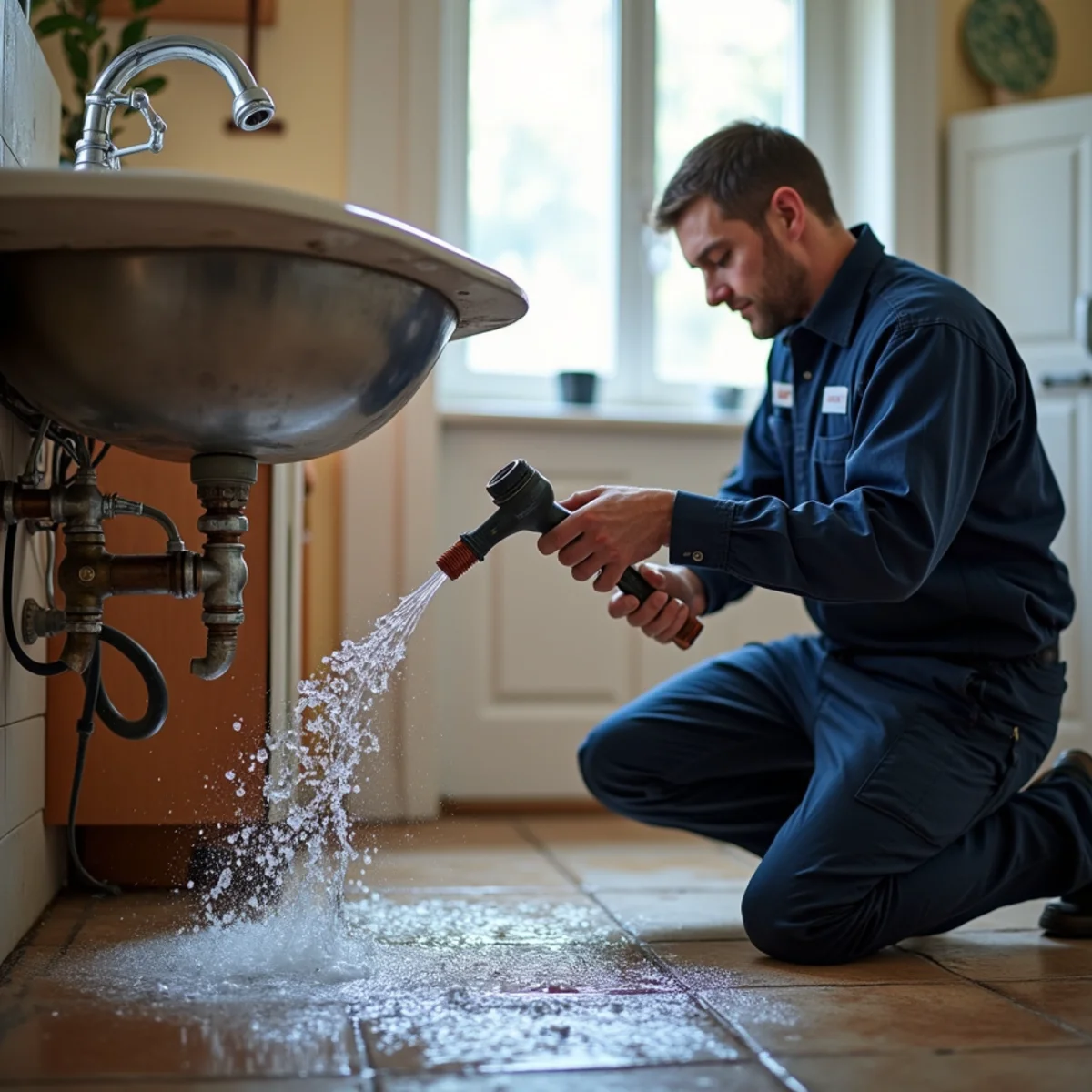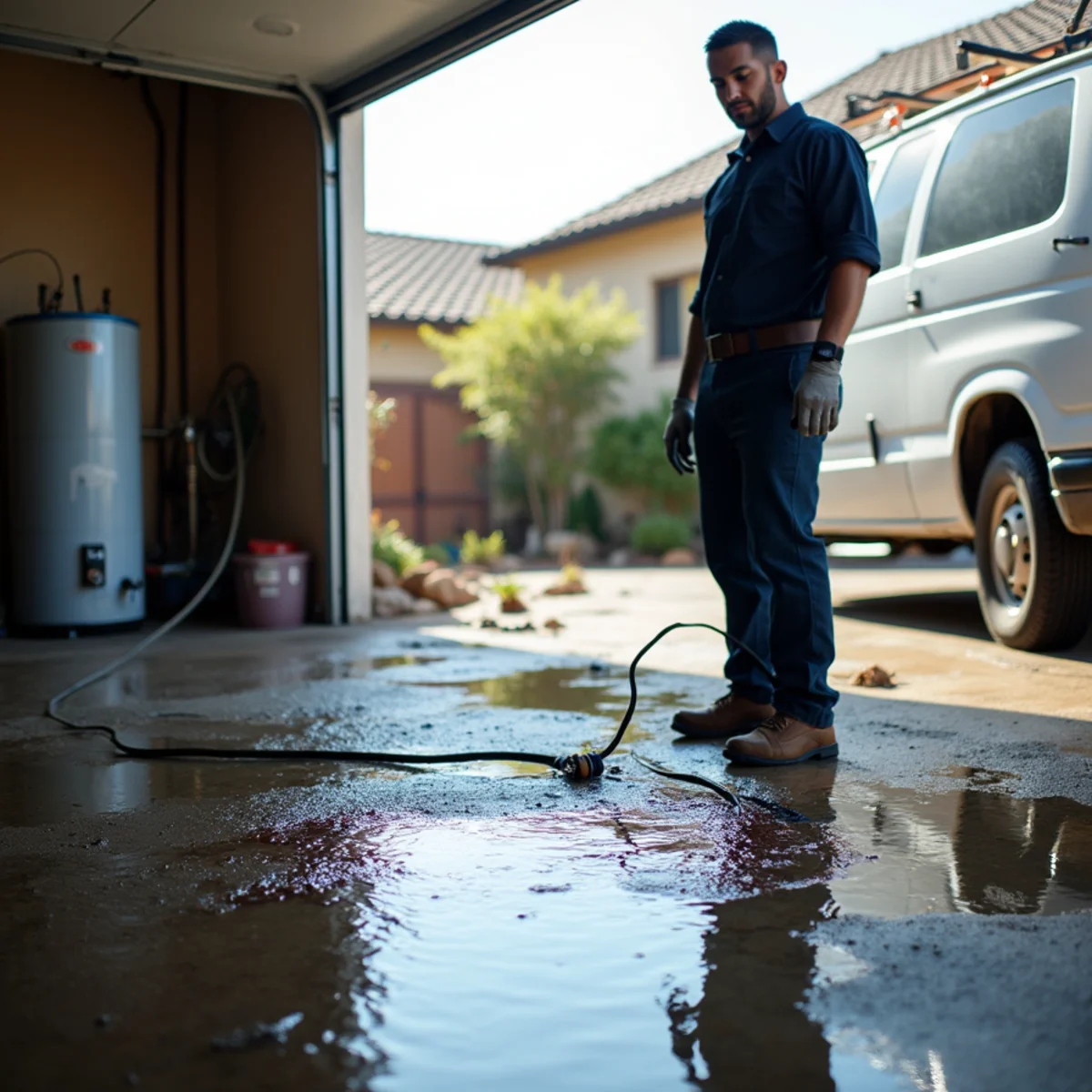
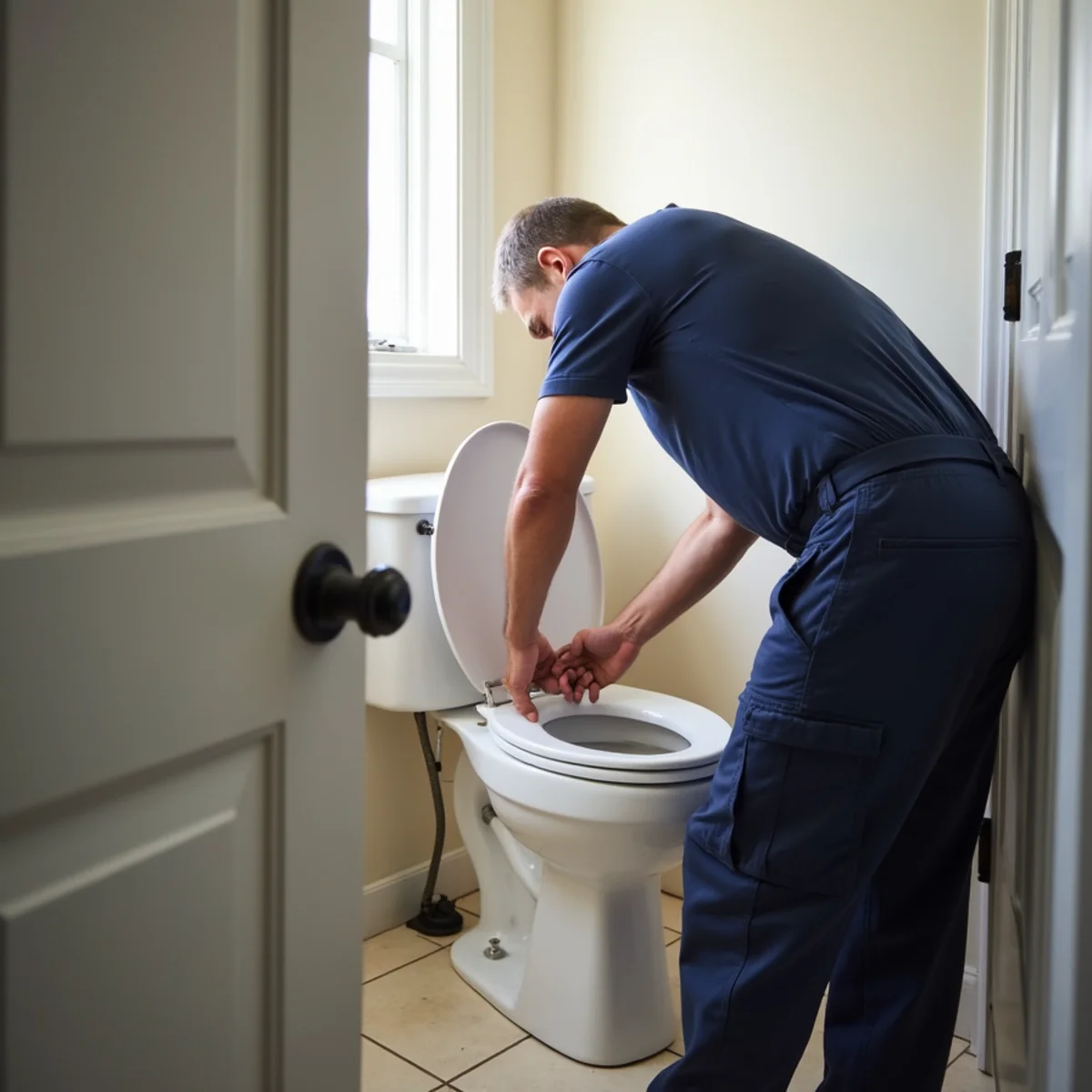
Take the tank lid off and push the rubber flapper down with your hand — that stops water leaving the tank for the bowl immediately. Then reach behind the toilet and turn the supply valve clockwise until it stops. Those two moves, in that order, end almost every overflow in under thirty seconds.
The reason to move fast is not the mess on the floor — it is what the water is. A bowl that overflows with clean tank water is a nuisance. A bowl backing up because the drain line is blocked is a different animal: that water can carry sewage, and it means the problem is downstream in your plumbing, not in the toilet. Knowing which one you have decides whether you mop it up yourself or call for sewage cleanup. Here is how to stop the water and read the situation.
Stop the Water in the Next 30 Seconds
Every toilet gives you two ways to cut the water. Use whichever is faster.
- 1. Push the flapper down. Lift the tank lid, reach in, and press the rubber flapper at the bottom center closed. This stops the tank from dumping into the bowl. Your hand stays clean — it is tank water.
- 2. Close the supply valve. Follow the water line from the wall to the base of the tank and turn the oval valve clockwise until it stops.
- 3. If the valve is stuck or spins freely, it has corroded. Go to your main water shutoff, or lift the tank lid and prop the float up to stop it refilling.
- 4. Do not flush again to test it. A second flush on a blocked line only adds more water to the floor.
Clean Water or Sewage? How to Tell
This is the question that changes everything. Look at what actually came over the rim.
If the toilet overflowed while filling — clear water, no waste, and it stops once you close the valve — that is Category 1 water. Wipe it up. If the bowl backed up full of waste, if the water is cloudy or foul, or if it rose without you flushing, that is a drain problem pushing contaminated water back into your home. That is Category 3 — the kind that carries bacteria and needs gloves, not bath towels.
When It Is Actually a Sewage Emergency
One overflowing toilet is usually a local clog. But watch for the signs that the blockage is deeper in your main line, because those turn a mop-up into a health hazard. If you see any of the following, stop cleaning and call a professional.
- Multiple fixtures acting up — the tub gurgles or backs up when you flush, or a floor drain bubbles. That points to the main sewer line, not one toilet.
- Sewage coming up in the shower, tub, or a lower-floor drain.
- A foul smell rising from more than one drain.
- Repeated overflows across different toilets in the house.
Why Older Concord Homes Back Up
Older housing is especially prone to main-line backups. Clay and cast-iron sewer laterals under the older housing stock around Downtown Concord crack with age and invite tree roots, which snag waste until the line stops draining. What starts as one slow toilet is really the whole house trying to drain through a partial blockage.
The category of the water matters enormously here. Our guide to why Category 1, 2, and 3 water are cleaned differently explains why a sewage backup is never a paper-towel job — the contamination soaks into whatever the water touches and has to be removed, not just wiped.
Cleaning Up Safely
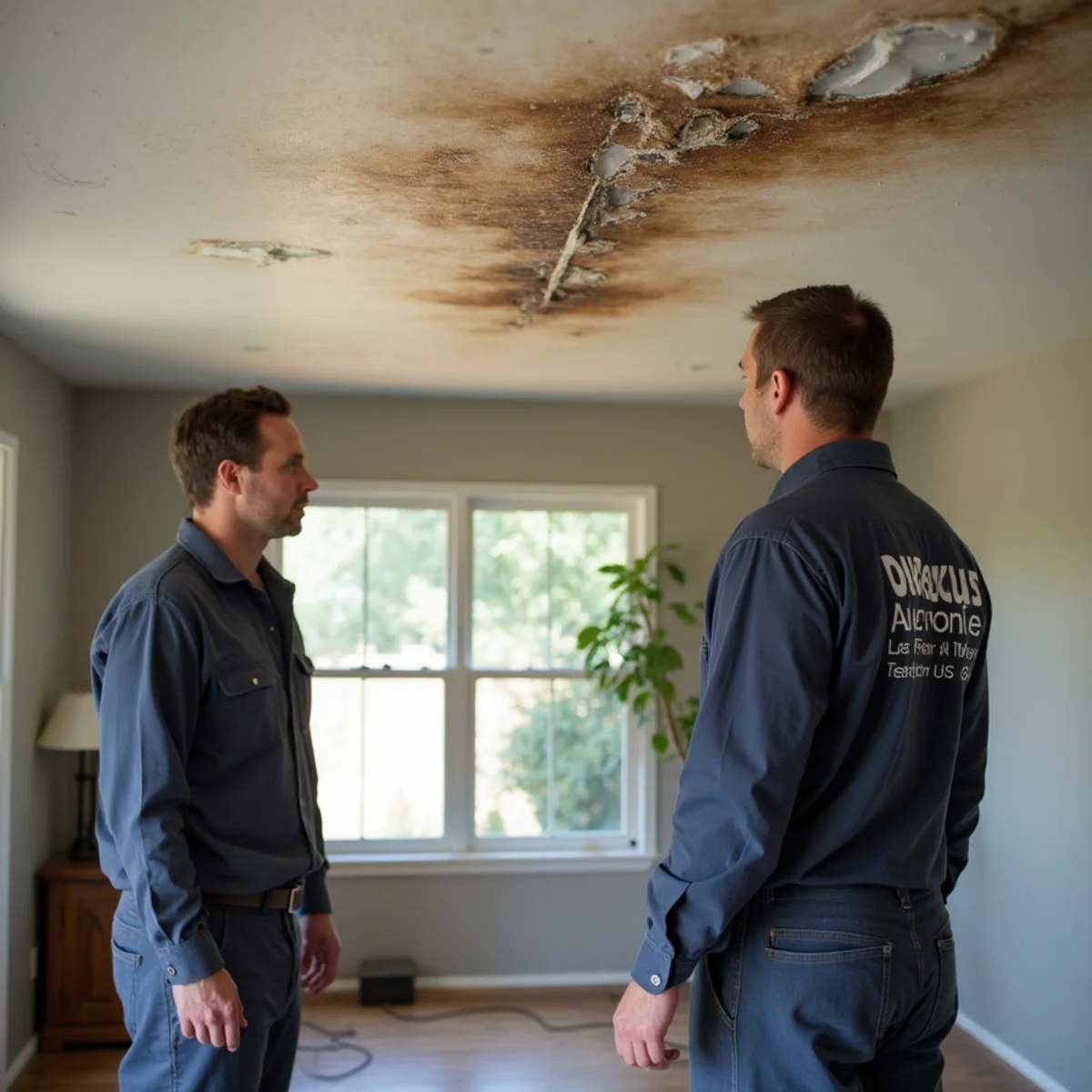
For clean tank-water overflow, dry the floor, check that nothing wicked under the baseboards or into the subfloor, and run a fan. Watch the ceiling below if it is an upstairs bathroom.
For any water that carried waste, protect yourself first, and remember that the water under the floor is the real risk. What you see on the tile you can fix with a mop. What seeped under the flange and into the wall base is what rots framing and grows mold.
- Wear gloves and boots, and keep kids and pets out of the room.
- Do not use a household vacuum on contaminated water — it spreads the contamination and ruins the machine.
- Toss porous items the water touched — bath mats, towels, cloth — unless they can be hot-washed and sanitized.
- Have it moisture-tested if the overflow was more than a cupful of clean water, and always after a backup. Call us at (201) 277-9344 and we will tell you honestly whether it is a mop-up or a job for a crew.
Pro insight: skip the drain cleaner, find the cleanout
When a toilet keeps backing up, the reflex is to pour in a chemical drain cleaner. On a line that is already blocked, that is the worst option: the caustic liquid never reaches the clog, so it sits in the bowl and on the floor as a hazard, waiting to splash whoever finally snakes the line. Roots and main-line blockages do not dissolve — they have to be cut or augered out. Leave the bottle on the shelf.
Reach for the cleanout instead — the capped pipe near your foundation. Opening it during a backup lets the pressure and water escape outside rather than up through your fixtures, and it shows a plumber whether the blockage sits on your lateral or the city main. One more thing technicians watch that homeowners miss: water weeping at the base of the toilet, a bowl that rocks, or a spongy floor around it. That is the wax seal failing and letting contaminated water into the subfloor with nothing on the surface to show for it. When a backup reaches that point, our sewage cleanup crew tests the floor, not just the tile.
Frequently asked questions
Related pages
Water Concord
IICRC-certified water damage restoration, based in Concord and serving all of Contra Costa County. We answer 24/7 — if you’re dealing with water damage right now, call (201) 277-9344.