
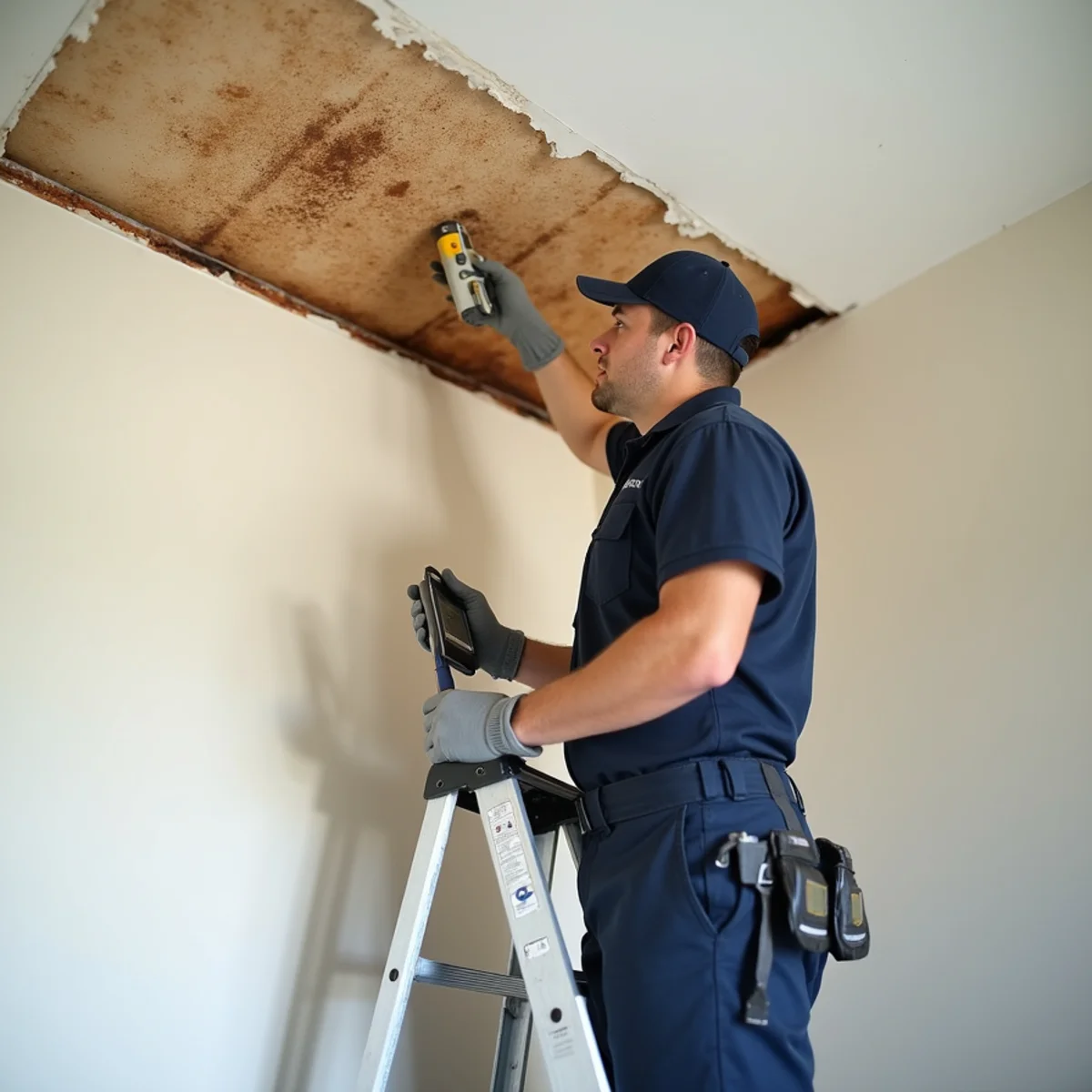
That is what makes a ceiling stain more than a cosmetic problem. Trapped water rots framing and ceiling joists, soaks attic insulation, and grows mold in the dark space overhead. A sagging, saturated ceiling can eventually let go and come down — a real hazard over a bed or a couch. And painting over the stain does nothing about the water behind it.
Water Concord repairs ceiling water damage from the source down. We find where the water is coming from, dry the structure above the ceiling, and repair the drywall, texture, and paint so it looks like it never happened. Our crews cover Concord 24/7 — call (201) 277-9344, especially if the ceiling is bulging.
Signs of ceiling water damage
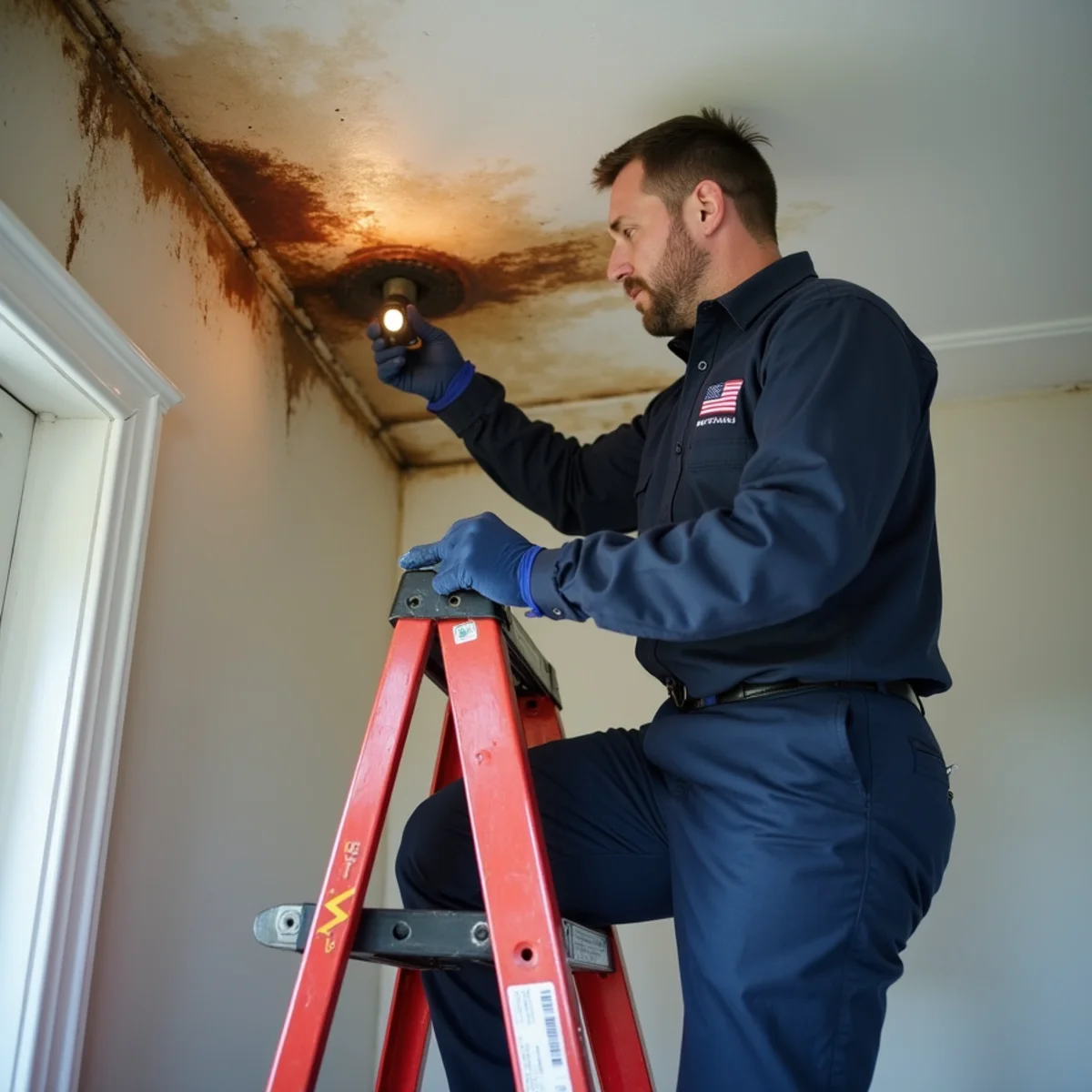
A ceiling tells you a lot about a hidden leak if you know what to look for. Call if you see any of these:
- Brown, yellow, or copper-colored stains or rings on the ceiling
- A ceiling that is sagging, bulging, or bowing downward
- Active dripping or a wet patch during rain or after upstairs use
- Peeling, bubbling, or cracking paint and texture overhead
- Soft or crumbling drywall you can push a finger into
- A musty smell concentrated in one room or near the ceiling
- Water spots that reappear after you have painted over them
- Stains directly below an upstairs bathroom, the attic, or a roof valley
A ceiling stain is a symptom — the leak is above it
Fixing the ceiling without finding the leak is a temporary patch, not a repair. Water on a ceiling came from somewhere above, and it rarely enters directly over the stain — it travels along the top of the drywall, runs down a joist, and drips at the lowest point, which can be feet from the actual source. Our first job is to find where the water is really getting in.
The usual suspects in Concord homes are roof leaks, failed flashing, an overflowing or leaking upstairs bathroom, a second-floor supply line, or HVAC condensate in the attic. We use moisture meters and thermal imaging, and when the path is not obvious we bring in professional leak detection. If it traces back to the roof, our roof leak water damage service addresses the entry point and the interior together.
What happens when you call — ceiling water damage repair, step by step
A damaged ceiling needs both diagnosis and repair. Here is how we handle it.
- Make it safe. If the ceiling is bulging with trapped water, we controlled-drain it to relieve the weight before it fails on its own.
- Find the source. We trace the leak with moisture meters and thermal imaging so the repair fixes the cause, not just the stain.
- Dry the cavity. We dry the ceiling framing, joists, and attic insulation above the damage to a verified moisture reading.
- Remove what is ruined. Saturated, sagging drywall and unsalvageable insulation come out; sound material stays.
- Rebuild the ceiling. We hang and finish new drywall, match the existing texture, and prime and paint so the repair disappears.
- Confirm it is done. We verify the area is dry and the source is resolved before we close it up.
When a ceiling can be saved — and when it has to come out
Not every stained ceiling has to be torn out. If we catch it early and the drywall is only lightly marked and still firm, we can often dry the cavity, treat the stain, and refinish in place. The deciding factor is how wet the material is and how long it has been that way.
Once drywall has been saturated, sagging, or wet long enough to lose its integrity, it has to come out — a compromised ceiling is both a mold risk and a falling hazard. The line between the two is not always obvious from below, which is why it helps to know when wet drywall can be saved and when it has to be replaced. We base that call on moisture readings, not guesswork.
If your ceiling is leaking during a storm right now
An active ceiling leak during a Concord storm needs fast action. Move furniture and electronics out from under the drip, and put down buckets and towels. Our guide on what to do in the next 30 minutes when a ceiling leaks during a storm walks through the rest, including when it is safe to relieve a water-filled bulge.
Two-story homes and houses with aging roofs — common across Concord's older neighborhoods — are the most likely to see storm-driven ceiling leaks. Whatever the source, get us on the phone early; the sooner we find and stop the water, the less ceiling we have to rebuild.
A note on older Concord ceilings and popcorn texture
One thing worth knowing before anyone scrapes a water-damaged ceiling: in Concord's many pre-1980 homes, that sprayed-on popcorn or textured finish may contain asbestos. It was standard on ceilings for decades, and it is harmless while it is intact and left alone. The risk comes from disturbing it — scraping, sanding, or breaking up a sagging section — which can release fibers into the air. Water damage is exactly the situation that tempts a homeowner to start pulling at a soft, drooping ceiling.
This is not cause for alarm, but it is a good reason not to tackle a damaged textured ceiling yourself. If the home predates the mid-1980s and the texture has never been tested, we treat it as presumed asbestos-containing and handle it accordingly — isolating the area and, where a test confirms it, coordinating licensed abatement before any repair begins. It is the same contained, no-shortcuts approach we bring to mold remediation: the material comes out safely, or it does not come out until it can.
Newer homes and ceilings that have already been re-textured are generally not a concern, and plenty of older ceilings test clean — the point is simply to check rather than assume. If you are unsure how old your ceiling finish is, leave the sagging area alone, keep the room ventilated, and let us assess it first. Call (201) 277-9344 and we will tell you what you are dealing with before anything gets disturbed.
Standing water spreading?
Every hour the water sits, the damage grows. Talk to a Concord crew now.
What affects the cost of ceiling water damage repair
Ceiling repairs range from drying a small stain to rebuilding a collapsed section, so we quote after we see it. The factors that move the price:
- The size of the affected area and how much drywall must be replaced
- How hard the leak is to locate and reach
- Whether framing, joists, or attic insulation need drying or replacement
- Matching existing texture, from smooth to heavy knockdown or popcorn
- Whether mold has formed in the cavity above
- The underlying repair — roof, plumbing, or HVAC — separate from the ceiling itself
Why Concord homeowners choose Water Concord for ceiling water damage repair
When water is where it shouldn’t be, you need a crew that shows up fast and does it right. Here’s what you get with Water Concord:
60-minute emergency dispatch across Concord
We’re based in Concord, so ceiling water damage repair starts before the damage has time to spread.
IICRC-certified technicians
Every job follows the IICRC S500 standard, with drying verified by moisture meters — not guesswork.
Licensed & insured
Fully licensed and insured, so your home and your project are protected from day one.
Insurance claim assistance
We document the loss, record moisture readings, and bill your carrier directly for covered work.
Locally owned & operated
You deal with a local team that answers for its work, not a national franchise queue.
Rated 4.9 from 127+ local reviews — and we answer open 24 hours — 7 days a week.