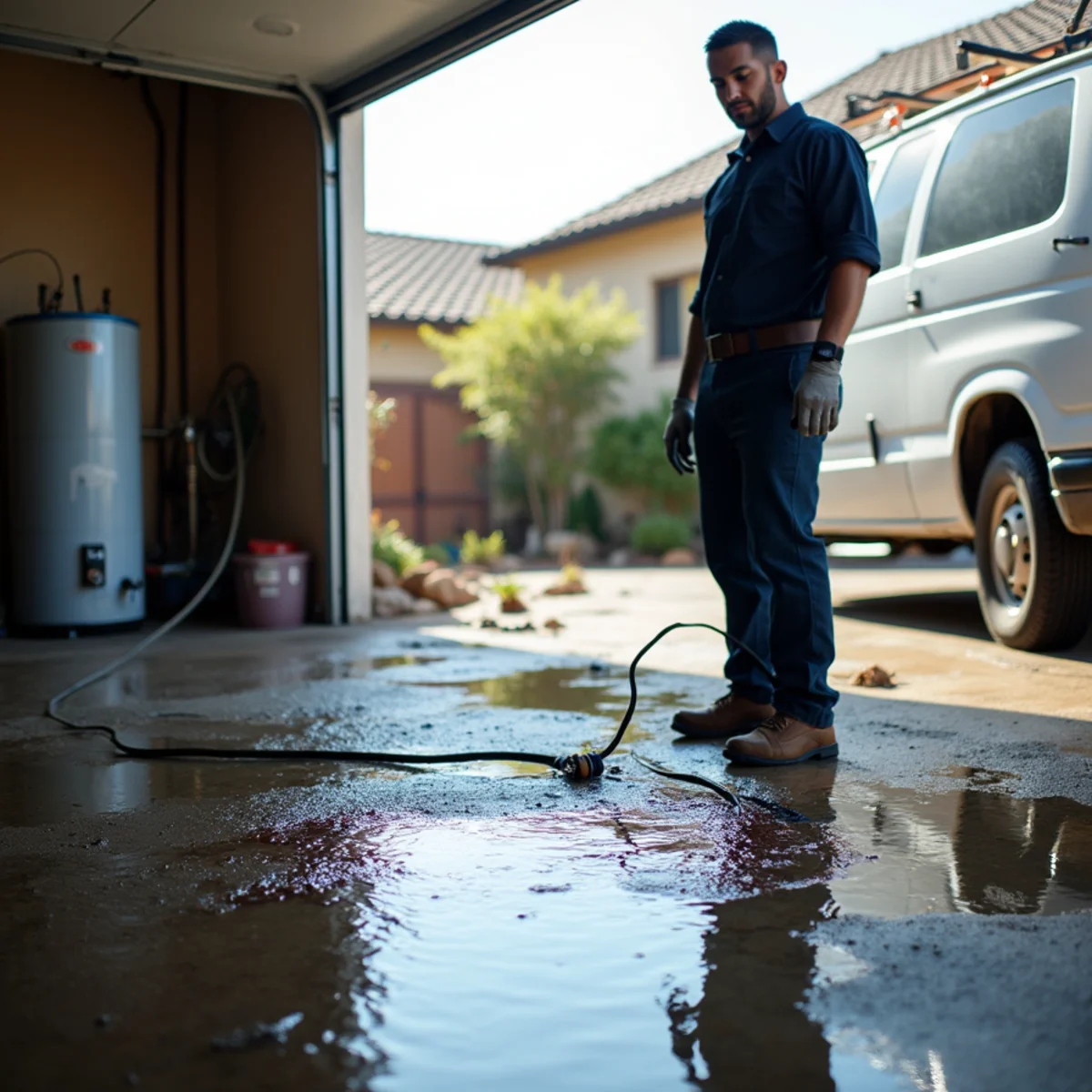
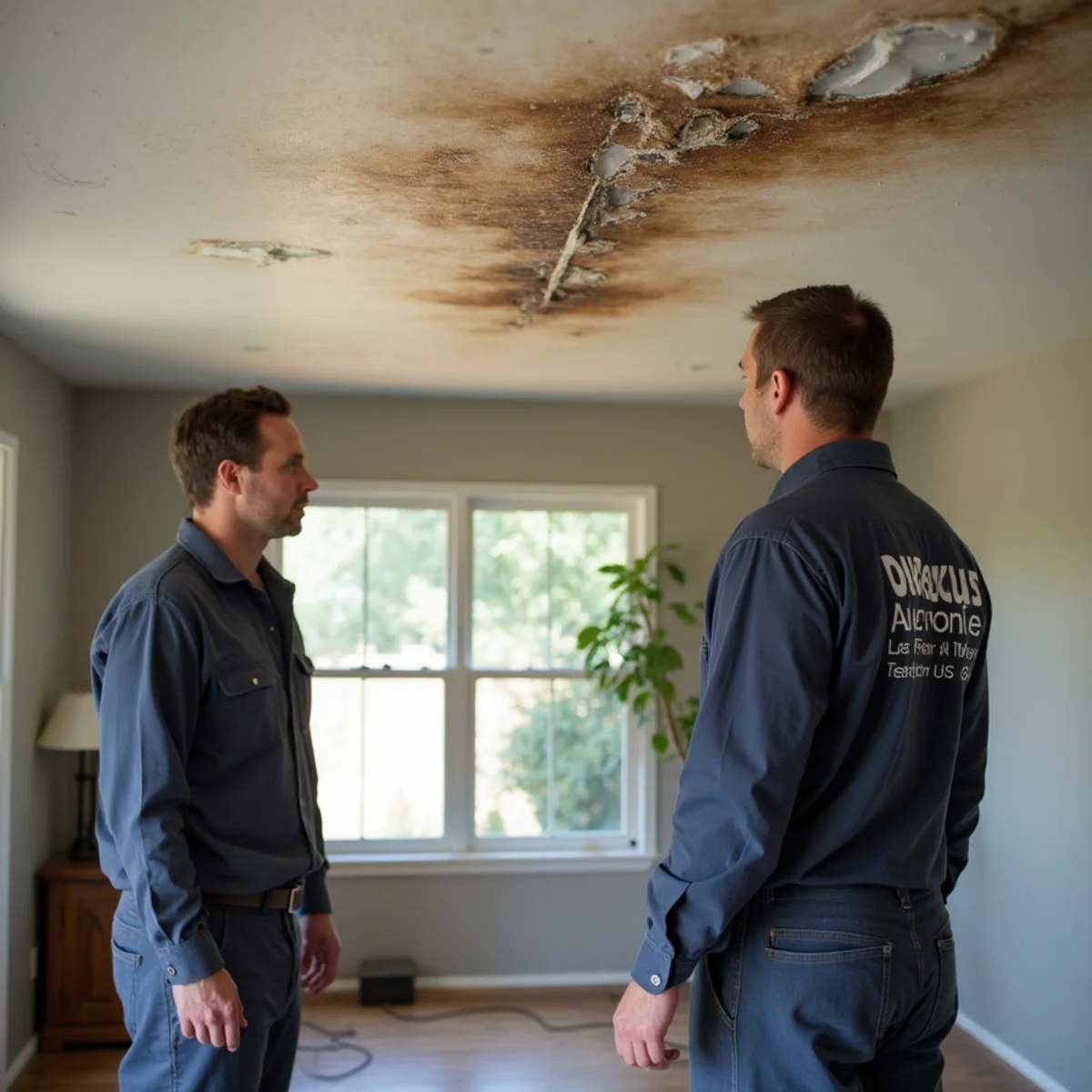
If the ceiling is bulging or sagging, put a bucket under it and carefully punch a small hole in the lowest point of the bulge with a screwdriver to let the water drain in a controlled stream. It feels wrong to poke a hole in your own ceiling, but a trapped pocket of water is far more dangerous than a controlled drip — a saturated drywall ceiling can weigh dozens of pounds and let go all at once.
Concord gets most of its 18 to 22 inches of rain between December and March, and the atmospheric rivers that arrive with it drive water into roofs that held up fine all summer. When it comes through the ceiling, you have a short window to protect the room below and slow the damage before the drywall gives up. Here is what to do in the next thirty minutes, and when to call for ceiling water damage repair.
The Next 30 Minutes: Contain and Relieve the Pressure
Work in this order. Protect the floor and contents first, then relieve the trapped water safely.
- 1. Move or cover everything below. Slide furniture out from under the leak and lay a tarp or plastic sheeting over what you cannot move.
- 2. Put down buckets and towels to catch the water and keep it from spreading across the floor.
- 3. Relieve a bulge. If the ceiling is sagging with trapped water, puncture the lowest point with a screwdriver and let it drain into a bucket. Do it from the side, not directly underneath.
- 4. Keep clear of the sag once you have drained it. Do not let anyone stand under a compromised ceiling.
Kill the Power to That Area
Water and ceiling light fixtures are a bad mix. If the leak is anywhere near a can light, a ceiling fan, or a fixture, water can travel down the wiring and energize the fixture — or the water itself.
Shut off the breaker for that room before you handle standing water or reach near a fixture. If water is dripping out of a light fixture, treat the whole room as live until the breaker is off.
Find Where the Water Is Coming From
In a storm, a ceiling leak almost always traces to the roof — but not always directly above the stain. Water runs along the top of the ceiling, down rafters, and across the drywall before it finds a low point to drip through, so the wet spot is often several feet from the actual entry point.
If it is not raining, or the leak persists after the storm passes, suspect plumbing instead — a supply line or drain in the floor or wall above. A storm-timed leak that stops when the rain stops is a roof leak; one that runs regardless of weather is plumbing. Either way, the ceiling cavity is now wet and has to be dried.
Why a Wet Ceiling Is Different From a Wet Floor
A ceiling holds water against gravity in a closed cavity you cannot see into. The insulation above the drywall soaks it up and holds it against the framing, so the ceiling can look like it is drying on the surface while the cavity stays saturated for days.
That trapped moisture does three things: it keeps the drywall soft and sagging, it rots the framing and rusts fasteners, and it grows mold in the dark, unventilated space above — often within 24 to 48 hours in our winter humidity. A stain that dries to a brown ring is not proof the cavity is dry. It usually is not.
When to Call a Restoration Crew
Call for help if the ceiling is sagging, if the stain is bigger than a dinner plate, if water reached a light fixture, or if you cannot find and stop the source. Those are signs the cavity is holding water your buckets will never reach. In older Sun Valley homes, aging roofs and worn flashing turn a single hard atmospheric river into a ceiling leak — and the drywall above is usually wetter than the stain on the surface suggests.
A crew will find the moisture with meters, open the ceiling where needed to dry the cavity and remove wet insulation, and dry the framing before any patching. If the source is the roof, we can tarp it to stop the intrusion while the storm continues. Call (201) 277-9344 — a sagging ceiling is not something to sleep under.
Pro insight: get above the ceiling, not just under it
If you can safely reach your attic during a lull, that is where the real containment happens. From above you can often see the water tracking along a rafter, slip a bucket or a length of plastic sheeting under the drip to divert it away from the ceiling below, and — just as important — pull the soaked insulation back off the top of the drywall. Wet insulation does two bad things at once: it adds pounds to a ceiling that is already sagging, and it holds moisture against the board so it never dries. Move slowly, step only on the joists, and take a flashlight.
One safety point technicians never skip up there: keep wet insulation clear of recessed can lights and any older wiring, and leave that circuit's breaker off until everything is dry. Waterlogged insulation packed around a hot fixture is a fire risk the moment power comes back on. If the water is entering where you cannot safely reach it, that is the signal to stop and call — a roof leak intercepted at the source mid-storm can save the ceiling, while one left to run all night rarely does.
Frequently asked questions
Related pages
Water Concord
IICRC-certified water damage restoration, based in Concord and serving all of Contra Costa County. We answer 24/7 — if you’re dealing with water damage right now, call (201) 277-9344.