
That trapped moisture is what turns a manageable leak into a mold problem and a structural one. Wet wood swells and warps; drywall wicks water upward and stays damp behind the paint. In Concord's cooler, damp winters, materials give up that moisture slowly, and mold can start growing within 24 to 48 hours in the wall cavities and floor assemblies you cannot reach with a towel.
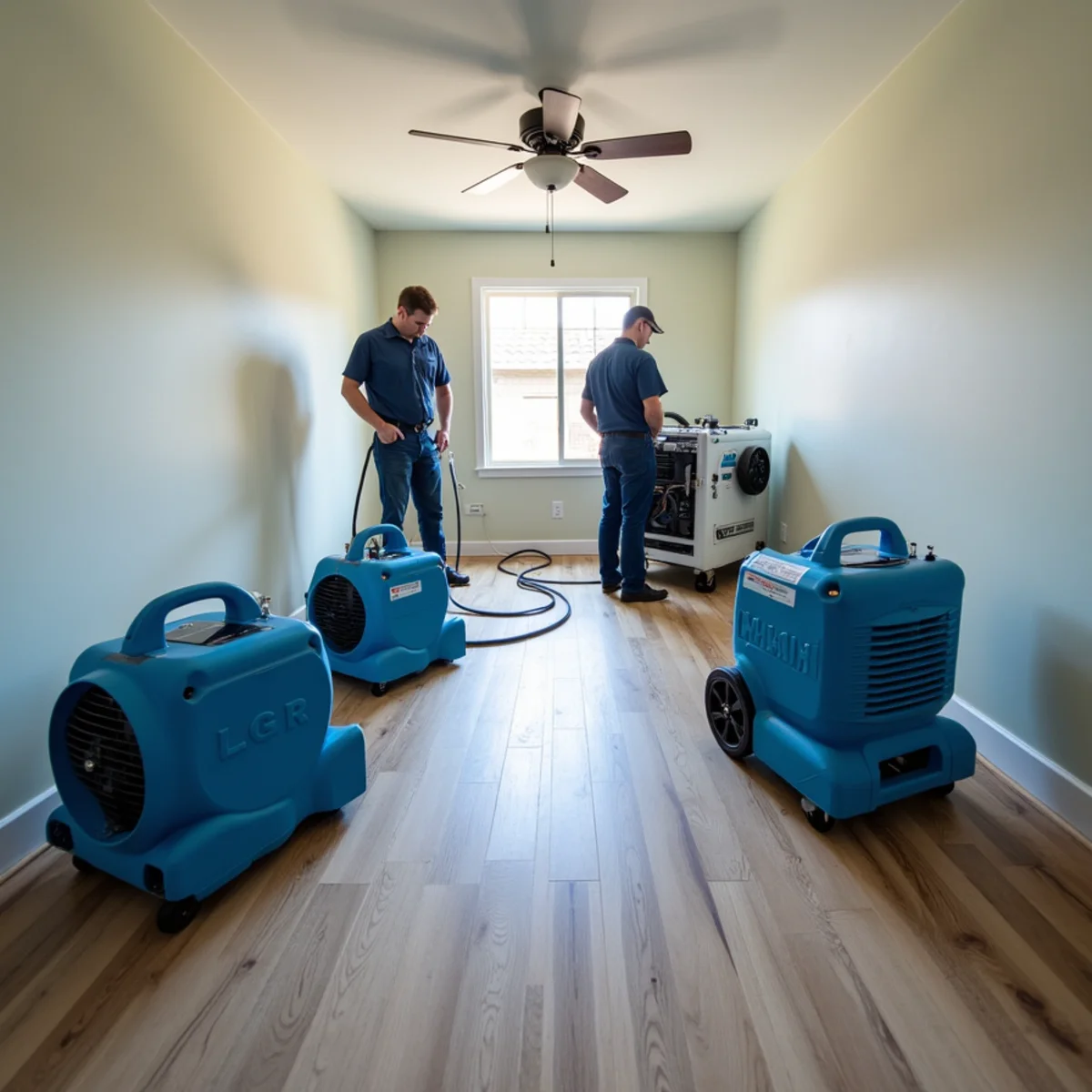
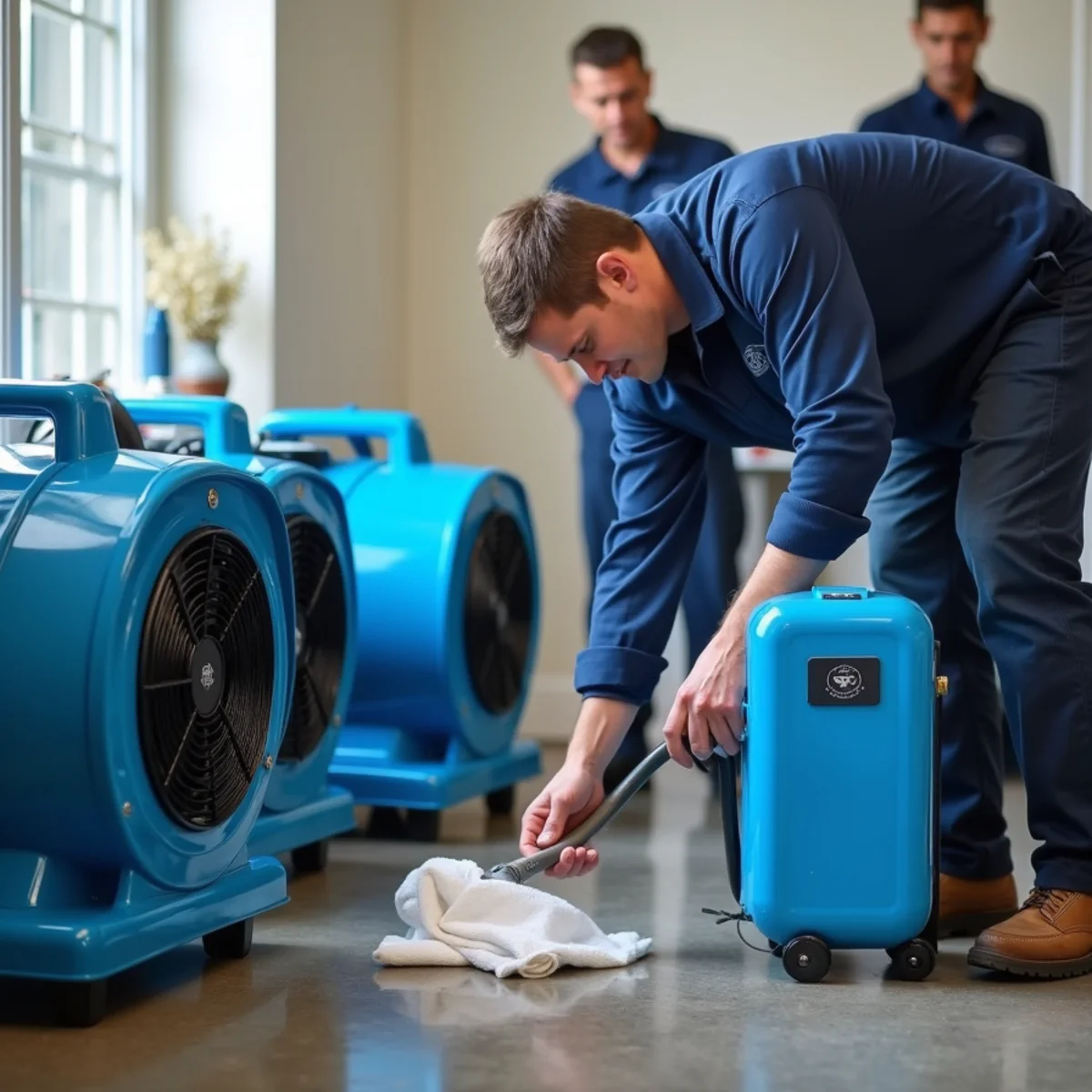
Water Concord dries the structure, not just the surface. We build a drying system around your specific loss — air movers to lift moisture off materials, dehumidifiers to pull it out of the air, and daily meter readings to prove the structure is actually drying. We do not pack up because a floor feels dry underfoot. We pack up when the numbers say the job is done.
Signs the structure is still wet
Surfaces dry first; the materials behind them hold moisture far longer. Call for structural drying if you notice:
- A musty or damp smell that lingers after the visible water is gone
- Baseboards, drywall, or trim that still feel cool or damp days later
- Paint that is bubbling, or wallpaper lifting at the seams
- Flooring that feels fine on top while the room still reads humid
- Condensation on windows or a clammy feel in a recently flooded room
- Cupped or crowned hardwood that has not returned to flat
- A moisture meter or your restorer flagging high readings in walls or subfloor
- Water that sat for more than a few hours before it was extracted
The science: why drying is more than fans
Structural drying is applied psychrometry — the science of how water moves between materials and air. Wet materials release moisture into the air as vapor. Air movers speed that release by breaking the thin, saturated layer of air that clings to wet surfaces. Dehumidifiers then pull that vapor out of the air so it does not simply resettle into another wall.
Balance is everything. Too few air movers and materials give up moisture too slowly; too little dehumidification and the air saturates and drying stalls. We calculate the equipment your specific room and materials need rather than scattering fans and hoping — the difference between a house that is dry and one that only feels dry, and why a home can still smell musty long after the water dried.
Our structural drying process, step by step
Every drying plan starts with measurement and ends with proof. Drying begins the moment water extraction is complete, and runs like this.
- Moisture mapping. We meter affected and unaffected areas to establish a dry standard and mark the true extent of the moisture.
- Equipment design. We calculate the air movers and dehumidifier capacity the space needs based on square footage, materials, and class of water.
- Strategic placement. Air movers are angled to sweep wet surfaces; dehumidifiers are positioned to capture the released moisture.
- Targeted drying. For wet wall cavities or hardwood, we use specialty equipment — wall-cavity injection and floor drying mats — instead of tearing everything out.
- Daily monitoring. We return to log moisture readings, temperature, and humidity, and adjust equipment as the structure dries.
- Verification and teardown. When materials hit the documented dry standard, we remove equipment and hand off a drying log for your records or your insurer.
Drying without demolition
Homeowners often assume wet walls and floors have to be ripped out. Frequently they do not. Modern methods save materials older crews would have demolished — we dry many wall cavities in place by injecting warm, dry air behind the drywall, and rescue hardwood with mats that pull moisture straight up through the boards.
Saving materials saves you money and time, but it is a judgment call. Wet drywall can sometimes be saved and sometimes has to come out, depending on the water category and how long it sat. We make that call from meter readings, not guesswork, and we tell you honestly when in-place drying is right and when removal is the safer move.
Drying in Concord's climate and older homes
Concord summers are hot and dry, which helps; winters are cool and damp, which does not. From December through March — when most rain-driven losses happen — outdoor air holds enough moisture that opening windows can make a wet room worse, not better. Sealed, dehumidified drying is the reliable approach here.
Older Concord housing adds a wrinkle. More than half the city's homes were built before 1979, and many have lath-and-plaster walls, hardwood over board subfloor, and tight crawlspaces that trap moisture. These assemblies dry slower than modern drywall and slab construction, which is part of why drying times vary room by room.
How we verify your home is actually dry
The way a drying job fails is quiet. A floor feels dry underfoot, the fans come out, and three weeks later a baseboard darkens or a room turns musty. Under-drying — pulling equipment before the materials have truly given up their moisture — is the single most common reason a loss comes back, usually as mold or cupped, warping wood. Surfaces dry first and fool the hand; the assembly behind them can still be wet.
So we do not decide by feel. Before drying starts we set a dry standard — a reading taken from the same material somewhere it never got wet, which tells us what is normal for your home in this season. From there we meter the wet materials every day, along with the temperature, humidity, and moisture in the air, and watch the numbers fall toward that target. Equipment stays until the wet materials read at the dry standard and hold there, not until they merely feel dry.
Every reading goes into a drying log you can keep or hand to your insurer — dated proof that the structure reached a documented standard rather than a technician's guess. It is also why we will run a dehumidifier an extra day rather than call a job finished early. Cutting a corner now buys a callback, a demolition, and a mold problem later, and none of that is cheaper than drying it right the first time.
Standing water spreading?
Every hour the water sits, the damage grows. Talk to a Concord crew now.
What affects the cost of structural drying
Drying is usually billed by the equipment on site and the days it runs. We set the plan after metering the space. What moves the cost:
- The size of the wet area and the number of rooms involved
- How saturated the materials are and how deep the moisture penetrated
- The class and category of water, which dictate methods and safety steps
- The type of materials — plaster, hardwood, and dense assemblies dry slower than drywall
- How many days of monitored drying it takes to reach the dry standard
- Whether specialty drying — wall injection, floor mats, crawlspace equipment — is required
Why Concord homeowners choose Water Concord for structural drying & dehumidification
When water is where it shouldn’t be, you need a crew that shows up fast and does it right. Here’s what you get with Water Concord:
60-minute emergency dispatch across Concord
We’re based in Concord, so structural drying & dehumidification starts before the damage has time to spread.
IICRC-certified technicians
Every job follows the IICRC S500 standard, with drying verified by moisture meters — not guesswork.
Licensed & insured
Fully licensed and insured, so your home and your project are protected from day one.
Insurance claim assistance
We document the loss, record moisture readings, and bill your carrier directly for covered work.
Locally owned & operated
You deal with a local team that answers for its work, not a national franchise queue.
Rated 4.9 from 127+ local reviews — and we answer open 24 hours — 7 days a week.