
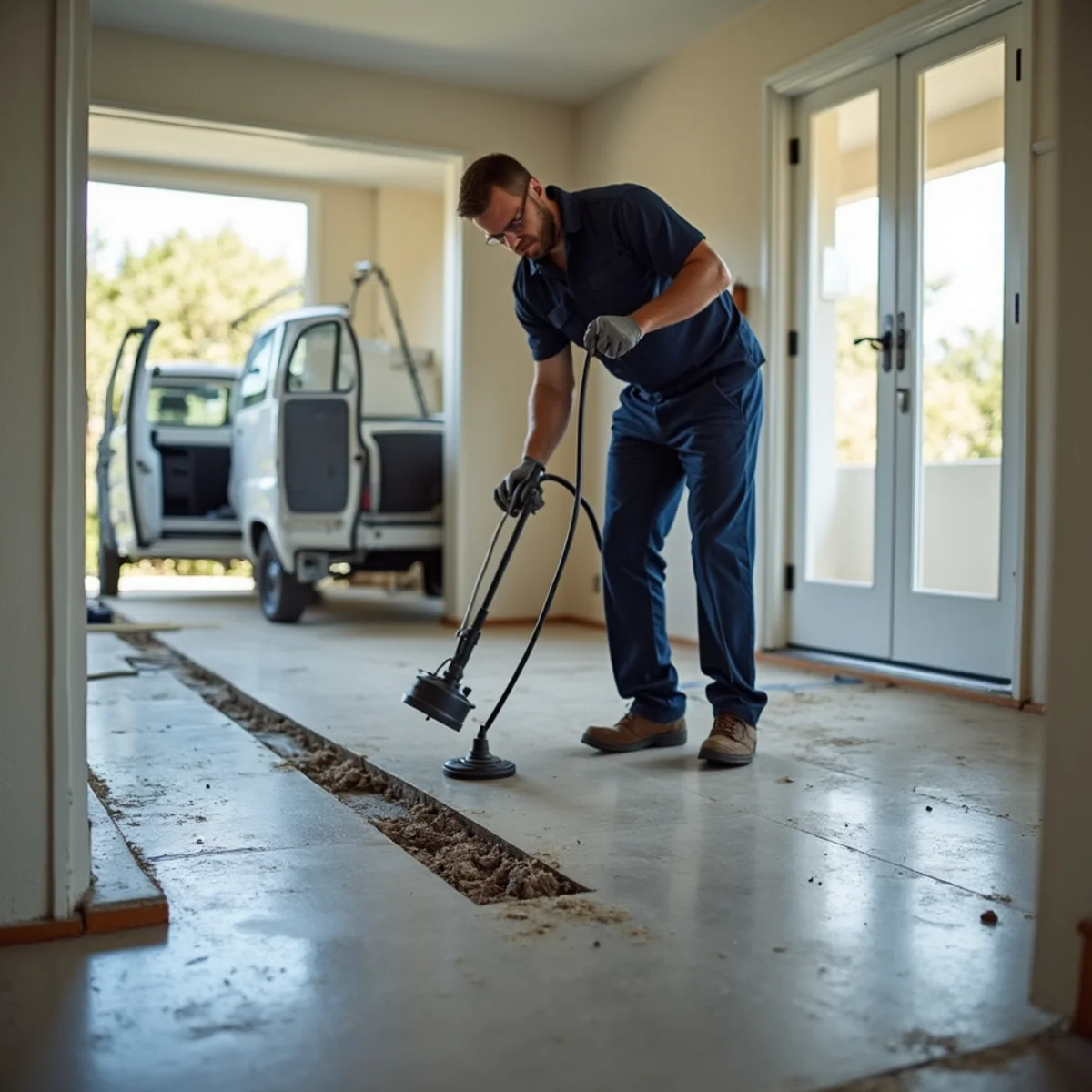
A slab leak rarely announces itself with a flood. It seeps. By the time the damage shows on the surface, water has often been migrating under the slab for weeks, wicking into subflooring and drywall and creating the damp, dark conditions where mold can take hold in 24 to 48 hours. Left alone, a pinhole in a copper line can lift hardwood, delaminate laminate, and quietly rot the bottom plates of your walls.
Water Concord locates and dries slab leak damage without tearing your whole floor apart. We pinpoint the leak with electronic and acoustic equipment, coordinate the plumbing repair, extract the trapped water, and dry the slab and surrounding materials to a verified moisture reading. You get the damage stopped and documented — not a guess and a jackhammer.
Signs of a slab leak in your Concord home
Slab leaks hide under concrete, so the warning signs show up around the edges. Call us if you notice any of these:
- A warm or unusually hot spot on the floor, often a sign of a hot-water line leak
- A water bill that jumped with no change in your household's usage
- The sound of running or trickling water when every fixture is shut off
- Cracked, buckling, or loose flooring over the slab — tile, laminate, or hardwood
- A persistent musty smell rising from the floor or along the baseboards
- Damp carpet, or water seeping up along the base of a wall
- Low water pressure that has developed gradually
- New cracks in drywall or the foundation as moisture shifts the slab
What a slab leak does to your home
A slab leak is a plumbing problem that becomes a water damage problem the moment the water reaches your living space. The supply lines that run through or under a concrete slab are under constant pressure, so even a pinhole releases a steady flow. That water follows the path of least resistance — up through control joints and cracks, along the underside of the slab, and into whatever porous material it meets first.
Because the source is hidden, the damage is usually well underway before you see it. We often find saturated subflooring, swollen cabinet toe-kicks, and wet drywall several feet from where the leak actually sits. Our job is to trace the water back to its source, stop the spread, and dry every material it touched — including the parts you cannot see. Left half-dry, a slab leak becomes a recurring mold problem instead of a one-time repair.
How we find and dry a slab leak, step by step
Finding the leak without demolishing your floor is the part homeowners worry about most. Here is how a Water Concord slab leak job runs from the first call to the final moisture check.
- Rapid dispatch. A local Concord crew heads out with leak-detection and moisture-mapping equipment, targeting arrival inside 60 minutes.
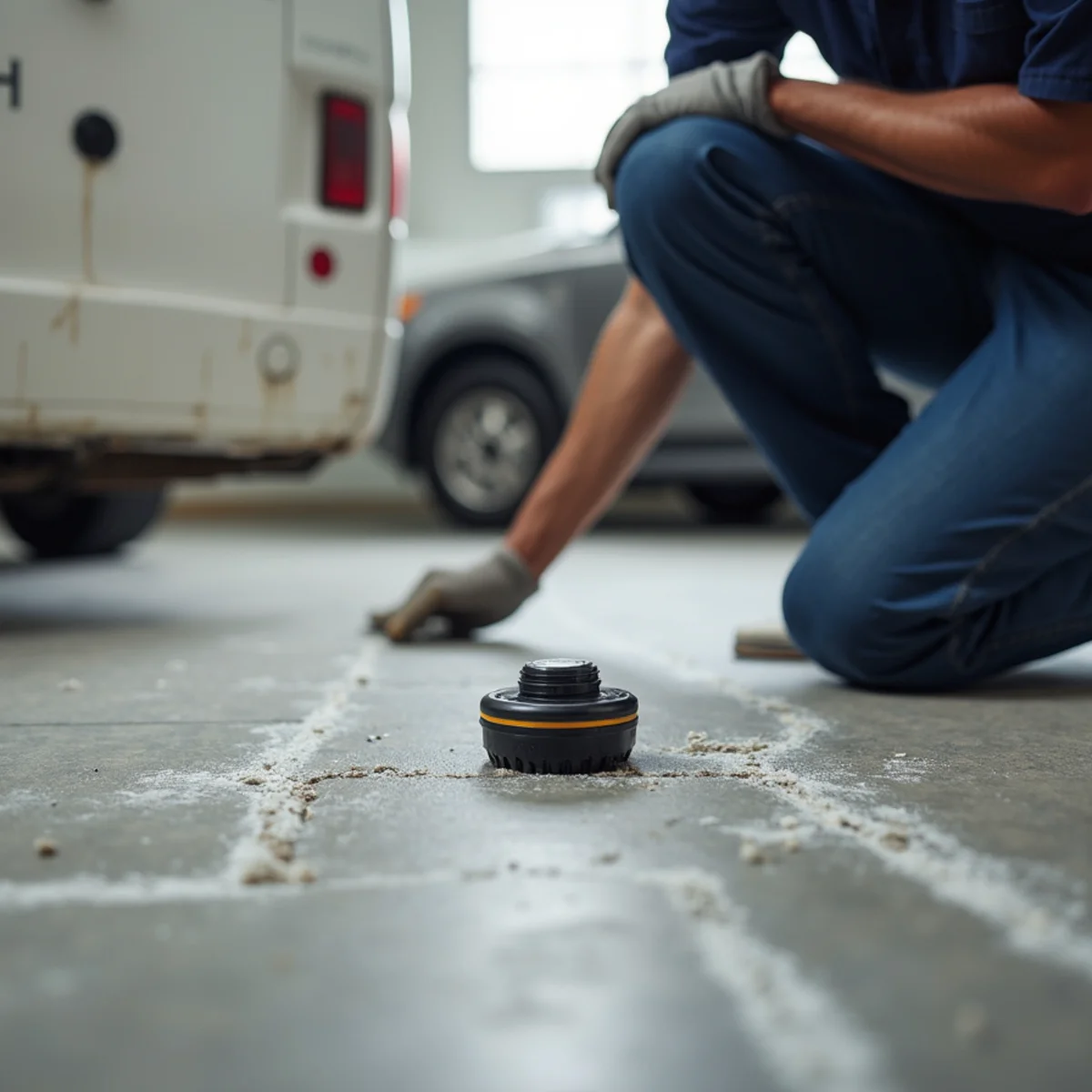
- Electronic leak location. We use acoustic listening devices and pressure testing to pinpoint the leak under the slab — see our leak detection service — so any access is small and targeted, not a torn-up floor.
- Moisture mapping. Meters and thermal imaging show exactly how far the water has spread through flooring, walls, and cabinetry.
- Coordinate the repair. Once the leak is located, the plumbing fix — a spot repair, a reroute, or a repipe — happens before drying begins, and we help you weigh the options.
- Extraction and structural drying. We pull trapped water and set air movers and dehumidifiers, then take daily moisture readings until the slab and materials return to a dry standard.
- Documentation for your claim. We photograph and log everything your insurer needs from the very first visit.
Why Concord's slab homes are prone to slab leaks
More than half of Concord's homes were built before 1979, and many of the 1950s-through-1970s tracts — the post-war neighborhoods off Monument Boulevard and out toward Clayton Valley — were built on concrete slabs with copper supply lines run underneath. That plumbing is now fifty to seventy years old, right at the age where pinhole leaks and slab leaks become common.
East Bay water makes it worse. Our hard, mineral-heavy water is rough on copper, and over decades it corrodes pipe from the inside out. Add the natural settling of clay-heavy Concord soils, which stresses rigid pipe where it passes through the slab, and you have the exact recipe for a slab leak. If your home is from that era and you have never repiped, a slab leak is less a question of if than when — which is why we also handle full water damage restoration when one finally lets go.
Repair the leak, then restore the damage
A slab leak job has two halves, and skipping the second is how homeowners end up with recurring problems. The first half is the plumbing repair — stopping the water at its source. The second is restoration: extracting the water that already escaped, drying the slab and the materials around it, and repairing what the moisture ruined.
We focus on that second half and coordinate the first. Concrete holds moisture stubbornly, so structural drying and dehumidification of a slab takes patience and the right equipment — not a couple of household fans. We dry to a verified reading, not to the eye, because a slab that feels dry on top can still be releasing moisture into your flooring for weeks.
Repair vs. whole-house repipe: how to decide
Once the leak is found and the damage is dry, you face a decision most homeowners never expected to make: repair the one line that failed, or repipe the whole house. There is no single right answer. It turns on the age of your plumbing, how many leaks you have already had, and how easily the pipe can be reached. A first slab leak in otherwise sound copper is often a good candidate for a targeted spot repair; a second or third leak in a fifty-year-old system is usually the plumbing telling you the rest of the pipe is not far behind.
We do not sell plumbing, so our read is straightforward: we locate and document the leak, dry the damage, and hand your plumber the moisture and access findings needed to price both paths honestly. Our guide to slab leak repair versus a whole-house repipe walks through what each option typically costs and what insurance will and will not touch. A few factors tend to tip the decision one way or the other:
- How many leaks you have had. One is bad luck; a pattern points to a system reaching the end of its life.
- The age and material of the pipe. Original copper run under a 1960s Concord slab has already outlived its comfortable service life.
- Access. Repairing a line under the slab can cost as much in demolition as rerouting it overhead through the attic and walls.
- Your plans for the home. If you are staying, a repipe buys decades of peace of mind; if you are selling soon, a documented spot repair may be enough.
Standing water spreading?
Every hour the water sits, the damage grows. Talk to a Concord crew now.
What affects the cost of slab leak restoration
We inspect before we quote — no honest number comes sight unseen. These are the factors that move the cost of a slab leak job:
- How long the leak ran before it was found and how far the water spread
- The location of the leak and how much access is needed to reach it
- Whether the plumbing fix is a spot repair, a reroute, or a full repipe
- The flooring involved — tile, hardwood, and laminate dry and repair differently
- How much subfloor, drywall, and cabinetry absorbed water
- Whether mold has started and needs containment and remediation
Why Concord homeowners choose Water Concord for slab leak water damage restoration
When water is where it shouldn’t be, you need a crew that shows up fast and does it right. Here’s what you get with Water Concord:
60-minute emergency dispatch across Concord
We’re based in Concord, so slab leak water damage restoration starts before the damage has time to spread.
IICRC-certified technicians
Every job follows the IICRC S500 standard, with drying verified by moisture meters — not guesswork.
Licensed & insured
Fully licensed and insured, so your home and your project are protected from day one.
Insurance claim assistance
We document the loss, record moisture readings, and bill your carrier directly for covered work.
Locally owned & operated
You deal with a local team that answers for its work, not a national franchise queue.
Rated 4.9 from 127+ local reviews — and we answer open 24 hours — 7 days a week.