
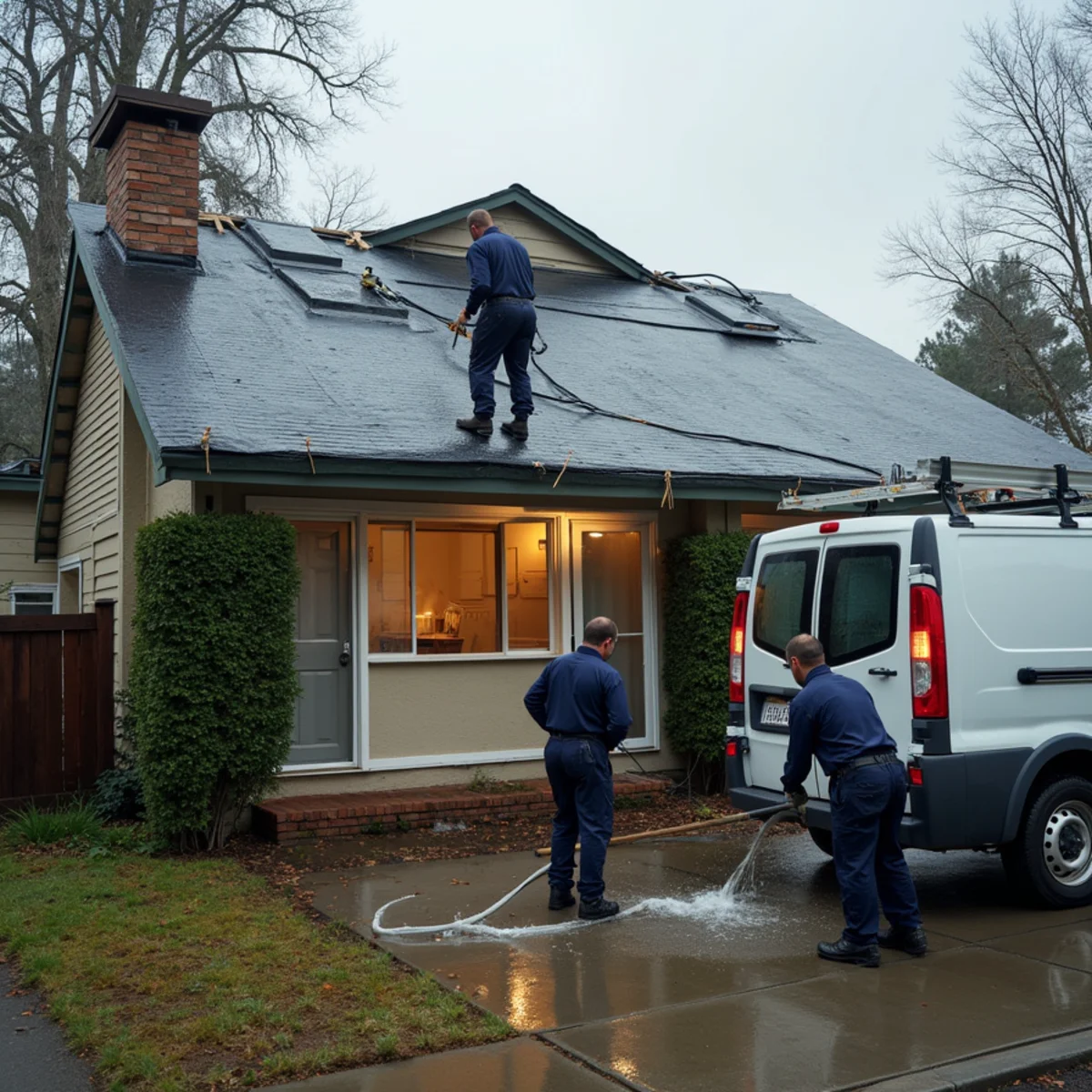
Concord's heaviest rain arrives in tight, intense bursts, and an atmospheric river can drop weeks of rain in a couple of days. That volume overwhelms roofs, gutters, and drainage that handle ordinary showers fine. Water pools where it should not, soaks into ceilings and walls, and if it is not extracted and dried quickly, it leads to warped materials, ruined insulation, and mold within 24 to 48 hours.
Water Concord responds through every storm. We stop the intrusion with emergency tarping and board-up, extract the water that got in, and dry the structure before the damage spreads. Our crews work 24/7 through Concord's wet season — call (201) 277-9344 when the weather turns against you.

Signs of storm water damage
Storm intrusion is not always dramatic — sometimes it is a slow stain that appears mid-downpour. Call if you notice any of these during or after a storm:
- Water dripping or streaming from the ceiling during heavy rain
- Wet, stained, or bulging drywall on walls or ceilings
- Water pushing in under exterior doors or around windows
- Missing shingles, lifted flashing, or visible roof damage after wind
- Pooling water in the yard draining toward the foundation
- A fallen tree or limb that has struck the roof or a wall
- Wet attic insulation or a damp, musty smell after a storm
- Gutters overflowing and dumping water against the house
Concord's storm season runs December through March
Concord gets roughly 18 to 22 inches of rain a year, and almost all of it falls between December and March. That means the risk is not spread out — it is concentrated into a few intense months, increasingly delivered by atmospheric rivers that stall over the Bay Area and pour rain for days. Older roofs, tired gutters, and marginal drainage that coast through a dry October give out under that kind of sustained load.
Low-lying properties and lots near the creek channels carry extra risk when the ground is already saturated and runoff has nowhere to go. It is worth understanding what winter storm runoff from the Mt. Diablo Creek watershed means for Concord homeowners, and getting ahead of the season with a winter storm prep checklist for East Bay homes.
What happens when you call — storm damage cleanup, step by step
Storm damage often means water is still getting in, so our first job is to stop it. Here is how a storm response runs.
- 24/7 dispatch. We answer during the storm and send a local crew as fast as conditions safely allow, targeting a 60-minute response.
- Stop the intrusion. Emergency tarping over roof damage and board-up of broken windows or openings keeps more water from entering while repairs are arranged.
- Assess and document. We inspect the entry points and affected areas and photograph everything for your insurance claim.
- Extract the water. Truck-mounted and portable extractors remove standing water from floors, carpet, and pad.
- Dry the structure. Air movers and dehumidifiers dry ceilings, walls, and floors to a verified moisture reading.
- Clean, sanitize, and restore. We clean affected surfaces, treat for mold, and repair the damage the storm left behind.
Storm water is not always clean water
It is tempting to think rainwater is clean, but by the time storm water enters your home it often is not. Runoff picks up soil, roofing debris, and contaminants on the way in, and water that rises from the ground outside can carry worse. That changes how the cleanup has to be handled — contaminated water means removing the porous materials it touched, not just drying them.
When storm water comes up from outside rather than down from the roof, it falls under flood cleanup, which follows stricter sanitation steps. If the intrusion started at the roofline, our roof leak water damage service addresses both the leak point and the interior damage. We sort out which situation you have on site.
Emergency tarping and board-up buys you time
During an active storm you cannot always get a roofer out in the rain — but you cannot let the water keep pouring in either. Emergency tarping covers roof damage and board-up seals broken windows and openings, stopping the intrusion so the interior can be dried and permanent repairs can wait for safe conditions.
It is a temporary fix, but a critical one. Every hour the opening is sealed is an hour more water is not soaking into your ceilings and walls. We handle the tarping as part of the same call, so one crew stops the water and starts the cleanup.
Getting your Concord home ready before the rains
The best storm call is the one you never have to make. Because Concord packs most of its yearly rain into a handful of winter months, a little maintenance before December protects your home far more than anything you can do once water is already inside. Roofs, gutters, and drainage that coast through a dry October are exactly what give out under a sustained February downpour — and the weak points are predictable enough to check on a single dry weekend.
Pay special attention to keeping runoff away from the foundation, so a downpour does not end up under the house where it does its quietest damage. And if a storm gets past your preparations anyway, we are on call through the whole wet season at (201) 277-9344. Before the first atmospheric river, work through the basics:
- Clean gutters and downspouts so they can carry a heavy load, and direct the discharge away from the foundation
- Look over the roof for lifted or missing shingles and cracked flashing — the entry points most storm leaks use
- Clear yard and area drains of leaves and debris so runoff has somewhere to go
- Trim overhanging limbs that could come down on the roof or a wall in high wind
- Check the seals around windows, doors, and skylights, and note anywhere water already tends to pool
Standing water spreading?
Every hour the water sits, the damage grows. Talk to a Concord crew now.
What affects the cost of storm damage cleanup
Storm losses range from a single leak to whole-house intrusion, so we estimate after inspecting the damage. The main cost factors:
- The number of entry points and how much of the home the water reached
- Whether emergency tarping or board-up is needed to stop active intrusion
- The water category — clean rain versus contaminated runoff or ground water
- The materials affected: roofing, drywall, insulation, flooring, and contents
- How long the water sat before extraction and drying began
- The scope of structural repairs after the space is dry
Why Concord homeowners choose Water Concord for storm damage cleanup
When water is where it shouldn’t be, you need a crew that shows up fast and does it right. Here’s what you get with Water Concord:
60-minute emergency dispatch across Concord
We’re based in Concord, so storm damage cleanup starts before the damage has time to spread.
IICRC-certified technicians
Every job follows the IICRC S500 standard, with drying verified by moisture meters — not guesswork.
Licensed & insured
Fully licensed and insured, so your home and your project are protected from day one.
Insurance claim assistance
We document the loss, record moisture readings, and bill your carrier directly for covered work.
Locally owned & operated
You deal with a local team that answers for its work, not a national franchise queue.
Rated 4.9 from 127+ local reviews — and we answer open 24 hours — 7 days a week.