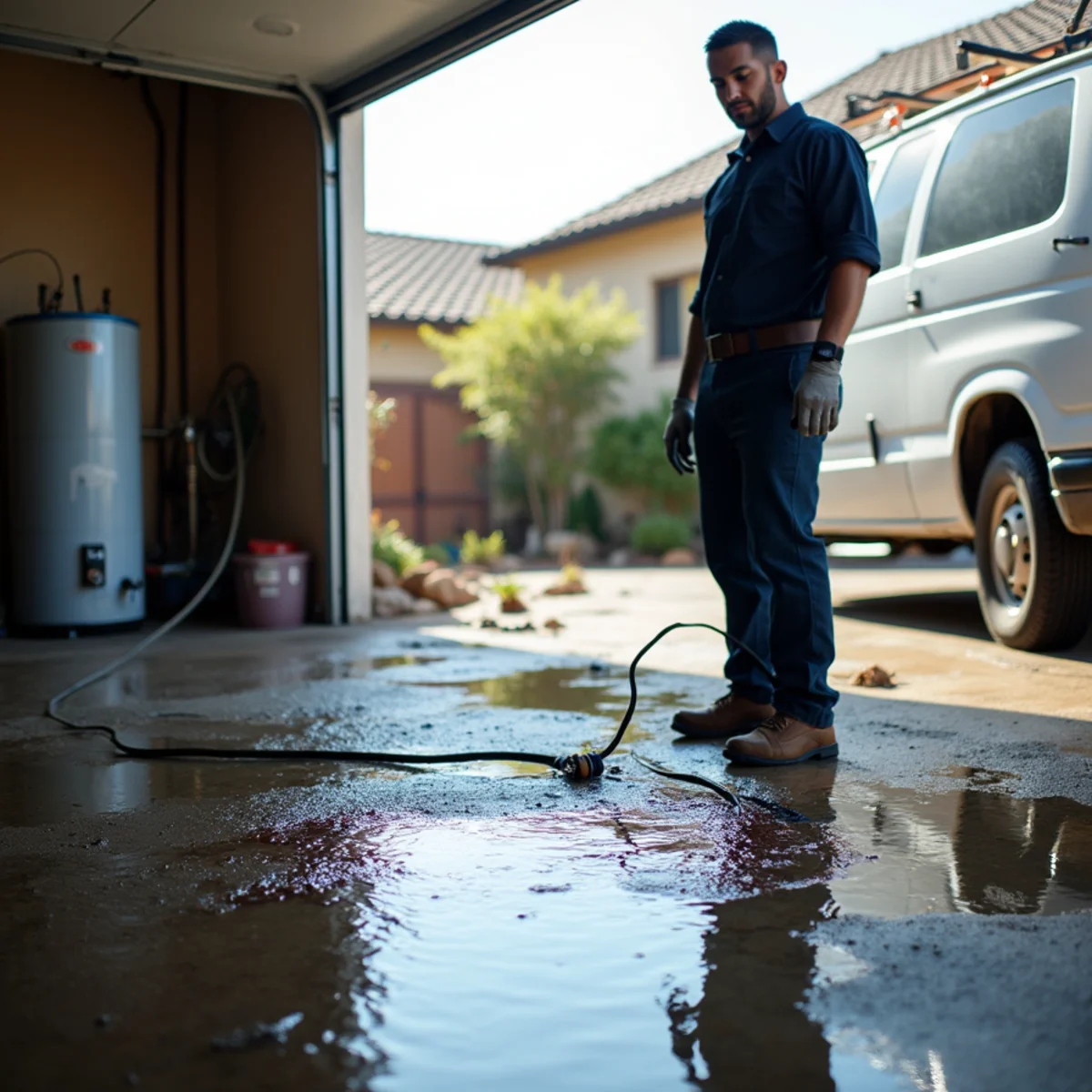
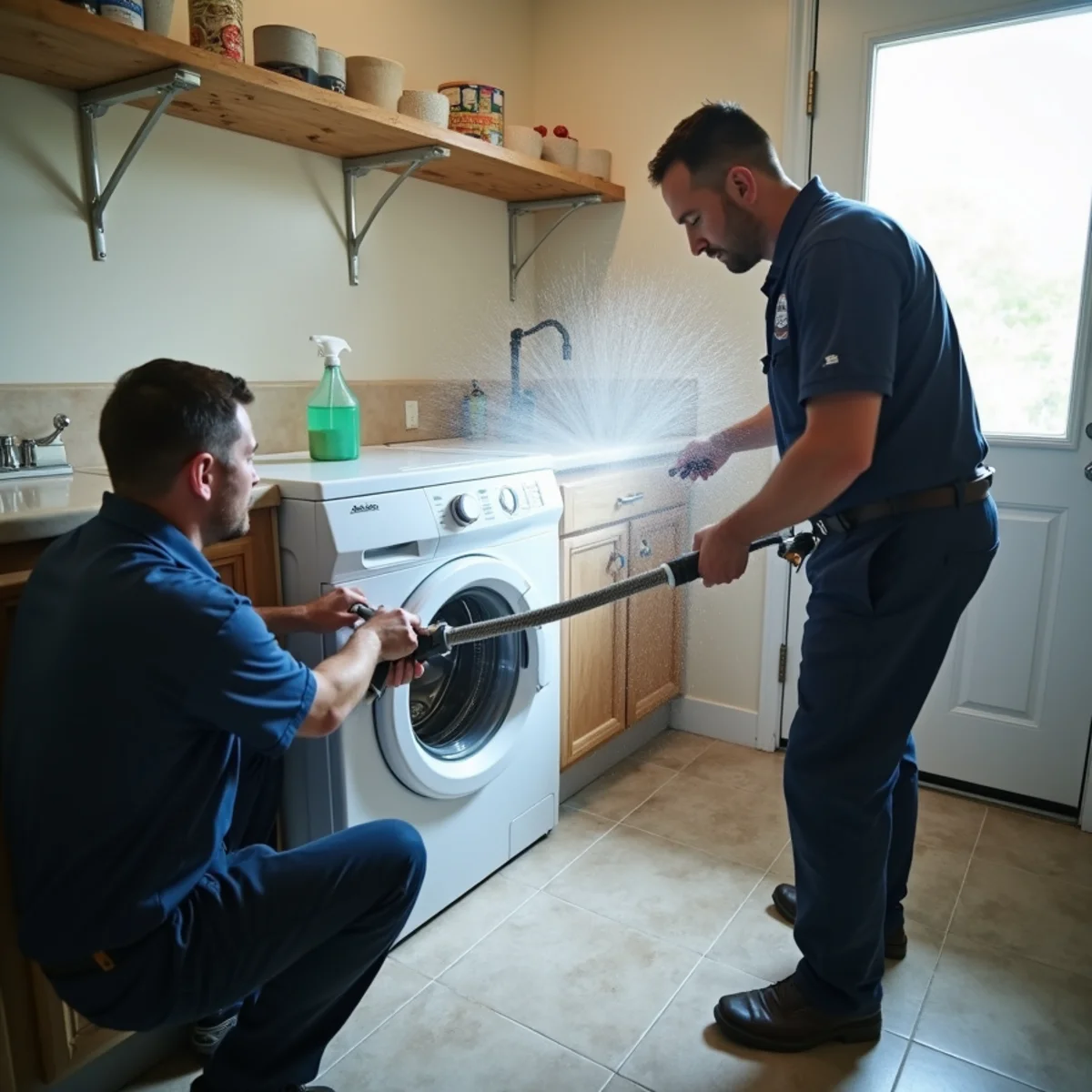
Reach behind the washer and turn off the two supply valves — the hot and cold taps the fill hoses connect to — clockwise until they stop. If you cannot reach them or they will not turn, shut off your home's main water valve. A burst washing machine hose can release several hundred gallons an hour, so the first move is always to close the source.
The washing machine hose is one of the most common floods we see in Concord, and one of the most preventable. The rubber hoses that ship with most machines are a known failure point — they harden, crack, and let go, often while no one is home. If yours just burst, follow these five steps in order to limit the damage before our water extraction team arrives.
Step 1: Shut Off the Water
The valves are on the wall directly behind the machine, one for hot and one for cold. Turn both off. If they are corroded or you cannot reach them, do not fight them — go straight to the main shutoff for the house and close that instead.
A burst hose does not slow down on its own. Until the valve is closed it keeps pumping at full house pressure, so this step comes before everything else — before you grab towels, before you call anyone, before you try to move the machine.
Step 2: Cut the Power to the Machine
Unplug the washer if the outlet is dry and safe to reach. If water has spread to the outlet or across the floor to other appliances, do not touch the plug — go to the panel and switch off the breaker for the laundry area.
Laundry rooms pack a washer, a dryer, and often a water heater into a small space with outlets low to the ground. Treat any standing water near an outlet as an electrical hazard until the breaker is off.
Step 3: Get the Standing Water Up Fast
Water spreads and wicks by the minute, and a laundry flood loves to travel — under the machine, along the baseboards, and through the wall into the next room. The faster you pull the standing water up, the smaller the drying job and the less of it disappears into places a towel will never reach.
- Wet/dry vacuum first if you have one — it moves far more water than towels.
- Push water toward a drain with a squeegee or broom if the laundry room has a floor drain.
- Towels and a mop for what is left, wrung into a bucket.
- Check where the water went — under the machine, along the wall base, and through any doorway into the next room or down through the floor.
Step 4: Start Drying and Move What Is Wet
Once the surface water is up, open the room, run fans across the wet floor, and pull in a dehumidifier if you have one. Move wet baskets, detergent boxes, and anything cardboard out of the room before they wick and spread the water further.
If your laundry is upstairs — common in Concord's newer Clayton Valley homes — check the ceiling in the room directly below. Water finds the joist bays fast, and the first sign of a real problem is often a spreading stain one floor down.
Step 5: Document the Damage and Replace the Hose
Photograph the burst hose, the water on the floor, and anything it damaged before you clean up — you will want it for the insurance claim. Then replace both fill hoses, not just the one that failed, and switch to braided stainless-steel lines. The old rubber ones almost always fail from age, and if one let go the other is not far behind. Our guide to when to replace washing-machine hoses and supply lines covers the ages that matter.
If the water spread beyond the laundry room, soaked into carpet or walls, or reached the floor below, call a crew to check the moisture you cannot see. Call (201) 277-9344 and we will make sure it is dry inside the walls, not just on the surface.
Pro insight: braided hoses fail too — install them right
Switching to braided stainless-steel hoses is the right call, but do not treat them as permanent. The braid only protects the rubber liner inside; that liner still ages, and most failures start at the crimped ferrule where the metal sleeve meets the fitting. Give them a real chance to last: leave three or four inches between the machine and the wall so the hose cannot be crushed or kinked, hand-tighten the connections and add just a quarter turn with a wrench, and replace even braided lines on a schedule instead of waiting for a burst. A hose that bulges, weeps rust at the ferrule, or has gone stiff is telling you it is next.
The habit that prevents most of these floods costs nothing: shut the two supply valves whenever you will be away for more than a day. Nearly every washer-line burst we clean up in Clayton Valley happened with no one home to hear it start. If reaching behind the machine is the reason you would never bother, a plumber can install a single-lever laundry shutoff box that closes both hot and cold in one motion — the small upgrade that turns 'I never turn them off' into a two-second habit.
Frequently asked questions
Related pages
Water Concord
IICRC-certified water damage restoration, based in Concord and serving all of Contra Costa County. We answer 24/7 — if you’re dealing with water damage right now, call (201) 277-9344.