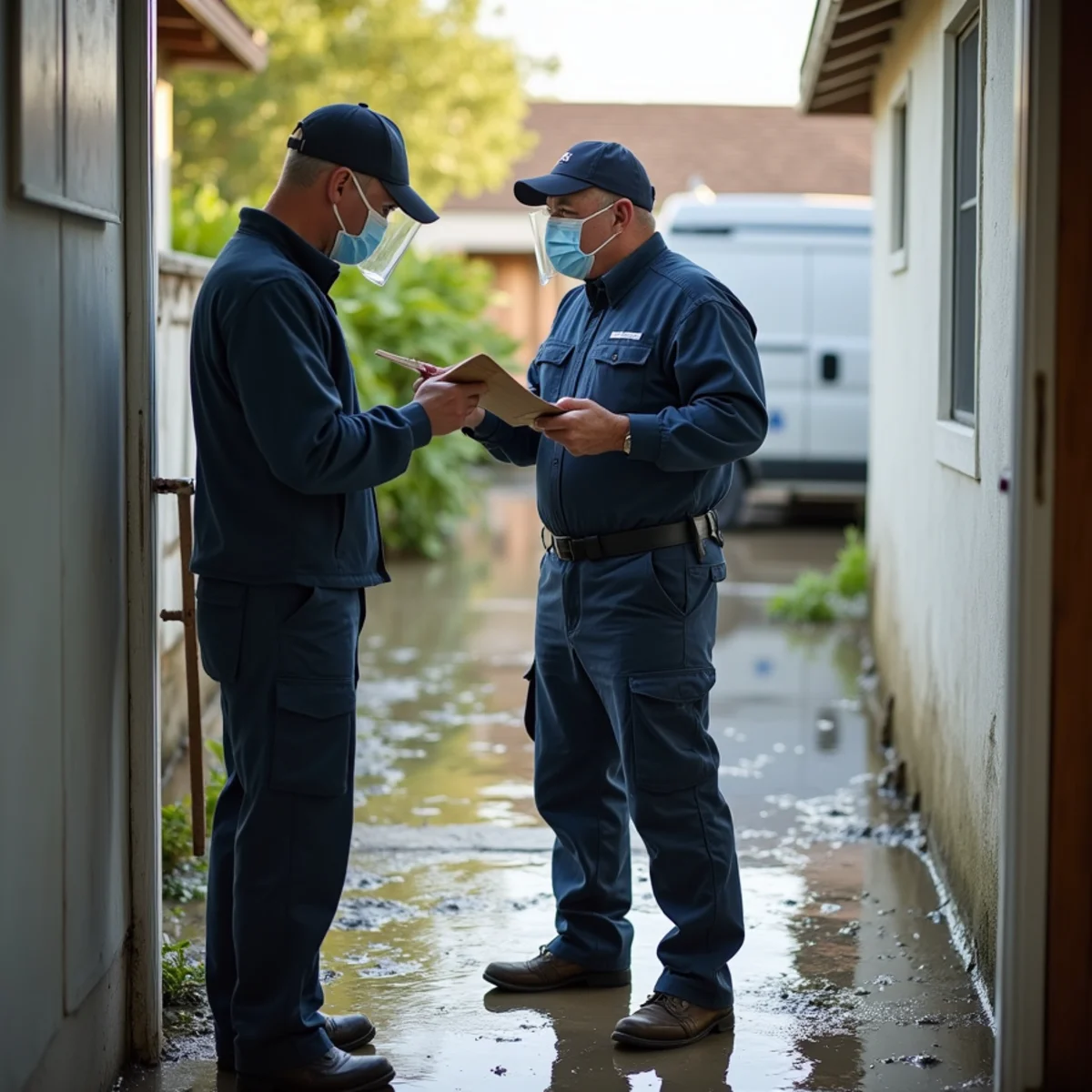
Two homes flood on the same day. One gets a quick dry-out and keeps its carpet; the other needs materials torn out, protective gear, and disinfection. The difference is not the amount of water — it is the kind of water. Restoration professionals sort every loss into one of three categories, and that single classification drives almost every decision that follows.
Understanding the categories tells you why a crew treats a clean supply-line leak so differently from a sewage backup, and why 'it's just water' is rarely the whole story. Here is what Category 1, 2, and 3 mean, how water moves between them, and why the classification shapes the entire flood cleanup — including for the older creekside homes around Lafayette.
Category 1: clean water
Category 1 is water from a sanitary source — a broken supply line, an overflowing tub or sink with no contaminants, a failed water heater tank, or rainwater that has not touched contamination. At the moment it escapes, this water poses no immediate health threat, which makes it the most salvageable situation. Carpet, pad, and drywall can often be dried and saved if the crew reaches them quickly.
The key phrase is 'at the moment it escapes.' Clean water does not stay clean, and how long it sits determines whether it stays a Category 1 job.
Category 2: gray water
Category 2, or gray water, carries some contamination and can cause illness or discomfort on contact. Typical sources are discharge from a washing machine or dishwasher, overflow from a toilet bowl containing urine but no solids, or a sump pump failure. It is not sewage, but it is not safe to treat casually either.
Gray water raises the bar on what can be saved. Carpet pad usually comes out, drywall that soaked it up is often removed, and the affected area needs cleaning and disinfection rather than just drying. Handled fast, some materials can still be salvaged; left to sit, the job escalates.
Category 3: black water
Category 3, or black water, is grossly contaminated and can cause serious illness. This is sewage backups, water from beyond the toilet trap, and rising storm or surface flooding that ran across the ground before entering the home. It may carry bacteria, viruses, chemicals, and debris.
Category 3 changes everything. Crews wear protective equipment, contain the area, and discard porous materials — carpet, pad, drywall, insulation, upholstered furniture — because they cannot be reliably disinfected. A sewage backup is the classic example, and sewage cleanup is handled as a contamination event from the first minute, not a simple dry-out.
Categories change over time
The categories are not fixed labels — water degrades. Clean Category 1 water that sits becomes Category 2, then Category 3, as it soaks into materials, warms up, and grows bacteria. The clock runs faster in a warm house.
- Time — the longer water sits, the more its category climbs.
- Temperature — warm, humid conditions accelerate bacterial growth.
- Contact — water that spreads into soiled or organic material picks up contamination.
- Materials — porous items that soak and hold water speed the decline.
Why the category drives the whole cleanup
Once you know the category, you can predict how the job will run. Category 1 leans toward drying and saving materials. Category 2 leans toward selective removal plus disinfection. Category 3 leans toward containment, protective gear, aggressive removal of porous materials, and thorough disinfection before anything gets rebuilt. The category sets the scope, the safety plan, the disposal, and ultimately the cost.
It is also why a crew's first move on any loss is to identify the source and classify the water. Guess low and you leave contamination in the home; guess high and you tear out more than you needed. Getting the category right is the foundation of a proper cleanup.
The Lafayette angle: creeks, custom homes, and septic
Homes in Lafayette sit among creeks and wooded hillsides, and many are older custom builds, some still on septic systems. That mix raises the odds of a Category 3 event. A creek that jumps its banks in a winter storm brings black water straight into a home, and a septic backup does the same from the inside. In both cases, the category — not the volume — is what dictates the response.
For Lafayette homeowners, the practical takeaway is to treat any water of unknown origin as potentially contaminated and let a crew classify it. It is the safe assumption, and it protects the health of everyone in the house.
Pro insight: category tells you how dirty, class tells you how hard it dries
Category is only half of how we scope a loss. The other half is class, and confusing the two is why some estimates miss badly. Category describes how contaminated the water is — clean, gray, or black. Class describes how much water is present and how difficult it will be to dry, based on how much material got wet and how deeply it soaked in. A clean Category 1 leak can still be a heavy structural drying job if it soaks into a plaster wall.
The IICRC S500 standard sorts drying difficulty into four classes, and they drive the equipment plan the way category drives the safety plan:
- Class 1 — a small area with minimal absorption; the fastest to dry.
- Class 2 — a whole room where water wicked a foot or two up the walls; more airflow and dehumidification.
- Class 3 — water that came from above and saturated ceilings, walls, and everything below; the heaviest standard drying.
- Class 4 — deeply held water in low-porosity materials like hardwood, plaster, or concrete, needing specialty methods and time.
Frequently asked questions
Related pages
Water Concord
IICRC-certified water damage restoration, based in Concord and serving all of Contra Costa County. We answer 24/7 — if you’re dealing with water damage right now, call (201) 277-9344.