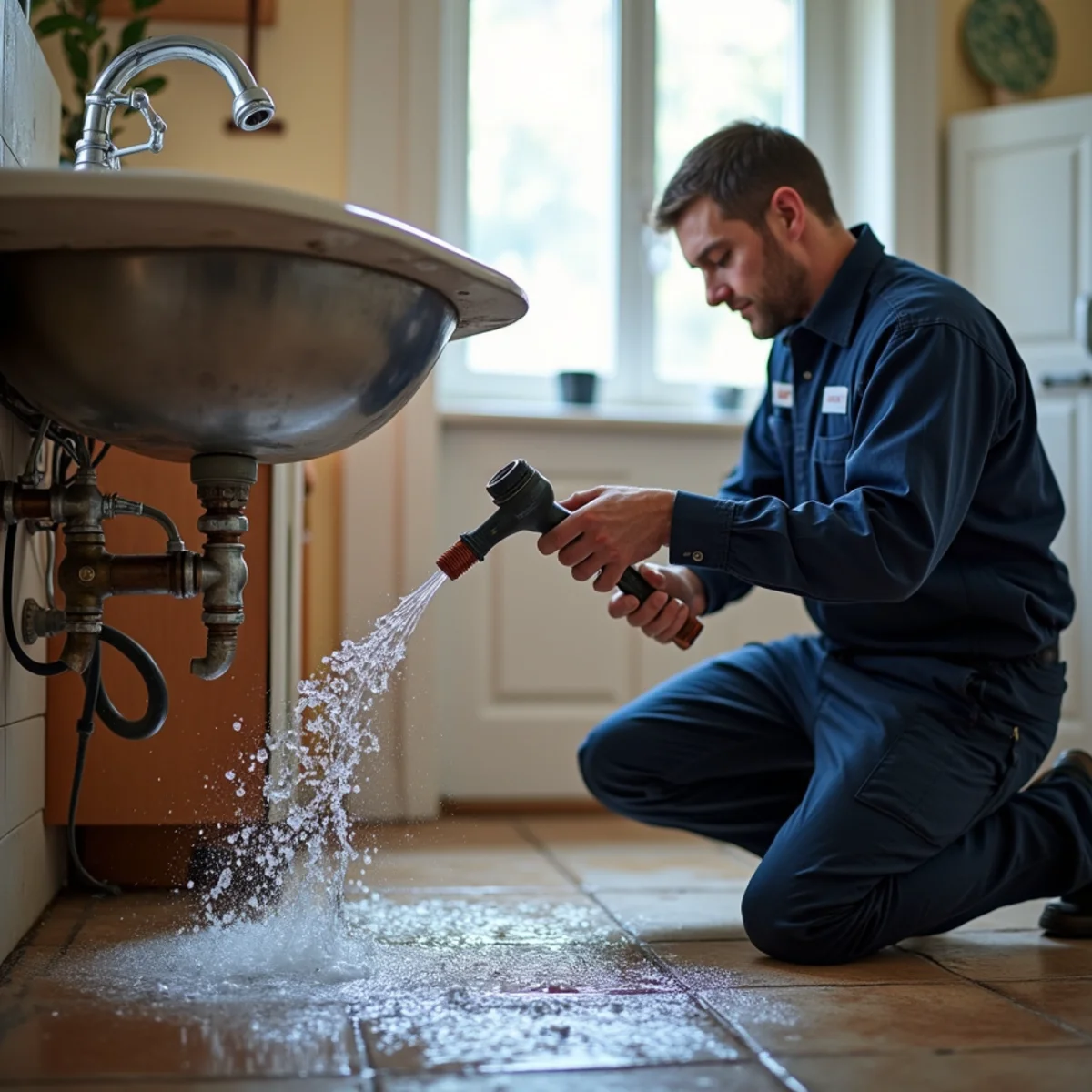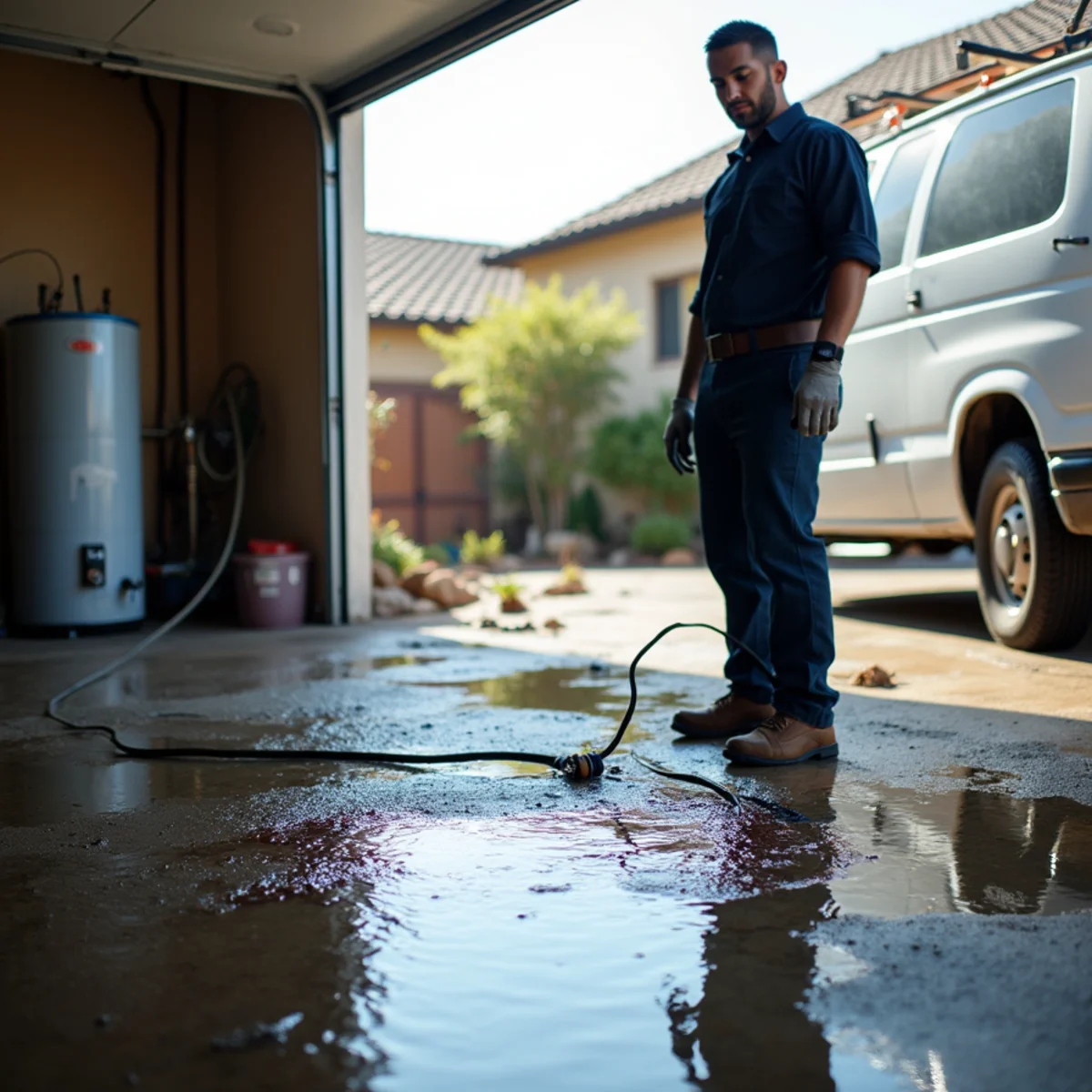
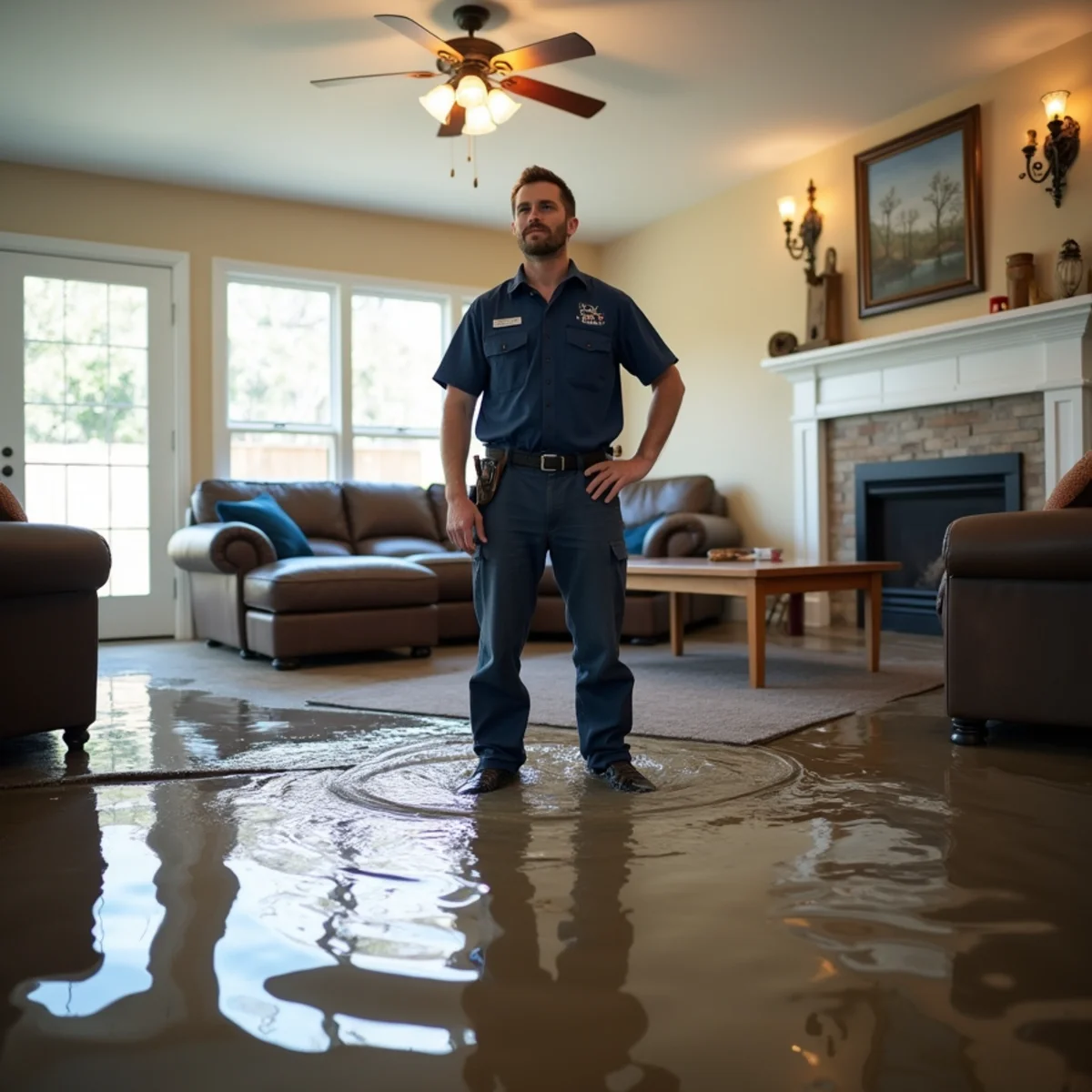
Before you step into standing water, stop and treat it as a hazard until you know otherwise. Two things can hurt you in a flooded room: electricity traveling through the water, and contamination you cannot see or smell. If water has reached any outlet, appliance, or your electrical panel, shut off the power at the breaker before you go in — and if you cannot reach the panel without standing in water, leave it and get out.
Whether it is safe to stay comes down to how much water there is, what is in it, and whether it has compromised the power or the structure. A clean inch from a burst supply line in one room is usually fine to be around once the power is handled. Several inches of storm or sewage water across the house is not. Here is how to make that call, what to avoid, and who to call first before our flood cleanup crew arrives.
First: Is the Water Safe to Be Near?
Run this check before anything else. Two hazards decide whether you can safely work the problem or need to get out.
- Electrical. If water touches outlets, plugged-in appliances, or the panel, assume the water could be live. Shut off power at the breaker only if you can reach it without standing in water. If not, stay out.
- Contamination. Clear water from a supply line is Category 1. Water from a storm, a sewer backup, or that has picked up chemicals is Category 2 or 3 and carries a health risk. Cloudy, smelly, or dark water is not safe to wade through.
- Gas. If you smell gas, leave immediately and call the utility from outside.
- Depth and spread. A shallow, contained spill is manageable. Water across multiple rooms, or rising water, is a leave-now situation.
When You Should Leave the House
Some conditions mean the safest move is to get everyone out and wait for professionals. Leave if any of these are true.
- The power is on and water has reached outlets or the panel, and you cannot safely shut it off.
- The water is sewage or storm water — it carries bacteria and contaminants that make staying unhealthy.
- The ceiling is sagging or floors feel soft or spongy, which can signal structural failure.
- You smell gas, or the water is still rising and you cannot find or reach the source.
Who to Call First — in Order
When several things need calling, the order matters. Handle safety before property, and work down this list.
- 1. Utility or 911 if there is an electrical or gas hazard you cannot safely control, or if anyone is in danger.
- 2. Your water shutoff — stop the source if it is plumbing and you can reach the valve safely.
- 3. A restoration company to extract the water and start drying. The faster water comes up, the less it damages and the lower the mold risk.
- 4. Your insurance company to open a claim. Restoration crews work with adjusters every day and can start mitigation before the adjuster arrives — you do not have to wait.
What Not to Do in a Flooded House
A few common instincts make things worse or dangerous. Avoid these while the water is still down.
- Do not use a household vacuum or plug anything in near the water.
- Do not wade through dark or smelly water without boots and gloves — you cannot see what is in it or what is under it.
- Do not run fans yourself on contaminated water; that pushes the contamination into the air.
- Do not throw everything out before you photograph it. Document first, for the insurance claim.
Getting the Water Out Before Mold Starts
Concord sits in a valley drained by Mt. Diablo Creek and the Walnut Creek channel, and winter storms push runoff into low-lying and older neighborhoods faster than people expect. In established areas like Ygnacio Valley, a single heavy atmospheric river can put water into homes that have never flooded before.
However safe it is to stay, the water needs to come out fast. Mold can start in 24 to 48 hours, and the category of the water sets the whole cleanup plan — our guide to why Category 1, 2, and 3 water are handled differently explains what that means for your home. Call us any hour at (201) 277-9344 and we will get a crew out to extract, dry, and tell you plainly whether it is safe to stay.
Pro insight: shut the HVAC, and check your flood coverage
One move restoration crews make on arrival that homeowners rarely think of: shut the whole HVAC system off, at the thermostat and the breaker. A running furnace or air handler pulls damp air up off the wet floor and drives it through every room in the ductwork — and when the water is contaminated, it is spreading bacteria and mold spores with it, seeding problems in rooms the water never touched. While you document, mark the high-water line on a doorframe before it recedes; that one reference tells an adjuster and a crew how deep it got and how high the walls must be opened.
The detail that catches people hardest comes later. A standard homeowners policy covers sudden internal water — a burst pipe, an overflow — but not flood, meaning water that rises in from outside. That protection only comes from a separate flood policy. Homes in the low-lying, creek-fed stretches of Ygnacio Valley and greater Concord can take on storm runoff and find the loss is not covered at all. If water has ever reached your home before, confirm whether you carry flood coverage now, on a dry day — not while you are standing in it.
Frequently asked questions
Related pages
Water Concord
IICRC-certified water damage restoration, based in Concord and serving all of Contra Costa County. We answer 24/7 — if you’re dealing with water damage right now, call (201) 277-9344.