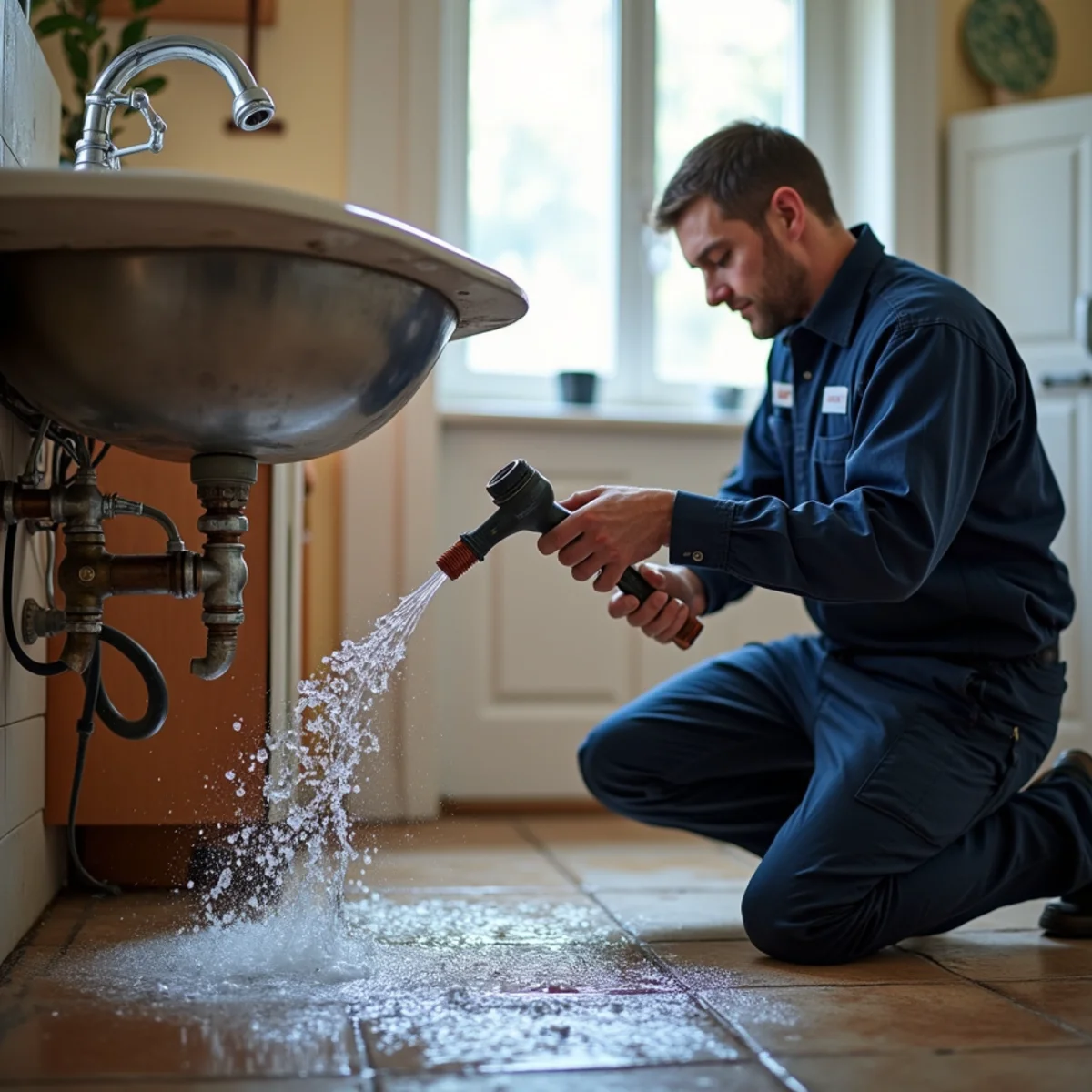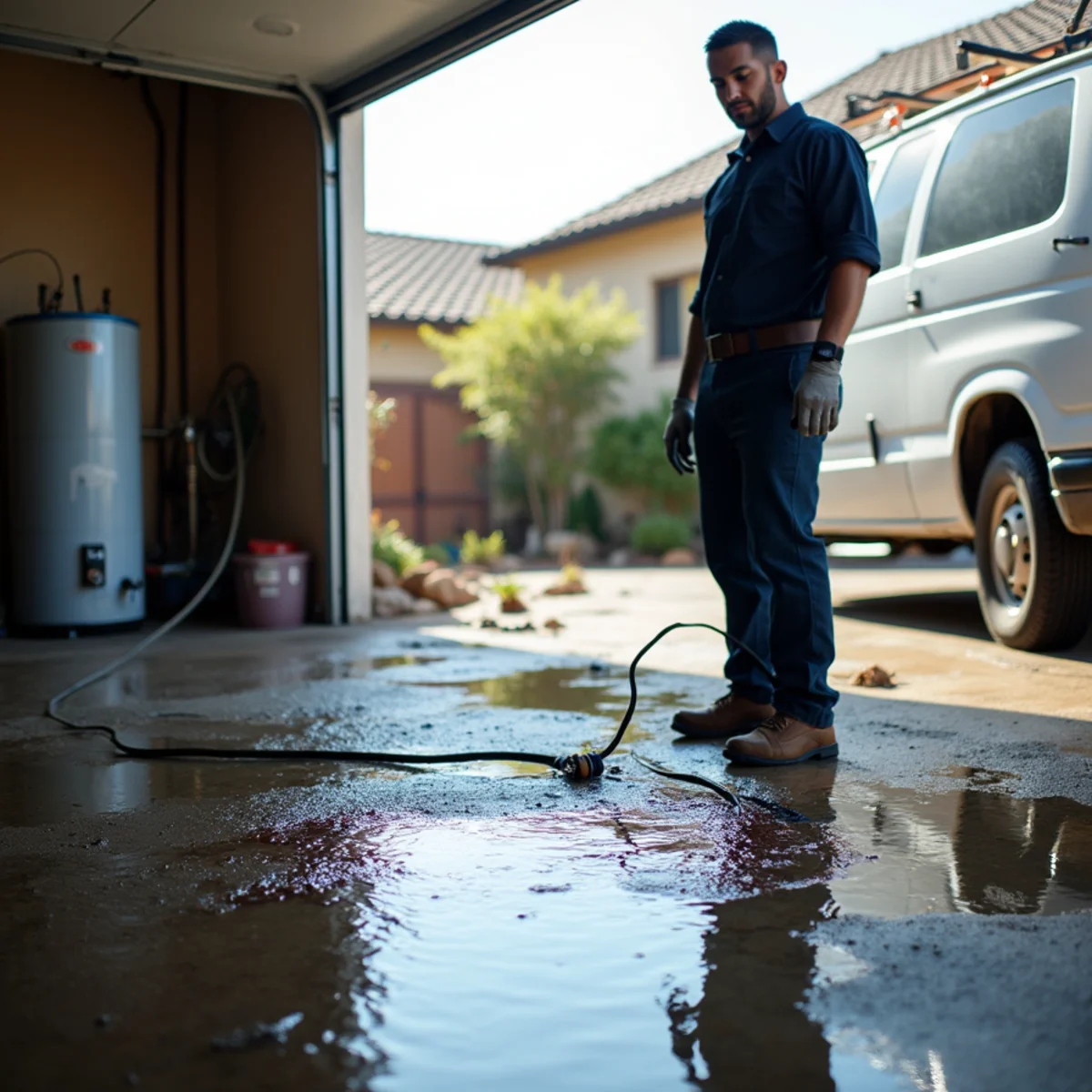
Go find your main water shutoff right now, while nothing is wrong. Walk to it, put your hand on the valve, and make sure you could close it in the dark. The middle of a flood — water spreading, adrenaline up, phone in one hand — is the worst possible time to learn you do not know where it is or that it is painted shut.
In every emergency call we take, the homeowners who limit the damage are the ones who found the valve in the first minute. The ones who lose a room spent that minute searching. Finding and testing your shutoff is a ten-minute job that pays for itself the first time a hose bursts. Here is where it usually hides, how to turn it off, and how to make sure it works before you ever need our emergency water removal crew.
Where Your Main Shutoff Usually Is
Most homes have two places to shut off the water: a valve on the house side, and the utility's valve at the street meter. Learn both. Start inside or at the house perimeter, where the main line enters.
- Where the main line enters the house — look on the street-facing wall, since the line runs in from the meter at the street.
- In the garage, often on the wall near the water heater or where the pipe comes up through the slab.
- In a utility closet or basement in older homes.
- At the water meter, usually in a covered box near the street or sidewalk. This valve needs a meter key or a wrench to turn.
The Two Valves You Have — and Which to Use
The house-side valve shuts off water to your home while leaving the meter live. Use this one for most emergencies — it is faster to reach and needs no tool. The street-side valve at the meter shuts off everything, including the line between the meter and the house, and is your backup if the house valve is stuck or the leak is in that outside line.
Know both, because the day you need them you may find the house valve seized. Homes across Pleasant Hill and Concord's older tracts often have original valves that have not been turned in decades and no longer close all the way.
How to Actually Turn It Off
There are three common valve types, and they close differently.
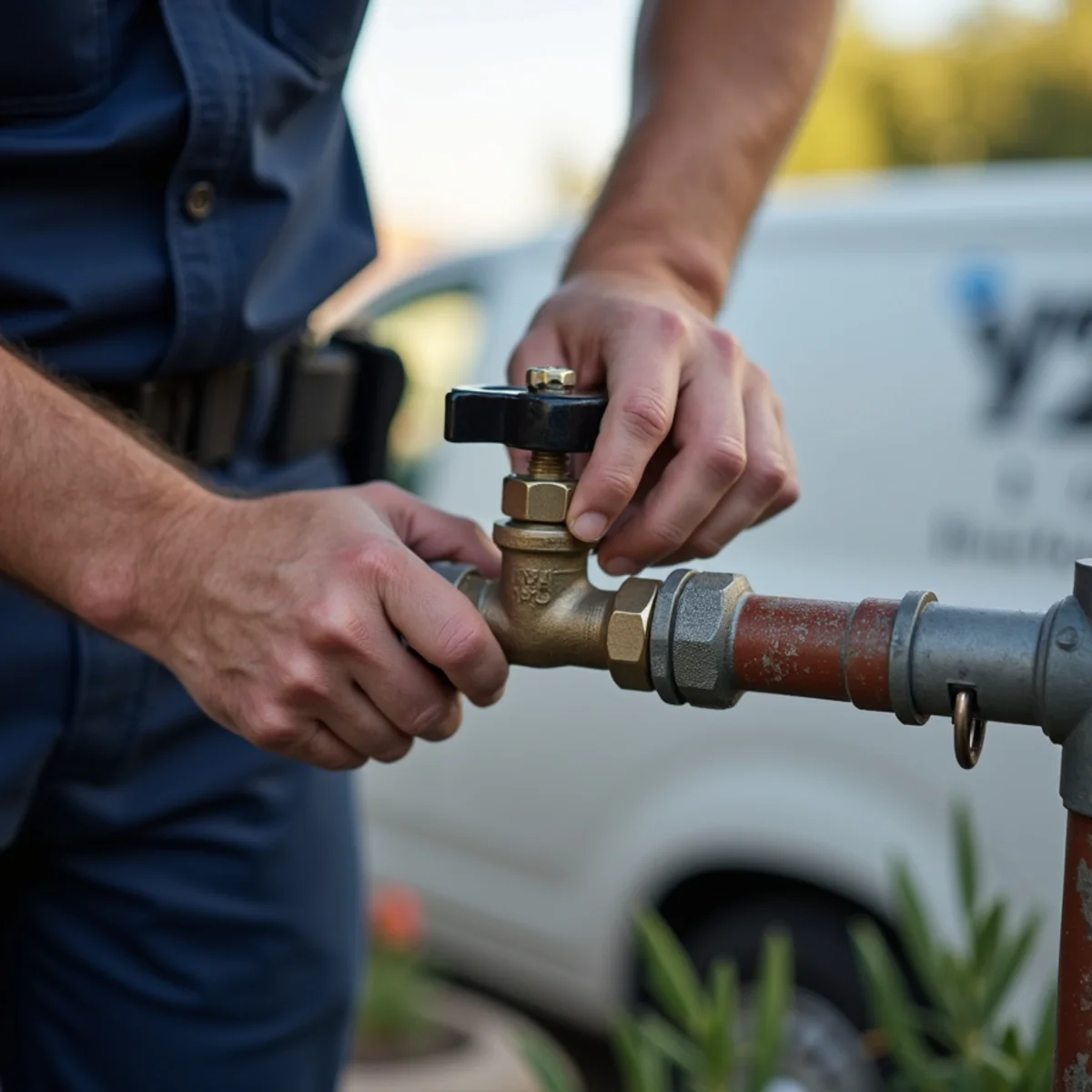
- Ball valve — a lever handle. Turn it a quarter-turn so the handle sits crosswise to the pipe. This is the easiest and most reliable type.
- Gate valve — a round wheel handle. Turn it clockwise and keep turning; it takes several full rotations to close completely.
- Meter valve — at the street, a slot or nut that needs a meter key or crescent wrench. Turn it a quarter-turn until it is crosswise to the pipe.
- Turn it the whole way. A half-closed valve still lets water through. Close it until it stops, then check that flow at a faucet has actually stopped.
Test It Before You Need It
A shutoff valve you have never turned is a valve you cannot trust. Old gate valves in particular seize open, or close but never fully seal, or snap at the stem when you finally force them. Find that out on a calm afternoon, not at midnight.
Once a season, close the valve, confirm the water stops at a faucet, then reopen it. If it is stuck, leaks, or will not seal, have a plumber replace it — swapping an old gate valve for a modern quarter-turn ball valve is a small job that makes every future emergency easier.
Make Sure Everyone Can Find It
A shutoff only helps if the person standing there when the pipe bursts knows how to use it. Tie a bright tag to the valve, show every adult and older kid in the house where it is, and keep a meter key near the door if your only reliable shutoff is at the street.
If you want to take it a step further, a smart water sensor or automatic shut-off valve can close the main for you when it detects a leak — worth considering if you travel or the house sits empty during the day. And keep our number where you can find it: (201) 277-9344. Shutting the water off buys you time; a fast call uses it well.
Pro insight: know your water pressure, not just your valve
Finding the shutoff is half of being ready; the other half is knowing what your plumbing fights every day. Most people never measure their water pressure, and high pressure is one of the quiet reasons hoses, valves, and joints let go in the first place — the upstream cause behind many a burst pipe. A gauge that threads onto an outdoor hose bib costs a few dollars, and anything over 80 psi is above what code allows and is steadily stressing every connection in the house. If yours reads high, a plumber can add or adjust a pressure-reducing valve — the single upgrade that takes strain off the whole system you just learned to shut down.
While you are at the meter, learn its leak indicator — the small triangle or star-shaped dial that turns on even the slightest flow. Shut off every fixture and appliance, then watch it: any movement at all means water is escaping somewhere you cannot see. It is the same check we run first on a call, and it will catch a running toilet or a slab leak long before it becomes the emergency this guide is written for. Pair that habit with a shutoff you have actually tested, and you are genuinely ready — not merely informed.
Frequently asked questions
Related pages
Water Concord
IICRC-certified water damage restoration, based in Concord and serving all of Contra Costa County. We answer 24/7 — if you’re dealing with water damage right now, call (201) 277-9344.