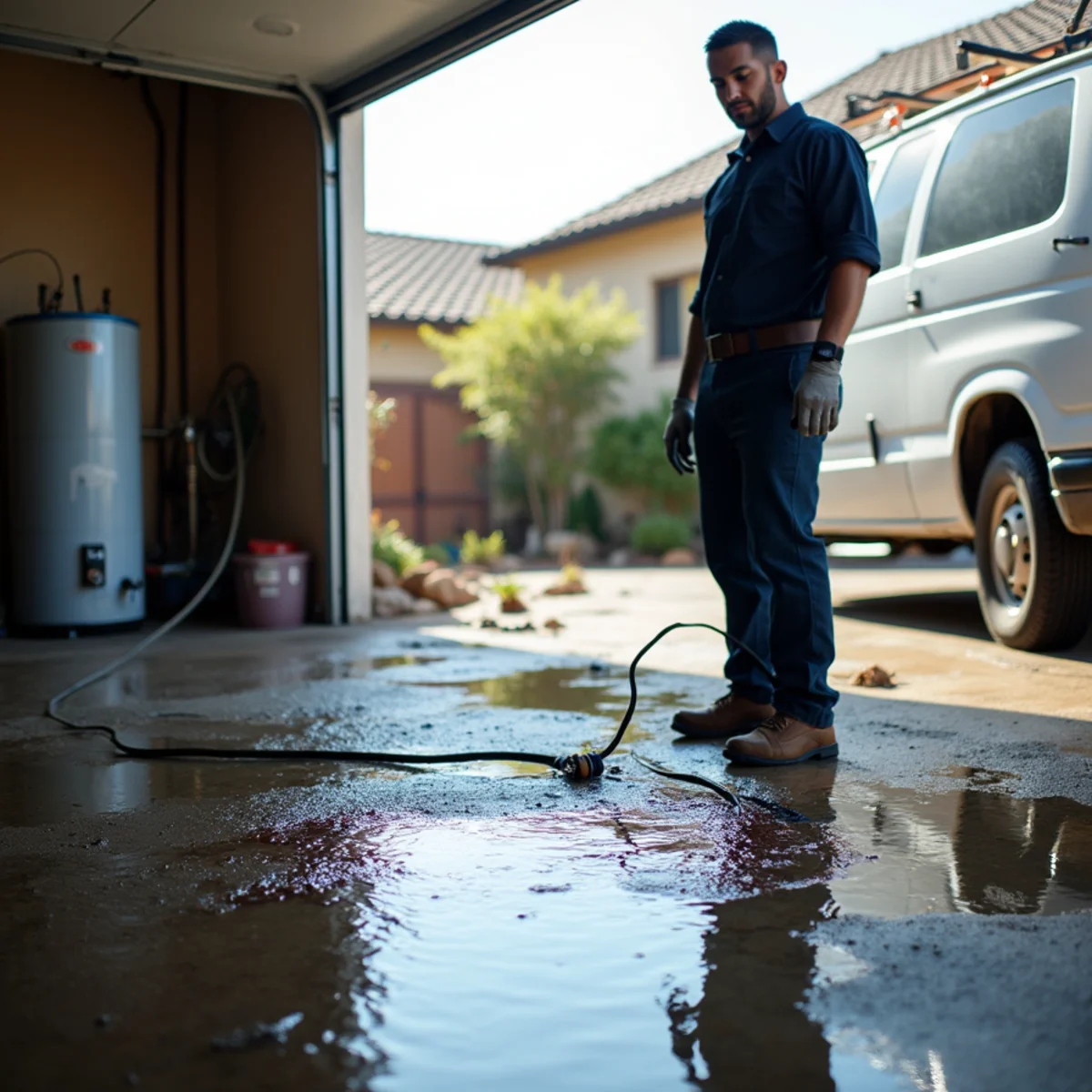

The worst leaks are the ones you cannot see. A pipe behind a wall or under the slab can run for weeks, quietly soaking the structure and inflating your bill, long before a stain ever appears to give it away. By the time there is visible damage, the leak has usually been at work for a while. The trick is learning to notice the quieter symptoms first.
Your home gives off signals when water is escaping where it should not be — you just have to know what they feel, sound, and cost like. Here are the most reliable signs of a hidden leak, a simple test you can run yourself, and when it is time for professional leak detection to pinpoint the source without tearing your house apart — a common need in the older tracts of West Concord.
Warm spots on the floor
A patch of floor that feels noticeably warmer than the area around it is one of the most telling signs of a hidden leak — specifically a hot-water line leaking under a concrete slab. As heated water escapes beneath the floor, it warms the surface above it, creating a spot you can sometimes feel with a bare foot. On tile or vinyl over slab, it can be surprisingly distinct.
If you notice a warm zone with no radiant heating to explain it, treat it as a serious clue. Slab leaks on the hot side often show themselves this way before any moisture surfaces, and catching one here saves a lot of flooring.
A water bill that climbs for no reason
Your water bill is a leak detector you already pay for. A hidden leak sends water down the line around the clock, and that shows up as usage you cannot account for. If your bill jumps while your habits have not changed — no houseguests, no new irrigation, no filled pool — water is very likely going somewhere it should not.
Compare a few months side by side, and watch the trend rather than a single spike. Our post on a spike in your East Bay water bill digs into how to read the numbers. A steady, unexplained climb is one of the earliest and most dependable signs a leak is running behind the scenes.
The sound of running water when everything's off
Stand still in a quiet house with every faucet, appliance, and fixture off, and listen. If you hear a faint hiss, trickle, or the sound of water running inside a wall or under the floor, that is water moving through the plumbing when nothing should be drawing it. It is one of the more unsettling leak symptoms, and one of the more reliable.
Put an ear near walls, along the floor, and close to where plumbing runs. A persistent running-water sound with no fixture on is a strong reason to shut the water off and investigate before the damage spreads.
Other tells worth knowing
Beyond the big three, hidden leaks leave a scattering of smaller clues. Any one of these on its own might be minor; two or three together point clearly to a leak:
- A musty or earthy smell in a room that should be dry, from moisture feeding mold in a wall or floor.
- Stains or discoloration creeping across drywall, ceilings, or baseboards.
- Peeling paint or bubbling where trapped moisture is pushing the finish off the wall.
- A drop in water pressure as water escapes before it reaches your fixtures.
- Cracks in the foundation or floor, which a long-running slab leak can worsen over time.
- Unusually lush or soggy patches in the yard over a buried supply or sewer line.
The meter test you can do yourself
There is a simple check that turns suspicion into evidence. Turn off every water-using fixture and appliance in the house, then find your water meter and read it. Wait one to two hours without using any water, and read it again. If the meter moved, water left the system somewhere — and with everything off, that means a leak.
For a faster version, many meters have a small low-flow indicator, often a triangle or dial, that spins when any water is moving. If it turns with everything shut off, you have confirmation. It will not tell you where the leak is, but it tells you there is one, which is the moment to bring in the tools that can pinpoint it.
The West Concord angle: aging pipes under older tracts
Much of West Concord was built out in the post-war decades, and homes of that era are now at the age where original galvanized and early copper plumbing starts to fail. Hard East Bay water accelerates corrosion from the inside, so pinhole leaks and slab leaks become more common as the pipes pass the half-century mark. Many of these homes also sit on concrete slabs, which is exactly where the warm-spot symptom shows up.
For West Concord homeowners, the takeaway is to take the quiet symptoms seriously rather than waiting for a stain. Non-invasive leak detection can locate a hidden leak in these homes precisely, so the repair is a targeted fix instead of a demolition project.
Pro insight: prove whether it's the hot line before anyone opens the floor
Once the meter test confirms a leak, there is a simple next step that narrows it enormously, and most homeowners never hear about it. Before you even call for detection, you can often tell whether the leak is on the hot side or the cold side — worth knowing because warm-floor slab leaks are almost always on the hot line.
Here is the test we walk people through. With every fixture off and the meter's low-flow indicator still spinning, close the cold-water inlet valve on top of the water heater. If the indicator stops moving, the leak is downstream of that valve, on the hot-water side. If it keeps spinning, the leak is on the cold side. Either way you have handed your technician a real head start that shrinks the search area before any equipment comes out.
It is a five-minute check with genuine payoff, because a tighter starting zone means faster pinpointing and a smaller access hole. A warm spot plus a hot-side confirmation points strongly to a slab leak under the concrete — exactly the case where precise location, not exploratory demolition, saves your floor.
Frequently asked questions
Related pages
Water Concord
IICRC-certified water damage restoration, based in Concord and serving all of Contra Costa County. We answer 24/7 — if you’re dealing with water damage right now, call (201) 277-9344.