
Most hidden leaks are not discovered by sight or sound. They are discovered on a bill. A water statement that jumps 30, 50, or 100 percent with no change in how your household uses water is one of the most reliable signals that water is escaping somewhere you cannot see — behind a wall, under the slab, or out in the yard line.
A single high bill can be a fluke. A pattern, or one dramatic spike, deserves investigation before the leak does structural damage or feeds mold. This guide walks East Bay homeowners — from central Concord out to the Pleasant Hill border — through confirming a hidden leak, narrowing down where it is, and knowing when to bring in professional leak detection.
Rule out the ordinary first
Before assuming the worst, account for the obvious. A month with houseguests, a new irrigation schedule, a filled pool or hot tub, or a season change that had you watering more can all push a bill up legitimately. Compare the spike against the same month last year, not just last month, since outdoor water use swings with the weather.
If none of that explains it — same household, same habits, same season, and the bill still jumped — you are likely looking at a leak. The next step is to confirm it with the one tool every home already has: the water meter.
The meter test that confirms a hidden leak
Your water meter is a leak detector you already own. Here is the check:
- Shut off every water fixture inside and outside — faucets, the dishwasher, the washing machine, the irrigation, and the ice maker.
- Find your meter, usually in a box near the street or sidewalk, and look at the low-flow indicator — often a small triangle, dial, or star that spins with even tiny flow.
- Watch it for a few minutes. If it is moving with everything off, water is flowing somewhere it should not be. You have a leak.
- Isolate inside versus outside. Shut off the valve where the main line enters the house and recheck. If the meter stops, the leak is inside; if it keeps moving, it is in the service line or irrigation between the meter and the house.
Where hidden leaks hide
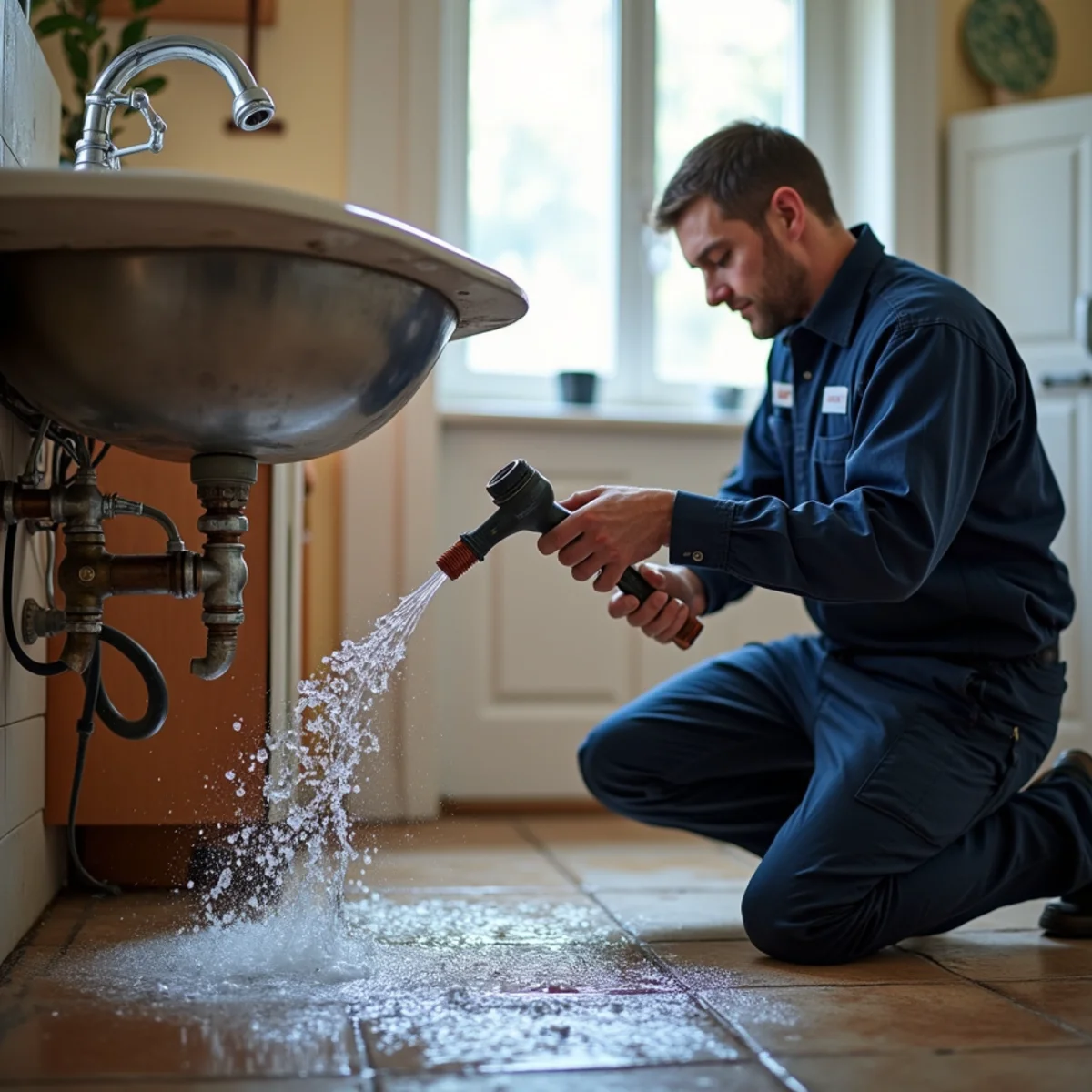
A confirmed leak with no visible water usually means one of a few places. Inside a wall, a corroded supply line or a failed fitting can spray or weep behind the drywall, showing up first as a damp spot, a bubble in the paint, or a musty smell. Under the slab, a failed pressurized line — a slab leak — escapes into or beneath the concrete, and the tells are subtle: a warm spot on the floor from a hot-water line, the faint sound of running water, or an unexplained damp patch of flooring.
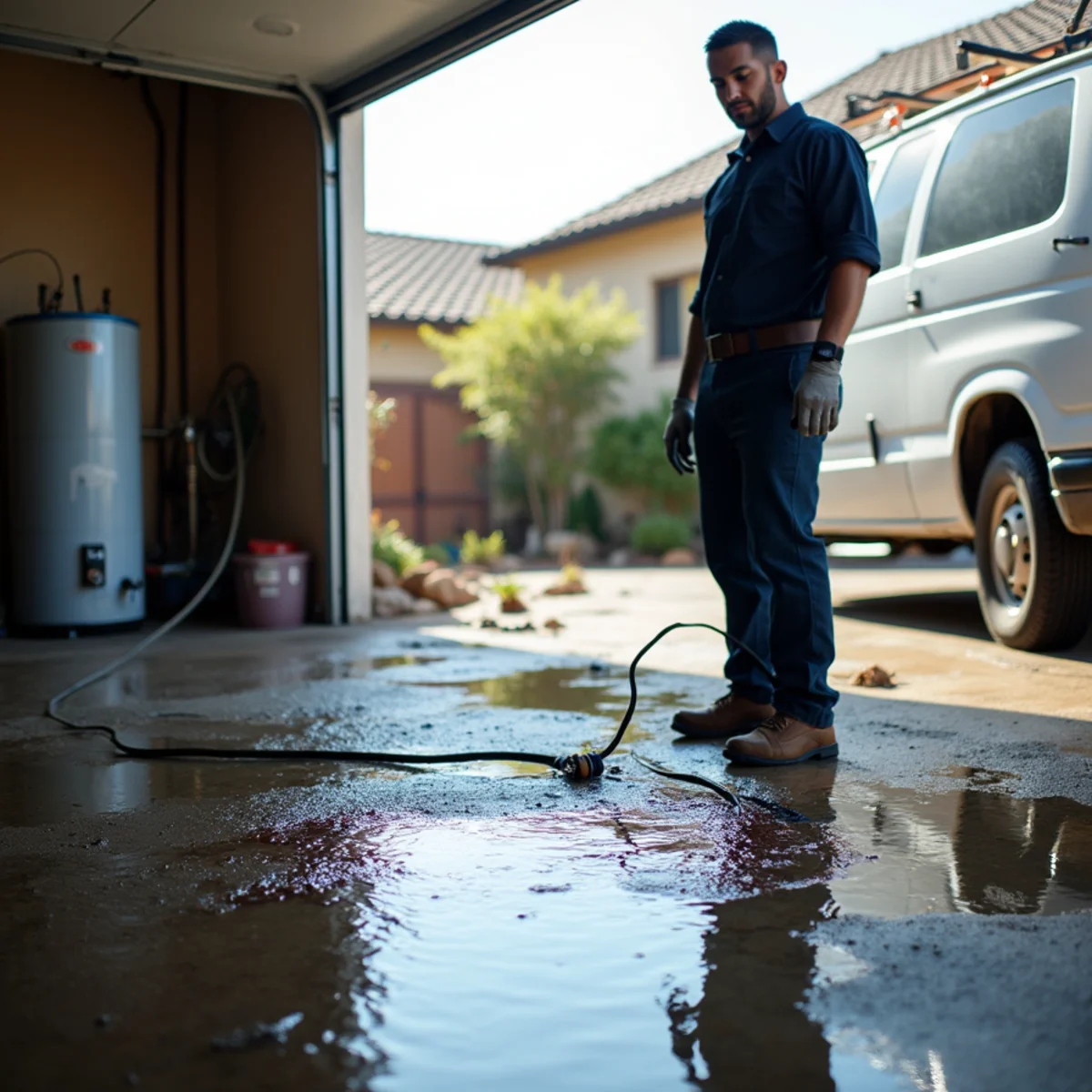
Out in the yard, a break in the service line or an irrigation leak can run for weeks without a trace at the surface, especially in the rainy season when the ground is already wet. The meter isolation test above is what tells you which of these zones to focus on.
The other signs that back up the bill
A high bill rarely arrives alone. Look for these corroborating clues:
- Warm or hot spots on a slab floor, which point to a hot-water slab leak.
- The sound of running or trickling water when everything is shut off.
- A drop in water pressure that showed up around the same time as the bill.
- Musty odors, discolored drywall, or paint that bubbles near the base of a wall.
- An unusually green or soggy patch in the yard over the service line.
When to call for professional leak detection
If the meter confirms flow and you cannot see the source, that is the point to stop guessing rather than open a wall or a floor at random. Professional leak detection uses acoustic listening equipment, pressure testing, and moisture meters to pinpoint the leak location before anything is cut open. For slab leaks in particular, that precision is what saves your floor — our explainer on how pros find slab leaks without tearing up your whole floor shows how it works.
The economics favor acting early. A hidden leak wastes water you are paying for every single day it runs, and the longer it soaks the structure, the more you eventually spend on drying, repairs, and mold you could have prevented. The bill that alarmed you is actually doing you a favor by catching it.
From detection to cleanup
Once the leak is located and stopped, whatever water has already escaped has to be dealt with. Saturated drywall, wet insulation, and a damp subfloor do not dry on their own, and mold can start within 24 to 48 hours of the material getting wet. Professional extraction and structural drying return the affected area to a safe moisture level and head off the secondary damage.
We serve homes across Concord and out to the Pleasant Hill border, find the leak, dry what it touched, and document the loss for your insurer. The sooner the spike on your bill turns into a service call, the smaller the whole problem stays.
After the fix: get the wasted water credited back
One more move once the leak is fixed: try to get the wasted water credited back. Most East Bay water providers offer some form of one-time leak adjustment — a partial credit on the abnormally high bill — when a customer repairs a qualifying hidden leak and submits the plumber's invoice as proof. The programs carry rules and deadlines, so call your water district as soon as the repair is done and ask exactly what they need. That single call can claw back a real share of a spiked bill.
While you have them on the line, ask to enroll in high-usage or continuous-flow alerts. Many providers now run smart meters that can text or email you when flow looks like a leak — days or weeks earlier than a paper bill would, which is the whole point of catching these early. Two things make both the credit and any insurance claim go smoothly: act promptly, and keep the paper trail — the dated repair invoice, before-and-after photos, and your meter readings. That is exactly what a utility and an adjuster each want to see. If the leak soaked drywall or subfloor on its way, our structural drying crews dry it out and document the loss for the claim.
Frequently asked questions
Related pages
Water Concord
IICRC-certified water damage restoration, based in Concord and serving all of Contra Costa County. We answer 24/7 — if you’re dealing with water damage right now, call (201) 277-9344.