Hard water rarely announces itself. It shows up as a chalky film on the shower glass, spots on the dishes, and a water heater that groans a little more each year. Behind the walls, though, that same mineral content is doing something less visible and more expensive: it is speeding the corrosion of older galvanized steel pipe throughout Contra Costa County.
If your home still runs on its original galvanized plumbing, the combination of hard East Bay water and decades of flow is working against you. This is a practical guide to how that corrosion happens, why it is common in older Concord and county neighborhoods, and the early signs that tell you to bring in leak detection before a corroded line opens up.
What makes water 'hard' — and why pipes care
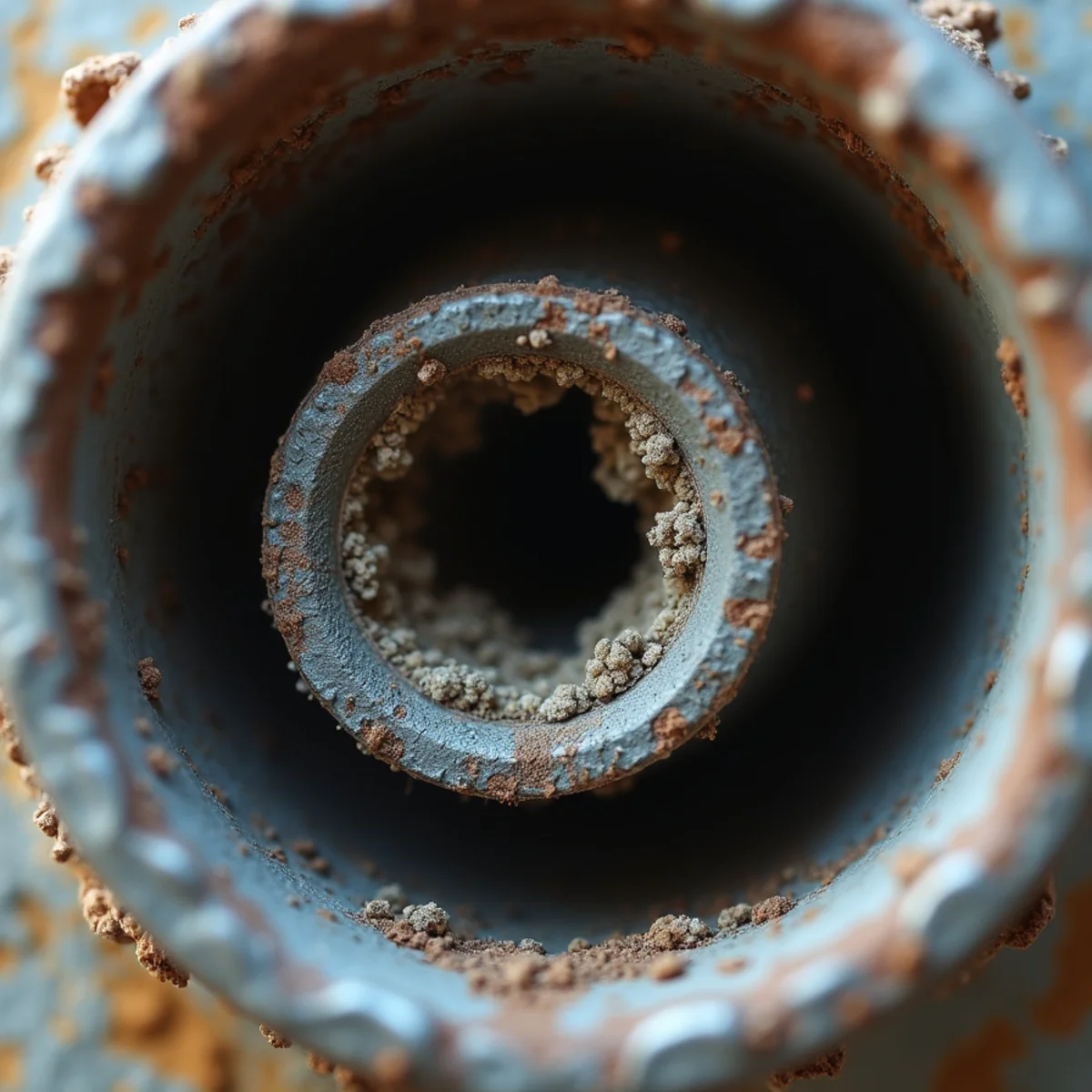
Hard water simply means water carrying dissolved minerals, mostly calcium and magnesium. It is not a health hazard, and plenty of Contra Costa homes run on it without a second thought. The trouble is what those minerals do over years inside metal pipe. They drop out of solution and build up as scale, coating the interior walls and collecting in the low spots and elbows.
In copper, scale is mostly a nuisance. In galvanized steel, it is an accelerant. The mineral buildup traps moisture against the steel, creates rough surfaces where corrosion takes hold, and works alongside the water to strip the protective zinc faster than clean, soft water would.
How galvanized pipe actually fails
Galvanized pipe was the standard in homes built through the mid-twentieth century, and a lot of Contra Costa County housing dates to exactly that era. The pipe is steel dipped in zinc. The zinc is sacrificial — it corrodes first and protects the steel underneath. That works well for decades, which is why these homes went so long without trouble.
Once the zinc wears through, the exposed steel rusts. Rust takes up more space than the metal it replaces, so it builds inward as tuberculation, choking the pipe's diameter. Flow drops. Pressure drops. And the pipe wall itself thins from the inside until a pinhole or a split opens — usually at a threaded joint or a horizontal run where sediment collects.
Why Contra Costa's older neighborhoods see more of it
The corrosion clock runs on two things: the age of the pipe and the water flowing through it. Established neighborhoods with original mid-century plumbing have both working against them. In areas like Holbrook Heights and the older Concord tracts, we regularly find homes on their original galvanized supply lines, now decades past the point where the zinc gave out.
The failures cluster because the housing does. When a street was built and plumbed in the same couple of years, the pipe ages together and starts leaking together. One neighbor's kitchen leak is often a preview of what the rest of the block will call about over the next few winters.
The early warning signs at your fixtures
Your faucets tell you more about your pipes than most people realize. Watch for:
- Weak flow that got worse gradually, not overnight — the signature of a pipe narrowing from tuberculation.
- Discolored water, rusty or yellow-brown, especially at the first draw in the morning or after a vacation.
- Hot water that runs weaker than cold, since heat accelerates corrosion and the hot lines usually clog first.
- Staining in tubs, sinks, and on laundry that no amount of cleaning fully prevents.
- A metallic taste or a faint rusty smell from the tap.
Testing, monitoring, and catching leaks early
You do not have to guess. A basic water-hardness test tells you what your pipes are up against, and a look at exposed galvanized in the garage or crawlspace — where flaking, rust bloom, or heavy scale shows at the joints — tells you how far along the corrosion is. If pressure has been fading, that is your cue.
When a hidden leak is already suspected — a spot of unexplained moisture, a jump in the water bill, the faint sound of running water with everything off — professional leak detection can pinpoint it without opening walls at random. Pressure testing and moisture meters find the failing section so the repair stays small. Our rundown of hidden leak symptoms walks through the tells.
What to do when a corroded line finally goes
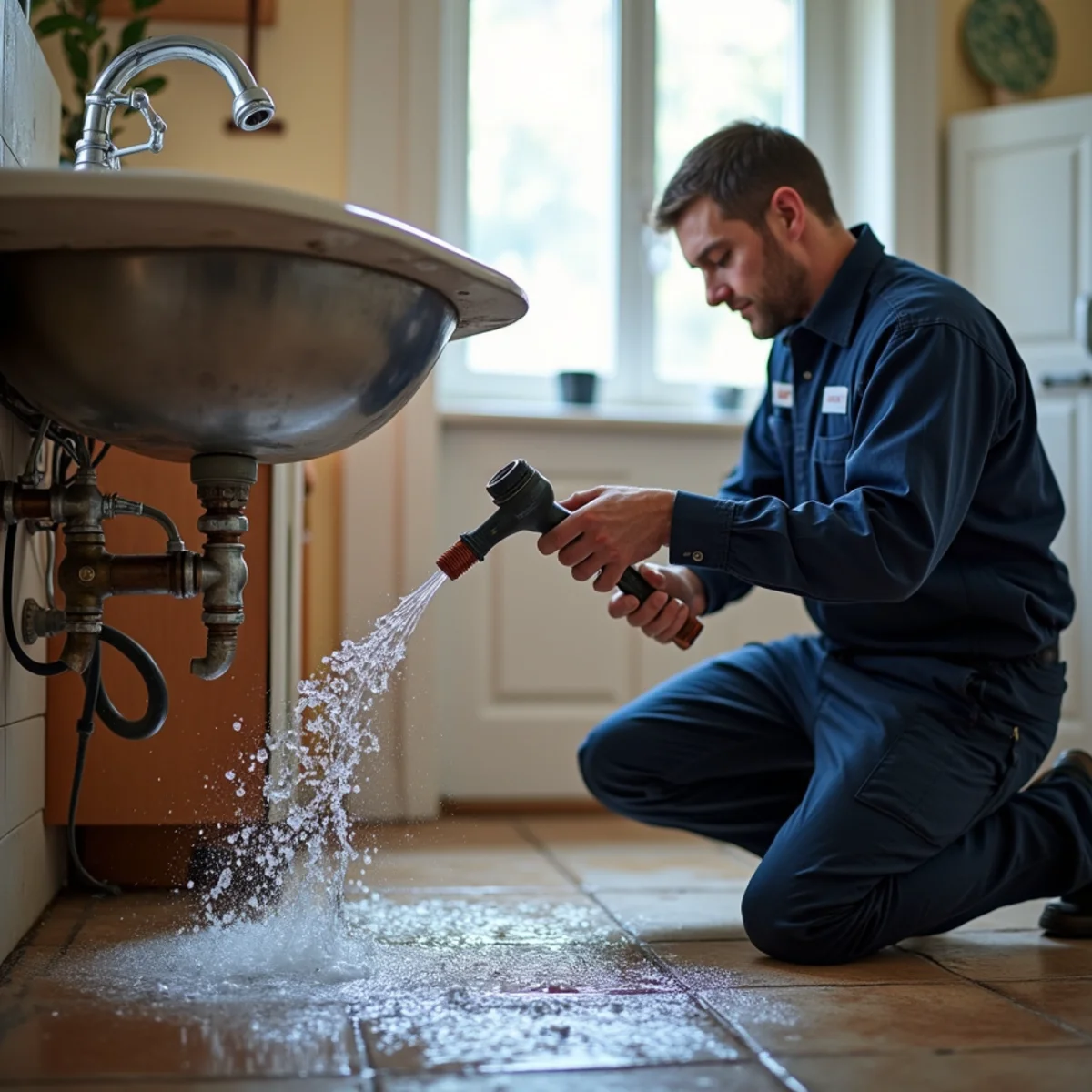
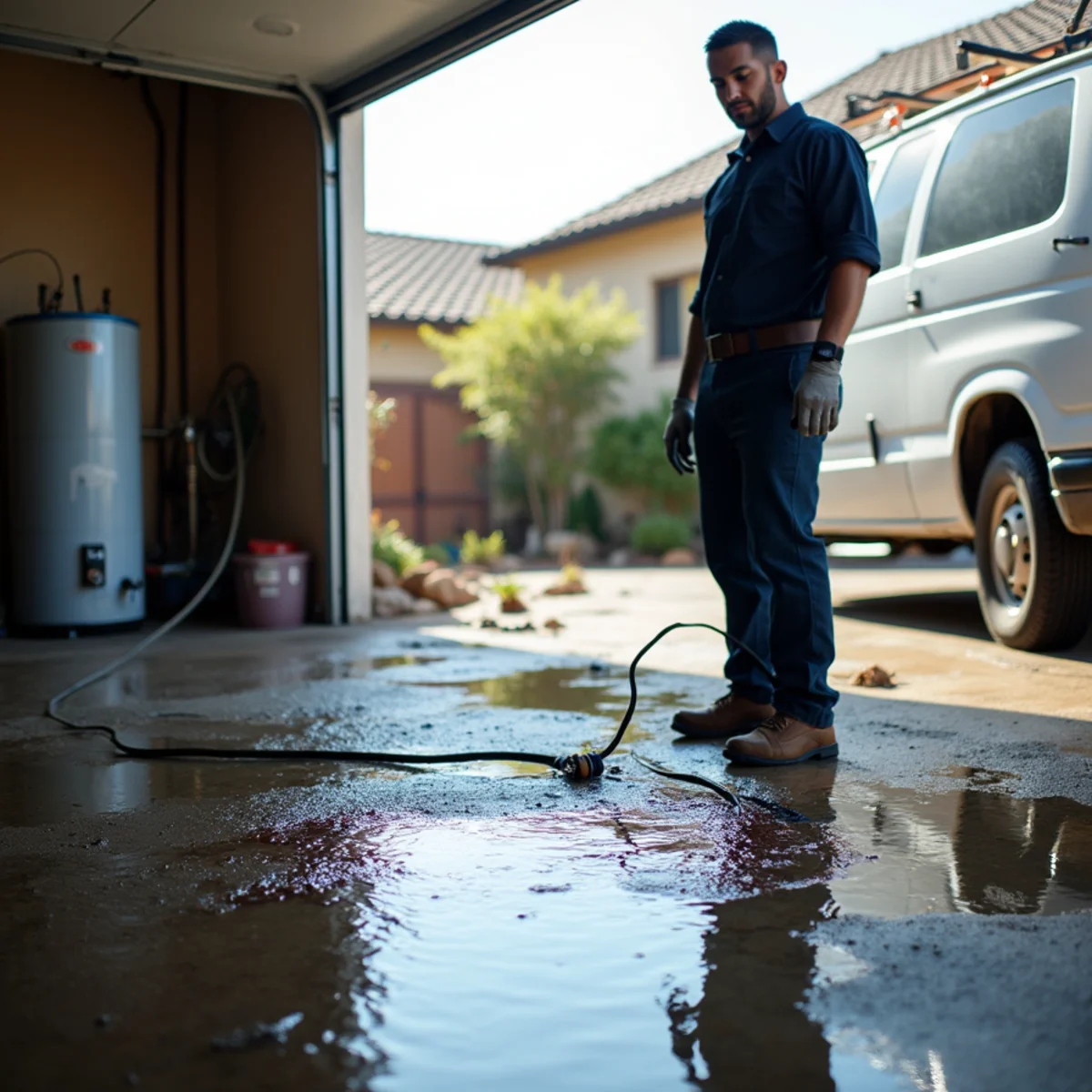
Corroded galvanized rarely fails politely. It splits at a joint or springs a pinhole that sprays inside a wall or cabinet, and because the pipe is old, the surrounding structure is often old too — plaster, original subfloor, materials that soak up water fast. Shut off the main, then get the water extracted and the structure dried before mold gets its 24-to-48-hour head start.
We handle the cleanup, document the damage for your insurer, and dry the structure to standard. If the same corroded plumbing keeps failing, that is the county's quiet signal that a repipe is coming due.
A repair detail that decides whether it lasts
Here is a detail that separates a lasting repair from a repeat visit: whenever new copper is joined directly to old galvanized steel, the two dissimilar metals form a small electrical cell, and the galvanized side corrodes faster right at the joint. A sound repair uses a dielectric union or a brass transition fitting to break that reaction. Plumbers working in a hurry sometimes thread copper straight onto galvanized to stop a leak fast — and the joint is corroding again within a couple of years. If a past patch on your line was done that way, it is worth a second look.
When a full repipe is not yet in the budget, the corrosion does not have to be tackled all at once. The horizontal hot-water runs go first, so replacing those worst sections buys years while you plan the rest. And one stretch many homeowners forget: the buried service line from the meter to the house is usually the same vintage of galvanized, and that section is the homeowner's responsibility, not the water district's. Across the older Contra Costa County neighborhoods we serve, that buried line often fails a season or two after the indoor pipe starts leaking.
Frequently asked questions
Related pages
Water Concord
IICRC-certified water damage restoration, based in Concord and serving all of Contra Costa County. We answer 24/7 — if you’re dealing with water damage right now, call (201) 277-9344.