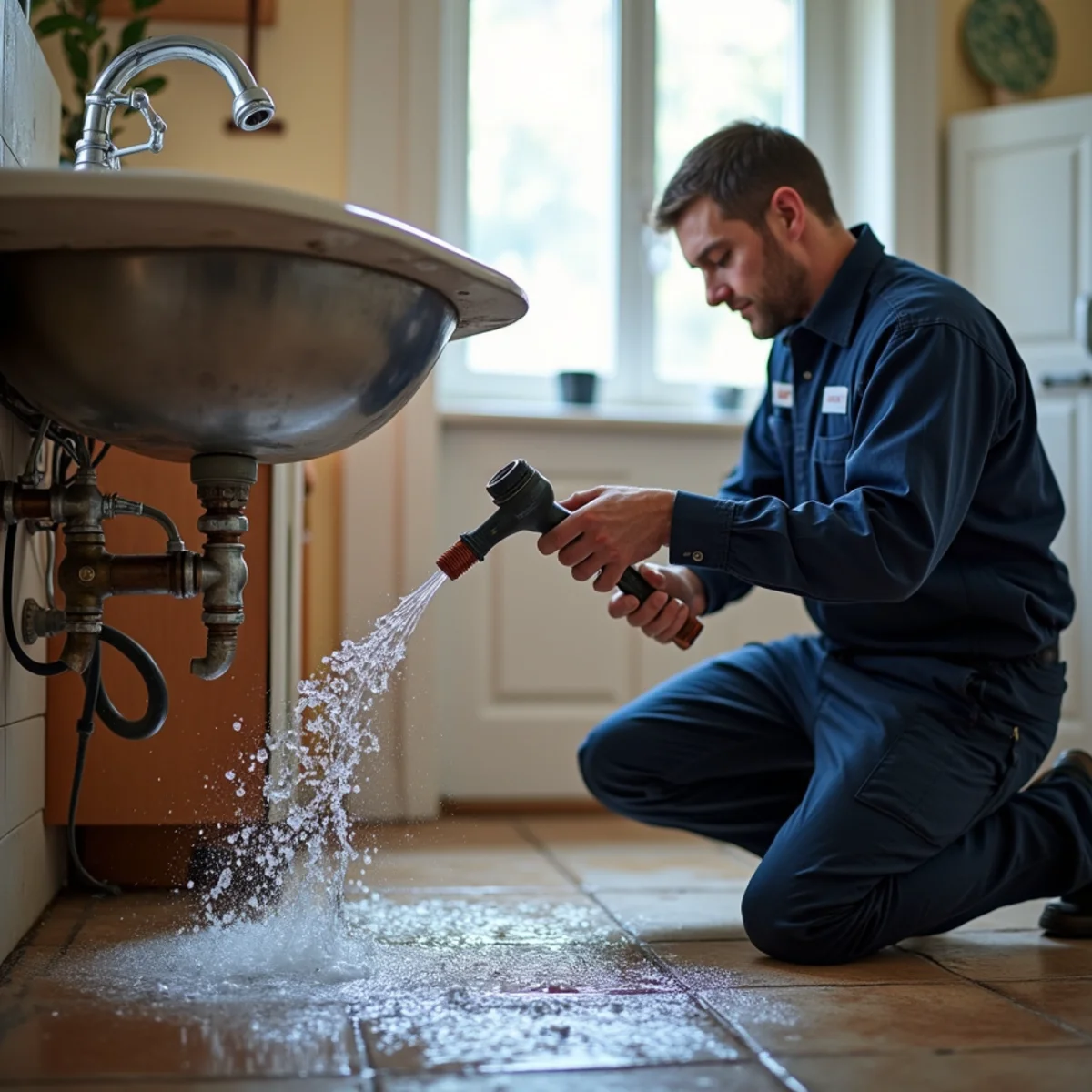
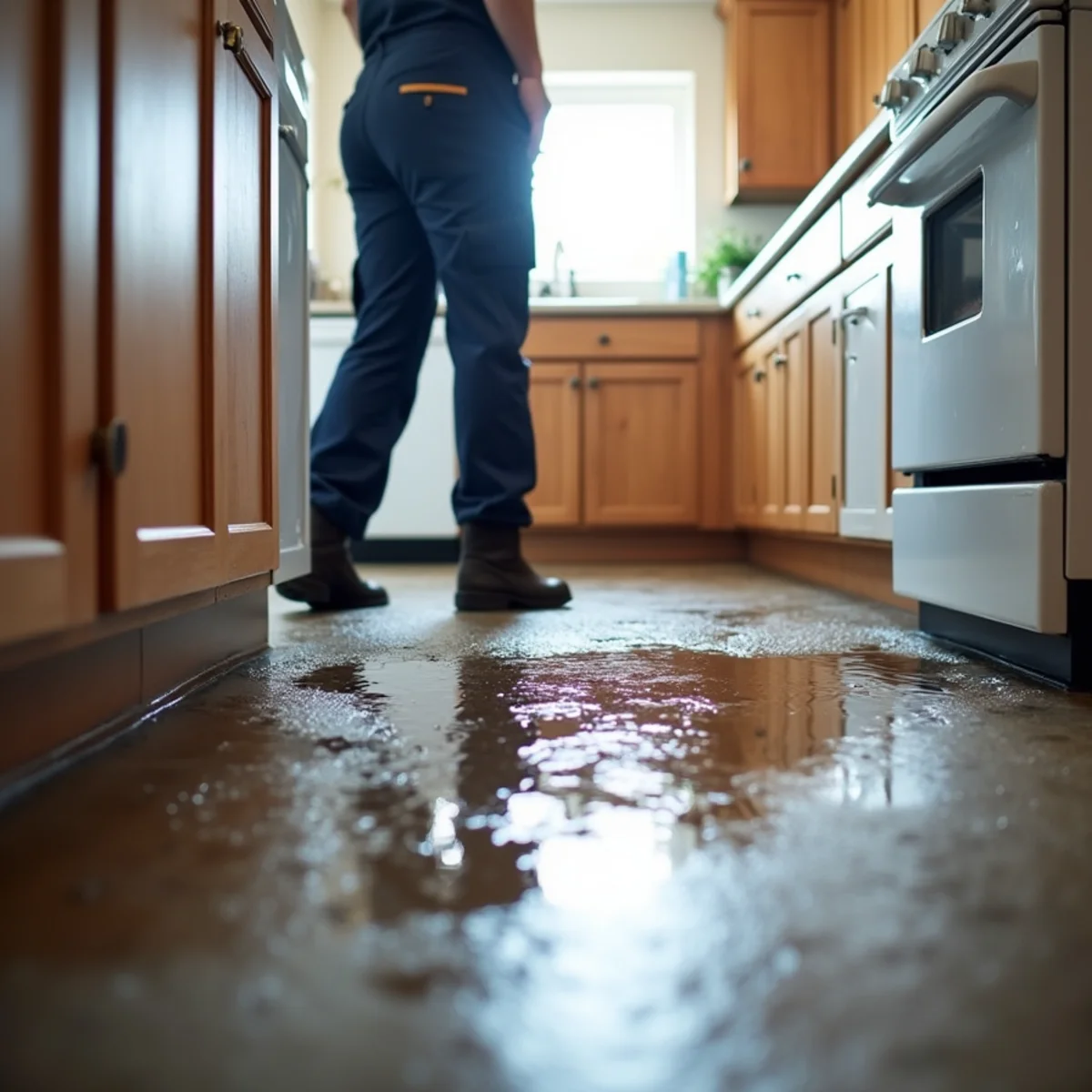
Open the cabinet under your sink and turn off the dishwasher's water supply — the small valve on the hot-water line feeding the machine, usually right next to the sink's own shutoff. Then switch off the dishwasher's breaker or unplug it. An overnight leak means the water has had hours to travel, so stopping the source and cutting the power are the first two moves before you deal with the puddle.
A dishwasher that leaks overnight is worse than one that fails while you are watching, for one reason: time. Hours of slow leaking pushes water under the cabinets, along the subfloor, and into the toe-kick and wall base where you cannot see it or reach it with a towel. The floor looks like a simple mop-up while the real damage hides underneath. Here is how to handle it, and when to call for professional water extraction.
Shut Off the Water and Power First
Two shutoffs, in this order.
- 1. Close the dishwasher supply valve under the sink — the small valve on the line running to the machine. Turn it clockwise until it stops. If you cannot tell which one it is, close the main water shutoff.
- 2. Cut the power. Switch off the dishwasher's breaker, or unplug it if the outlet under the sink is dry and reachable. Do not touch the plug if water has reached it.
- 3. Do not run the dishwasher to finish the cycle or test it. That only pumps more water onto the floor.
The Real Danger Is Under the Cabinets
The puddle in front of the dishwasher is the least of your problems. Overnight, water runs to the lowest, most hidden places — and in a kitchen that means under the base cabinets and into the subfloor.
Dishwashers sit in a recess with an open bottom, so a leak flows straight back and under the surrounding cabinets. From there it wicks into particleboard cabinet boxes, soaks the subfloor, and travels along the wall base. This is why a kitchen that looks dry after mopping can still be quietly rotting underneath — and why overnight leaks so often turn into mold jobs.
Pull the Standing Water and Check the Hidden Spots
Get the visible water up first, then chase where it went.
- Wet/dry vacuum the floor, then towel-dry.
- Open the under-sink cabinet and the ones beside the dishwasher. Pull everything out and feel for water on the cabinet bottoms.
- Check the toe-kick — the recessed panel at the base of the cabinets. Water pools behind it where you cannot see. Pop it off if you can.
- Look at the floor seams and the next room. Water travels under laminate and hardwood and can buckle it days later, and it can reach an adjoining room's wall base.
Get Air Into the Hidden Cavities
Surface drying is not enough for an overnight leak, because the water that matters is trapped where fans do not reach — under cabinets, behind the toe-kick, and in the subfloor. This is where homeowners most often think a leak is handled and get a musty smell or a warped floor weeks later.
Open cabinet doors, remove drawers, aim fans into the toe-kick space, and run a dehumidifier in the kitchen. But understand that air movers in the room do not dry a saturated cabinet base or subfloor on their own. Wet cabinetry and flooring often have to be lifted or opened to dry properly, and how long that takes depends on what is wet — our room-by-room drying timeline sets honest expectations.
When to Call a Crew
Call for a professional assessment if the leak ran for hours overnight, if the water reached under the cabinets or into an adjoining room, or if you have hardwood or laminate flooring that could buckle. Those are exactly the situations where surface drying leaves moisture behind.
A crew will find the wet cabinetry and subfloor with moisture meters, dry the cavities with the right equipment, and confirm it is dry before it molds. In kitchens across Turtle Creek and greater Concord, catching a hidden overnight leak early is the difference between drying the floor and replacing the cabinets. Call (201) 277-9344 and we will check what is wet beneath the surface.
Pro insight: pull the unit, and do not rush the floor
The cabinet toe-kick is not the only hidden reservoir — the floor directly beneath the dishwasher is, and you cannot dry it or even see it without easing the unit out of its bay. That is the step homeowners almost never take and crews always do: with the water and power already off, slide the dishwasher forward to expose the subfloor under it. While it is out, find where the water actually came from, because an overnight leak that is not traced simply happens again — the usual suspects are the inlet water valve, a cracked door gasket, or a loose drain-hose clamp at the disposal.
If hardwood or laminate has cupped, resist the urge to tear it out right away. Wood that swelled will often relax and lie flat again once the subfloor beneath it is fully and slowly dried, and replacing it too soon just means doing the job twice. Give it weeks, not days, and let a moisture reading — not the calendar — make the call. Reaching dry reliably is exactly what proper water extraction and structural drying are for; we have saved plenty of Concord floors that looked ruined the morning after simply by drying them instead of ripping them out.
Frequently asked questions
Related pages
Water Concord
IICRC-certified water damage restoration, based in Concord and serving all of Contra Costa County. We answer 24/7 — if you’re dealing with water damage right now, call (201) 277-9344.