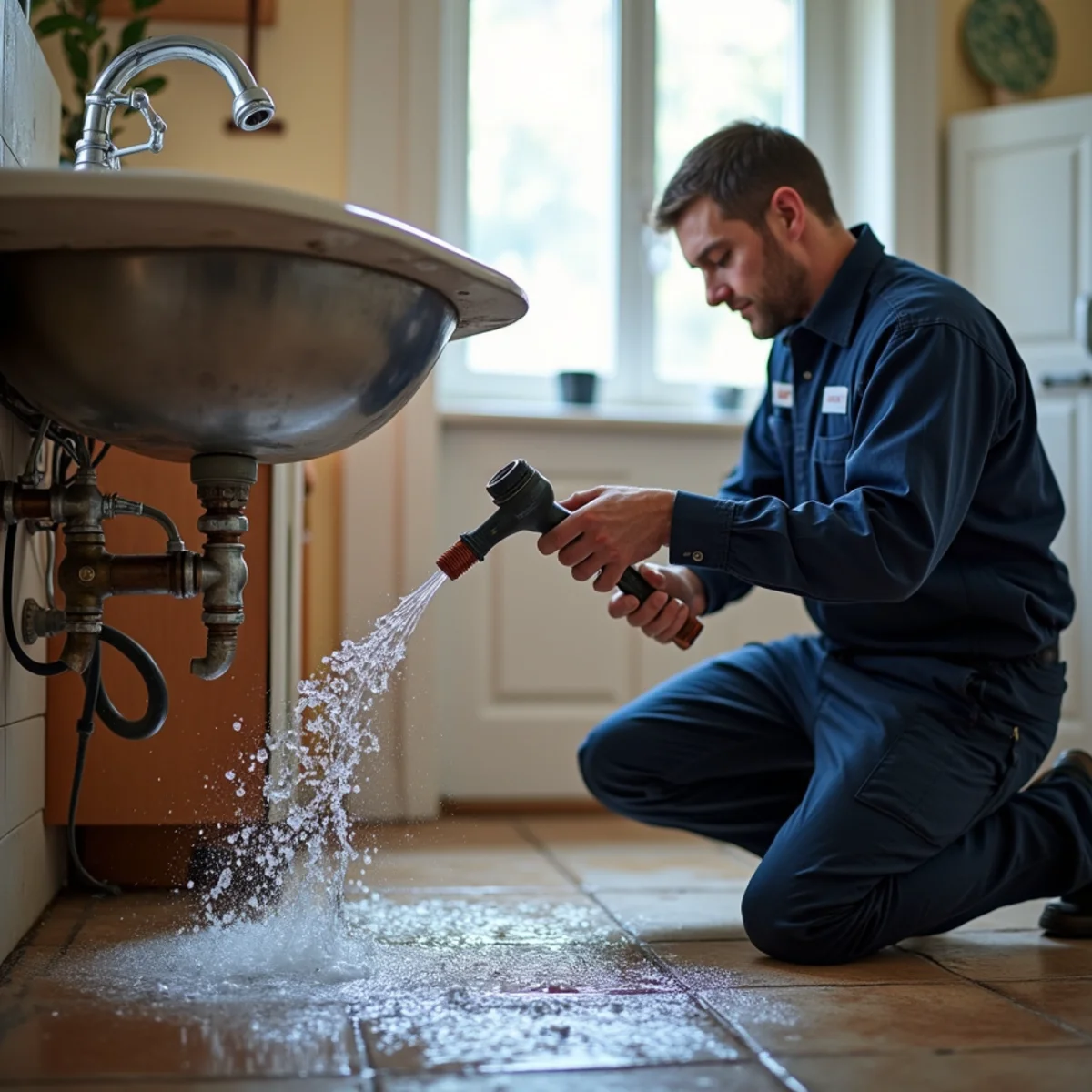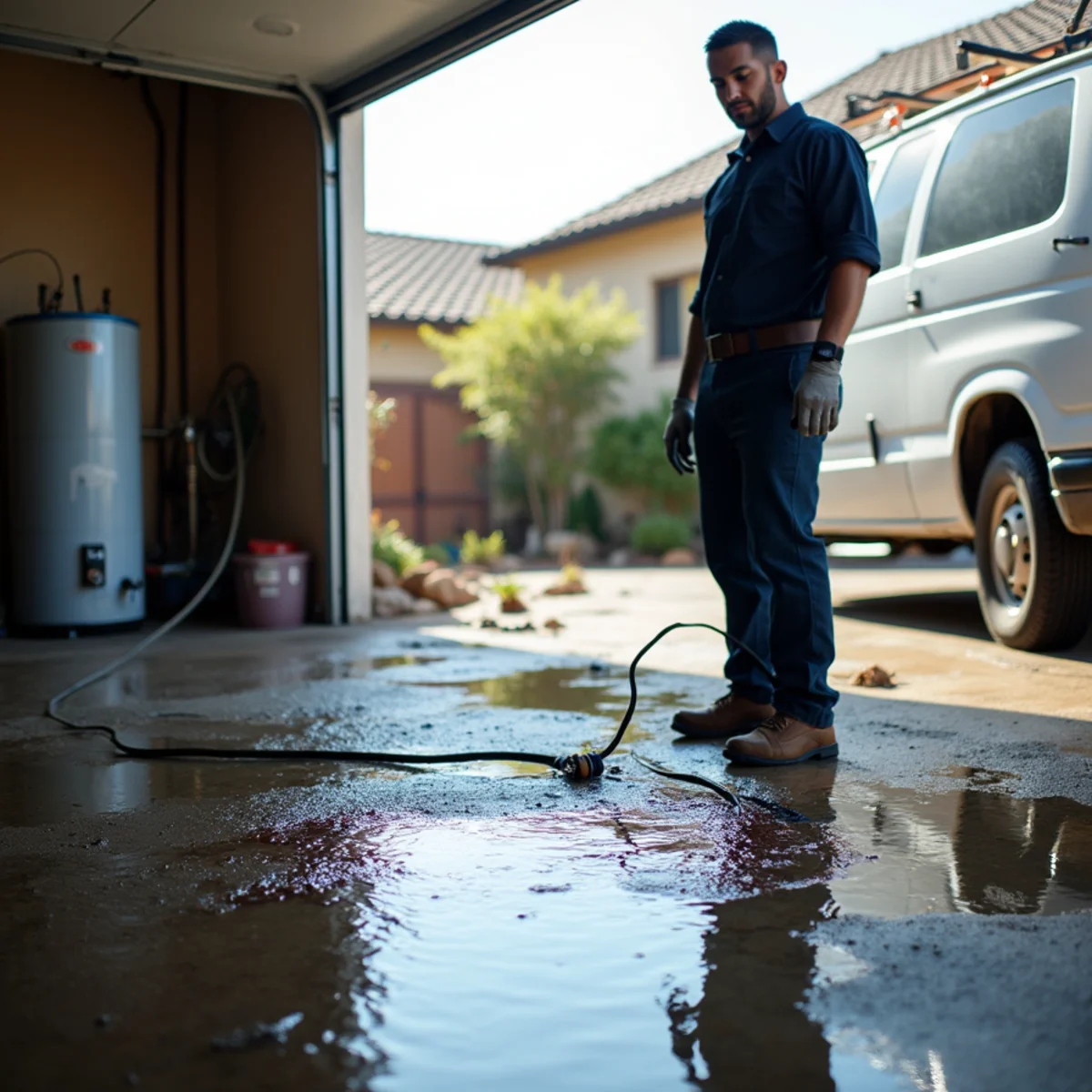
Walk any post-war tract in Concord and the houses look solid — low-slung ranch homes on quiet streets, many with the same owners for decades. What you cannot see is the plumbing threading through the walls and slabs. In a lot of these homes, that pipe was installed when Eisenhower was in office, and it is now living on borrowed time.
More than half of Concord's homes were built before 1979, and roughly a quarter went up before 1960. That puts the tracts built from the 1950s through the 1970s at the heart of what we call the repipe danger zone: original galvanized steel and early copper that has quietly corroded for decades. This is a plain-English look at why these homes are reaching a tipping point, what a failure looks like, and how to get ahead of it before a hidden line lets go behind a wall.
The building boom that is now coming due
Concord grew up fast after World War II. Returning service members, the expansion of nearby military facilities, and cheap land east of the hills turned orchard tracts into subdivisions almost overnight. Whole neighborhoods went up in a handful of years, framed and plumbed by the same crews using the materials that were standard at the time.
That compressed timeline is exactly the problem today. When hundreds of homes are built in the same few years with the same pipe, they also age on the same schedule. The plumbing that was normal in a 1958 tract home — galvanized steel supply lines, cast iron drains, and later thin-wall copper — was never meant to last 65 or 70 years. Much of it is now past the end of its service life all at once.
What 'end of life' means for galvanized and early copper
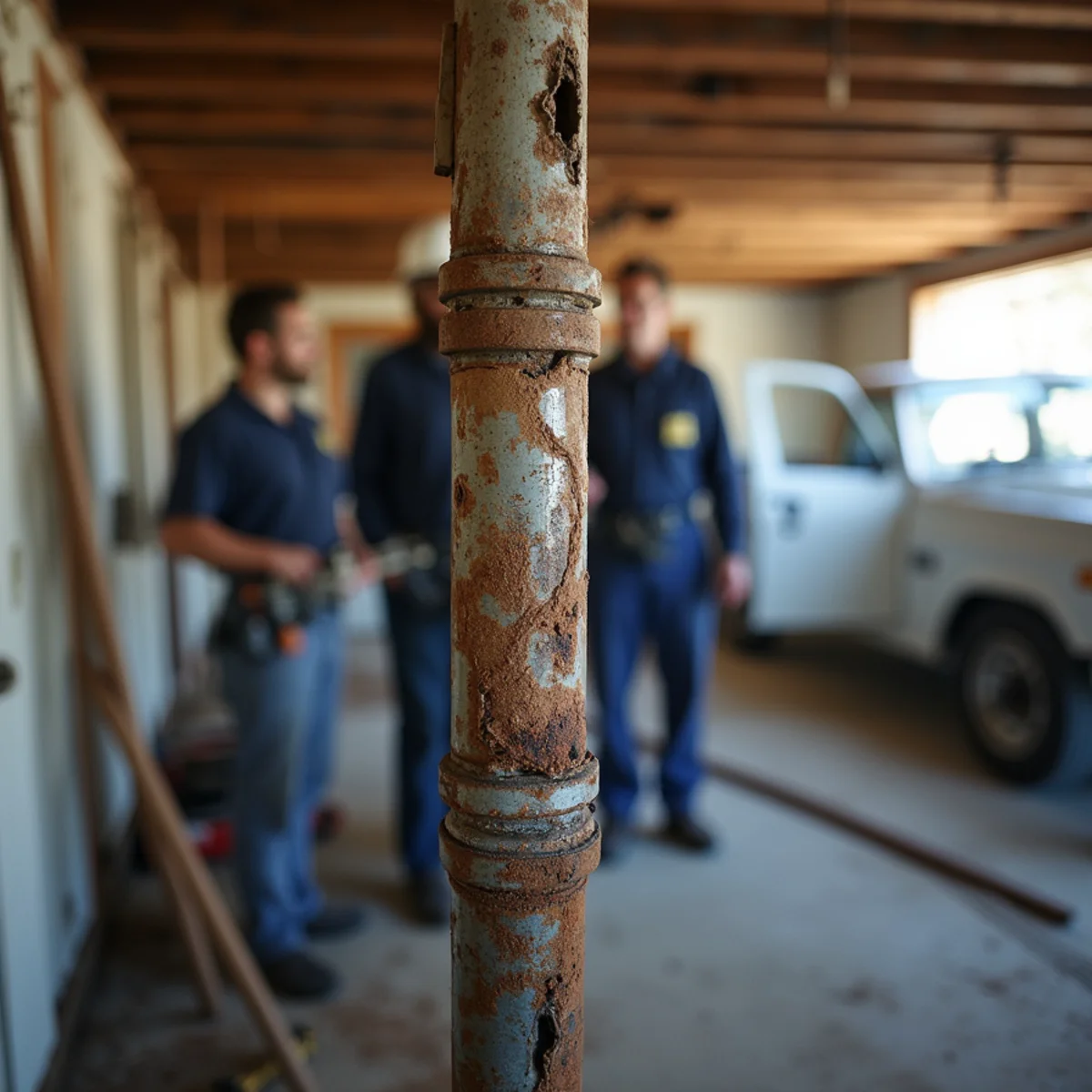
Galvanized steel pipe is steel coated with a thin layer of zinc. The zinc protects the steel from corrosion — until it does not. Decades of water flow strip the zinc away, and once bare steel is exposed, it rusts from the inside out. The rust builds up in layers called tuberculation, narrowing the pipe like plaque in an artery. You see the symptoms long before the leak: dropping pressure, rusty or metallic-tasting water, and hot lines that clog faster than cold.
Early copper has its own weak points. Thin-wall copper installed in mid-century homes can develop pinhole leaks, especially where water chemistry and high flow velocities wear the pipe from the inside. Copper buried in or under the slab is the bigger worry — when it fails, water escapes below the floor where you cannot see it, and you have a slab leak on your hands.
Hard East Bay water speeds the clock
Local water chemistry does these old pipes no favors. The mineral content in East Bay water leaves scale inside the lines and accelerates the corrosion already underway in aging galvanized steel. Every year the interior surface gets rougher, flow gets worse, and the thin spots get thinner. A home that might have gotten 70 years out of its pipe in a gentler climate can start failing sooner here.
Where we see it most in Concord
The pattern tracks the age of the housing stock. The tracts built through the 1950s and 1960s — including much of North Concord and the older military-era neighborhoods — sit squarely in the window. Homes that still have their original supply lines, that have never been repiped, and that are on their second or third water heater are the ones we get called to most.
It is rarely a surprise to the homeowner. Usually there were signs for months: a faucet that trickles, a rusty stain in the tub, a repair that fixed one leak only for another to show up a few feet down the same corroded run.
Warning signs your home is entering the danger zone
A single leak is a repair. A pattern of leaks is a message. Watch for these:
- Water pressure that keeps dropping, especially on the hot side, as tuberculation narrows the pipe.
- Rusty, brown, or metallic-tasting water, particularly first thing in the morning after water has sat in the lines.
- Repeat pinhole leaks — once you patch one spot on an old copper or galvanized run, others tend to follow.
- Warm spots on the floor or an unexplained jump in your water bill, which can point to a slab leak under the foundation.
- Visible corrosion or flaking at exposed pipe connections in the garage, crawlspace, or under sinks.
Repair the leak, then decide about the repipe
When a pipe fails in one of these homes, there are really two jobs. The first is urgent: stop the water, dry the structure, and repair the damage. If the failure happened under the slab, that means locating the leak precisely and handling the slab leak water damage restoration before moisture works into the framing and flooring. Fast leak detection keeps that first job small.
The second job is the long game. If your home still has its original galvanized or early copper and you are patching leak after leak, a whole-house repipe often costs less over five years than a running series of emergency repairs and the water damage that comes with each one. We do not sell repipes — we clean up after the leaks that make people finally schedule one. Our explainer on how pros find slab leaks without tearing up your whole floor is a good next read if you are weighing the decision.
Before you repipe: protect the claim and time the work
There are two practical moves most homeowners miss until a pipe forces the issue. The first is documentation. Homeowners insurance in California generally covers water damage that is 'sudden and accidental' — a line that bursts today — but routinely denies losses it can call gradual, such as a joint that has been weeping inside a wall for months. On a home still running original galvanized, that distinction decides your claim. Keep dated photos of every leak and repair, and hold onto the plumber's invoices; a documented history of prompt fixes is what keeps a slow-leak denial from sticking.
The second move is timing. A whole-house repipe is far cheaper when the walls are already open, so the shrewd play is to bundle it with a planned kitchen or bath remodel rather than waiting for the next failure. If a repipe is not in the budget yet, at least have a licensed plumber put the pipe material and condition in writing — some carriers now surcharge or decline to renew homes still on original galvanized, and a professional assessment gives you room to push back. When a line does let go before you are ready, fast burst pipe cleanup keeps both the damage and the claim small.
Frequently asked questions
Related pages
Water Concord
IICRC-certified water damage restoration, based in Concord and serving all of Contra Costa County. We answer 24/7 — if you’re dealing with water damage right now, call (201) 277-9344.