Search 'mold remediation cost per square foot' and you'll get a tidy number that falls apart the moment a real job starts. Two East Bay homes with the same visible patch of mold can cost very different amounts to remediate — because the mold you see is rarely the whole story.
The price is driven by how far the mold spread, where it's hiding, what kind of water fed it, and how much has to be sealed off to work safely. Understanding those factors tells you why estimates vary, and — more useful — how catching a problem early keeps it on the cheaper end. No fake prices here, just the levers.
Why 'cost per square foot' is a starting point, not an answer
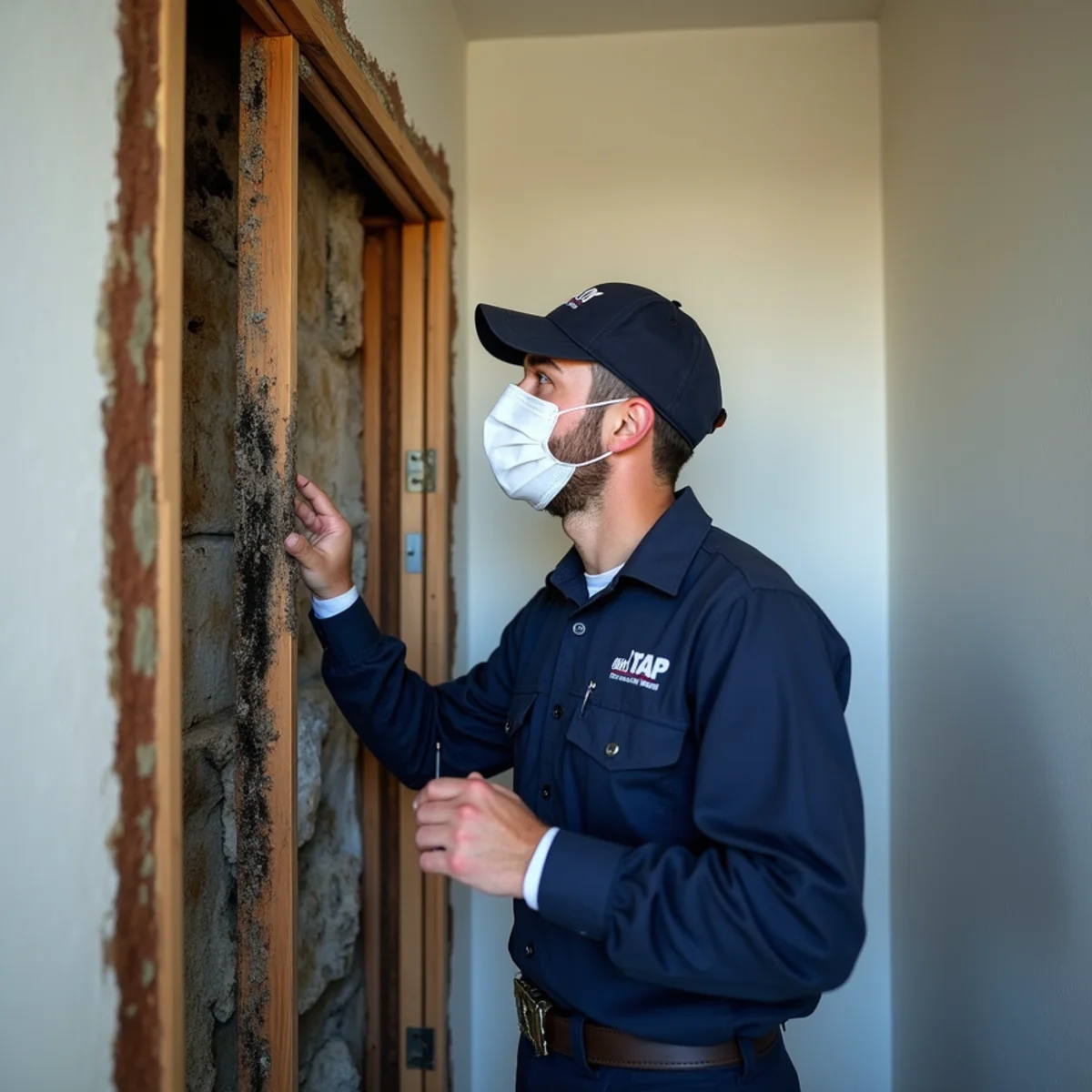
Square footage matters, but it's only one input. A small patch of surface mold on a tile bathroom wall is a straightforward job. The same-size patch inside a wall cavity, fed by a hidden leak and spread into the framing, is a different project entirely — containment, demolition, drying, and clearance testing all come into play.
So when you see a per-square-foot figure, treat it as the floor of a range. The factors below decide where a specific East Bay job actually lands.
The factors that push mold costs up
These conditions expand a remediation scope:
- Size and spread. More affected area means more containment, more removal, and more air scrubbing.
- Hidden locations. Mold inside wall cavities, under flooring, in the HVAC system, or in a crawlspace is harder to reach and remove than a surface patch.
- Water category. Mold fed by clean water is simpler than mold tied to gray water or Category 3 contamination, which demands stricter protocols.
- Structural involvement. When mold reaches framing, subfloor, or insulation, those materials often have to come out and be rebuilt.
- Containment needs. Sealing off the work area and running negative-air machines protects the rest of the home but adds labor and equipment.
- Clearance testing. Independent post-remediation verification adds cost, but it's how you prove the job worked.
The factors that keep mold costs down
Just as real are the things that shrink the job:
- Early detection. Mold can start within 24–48 hours of a leak. Catching it in days instead of months is the single biggest cost saver.
- A surface-only problem. Mold that hasn't penetrated porous materials is faster to treat.
- Fixing the moisture source first. Remediation that isn't paired with drying the source just invites regrowth — and a second bill.
- Good access. An open, reachable area costs less to contain and clean than a tight crawlspace.
Why East Bay homes see the problems they do
The East Bay hands mold a few advantages. Winter rain concentrated from December through March keeps humidity high and soaks crawlspaces. Older Concord and Antioch housing stock — much of it built before 1979 — hides original plumbing that leaks slowly behind walls. And homes closed up tight against the cold trap moisture inside.
Put those together and you get the classic East Bay scenario: a slow leak in an older wall, undetected for weeks, feeding mold through the framing before anyone smells it. That delay is exactly what turns a small job into a large one. Professional mold remediation in Concord starts by finding and drying that moisture source — otherwise you're paying to remove mold that will simply come back.
Does insurance help with mold?
Sometimes — and it hinges on the same rule as the rest of water damage. If mold results from a sudden, covered loss, such as a burst pipe you addressed promptly, your policy may cover remediation, though many California policies cap mold coverage at a set limit. If the mold grew from a gradual leak or deferred maintenance, it's usually excluded as a preventable problem.
As always, the specifics live in your policy. Some homeowners carry a mold endorsement that raises the cap; many don't. Check your mold coverage limit before you need it, and document any water event promptly to keep a covered claim covered.
How to keep your remediation on the low end
You have more control than it feels like. Fix leaks fast, keep humidity down, and don't wait to investigate a musty smell or a stain. The homeowners with the smallest mold bills are the ones who acted while the problem was still the size of a dinner plate — not after it spread through a wall. When water hits, dry it thoroughly and quickly, and the mold conversation often never has to happen.
Keep the crew that removes mold separate from the one that clears it
Here's a professional standard that also protects your wallet and your claim: on any sizable mold job, the party that writes the remediation protocol and performs the final clearance test should be independent from the crew doing the removal. When one company defines its own scope and then signs off on its own work, there's an obvious conflict — and experienced adjusters treat that self-clearance skeptically.
An independent hygienist's written protocol and post-remediation clearance does two things. It gives you objective proof the mold is actually gone, not just sealed behind fresh paint. And it gives you leverage if your insurer disputes the scope, because the standard came from a neutral third party rather than the company being paid to do the removal. Budget for that testing separately; it's a line item apart from the remediation itself.
This matters across older housing in Walnut Creek and Concord, where hidden leaks feed mold that's easy to under-scope. Insist on containment, a written protocol, and independent clearance, and you rarely end up paying twice for the same wall.
One caution: mold coverage and testing reimbursement vary by policy, and many California carriers cap the mold portion regardless of how carefully the job is documented. Confirm your mold limit and whether testing is covered before the work starts, so the clearance step doesn't land as a surprise cost.
Frequently asked questions
Related pages
Water Concord
IICRC-certified water damage restoration, based in Concord and serving all of Contra Costa County. We answer 24/7 — if you’re dealing with water damage right now, call (201) 277-9344.