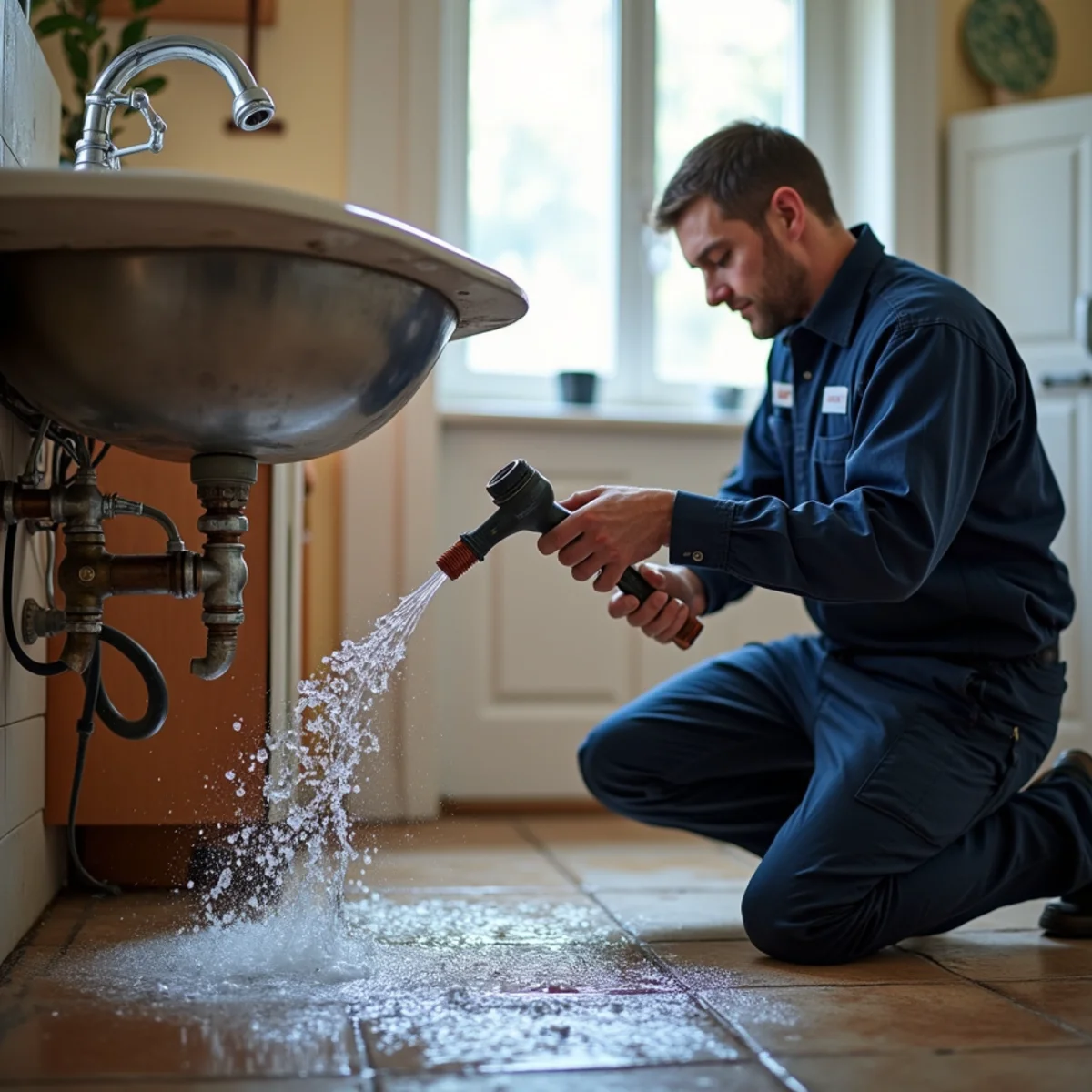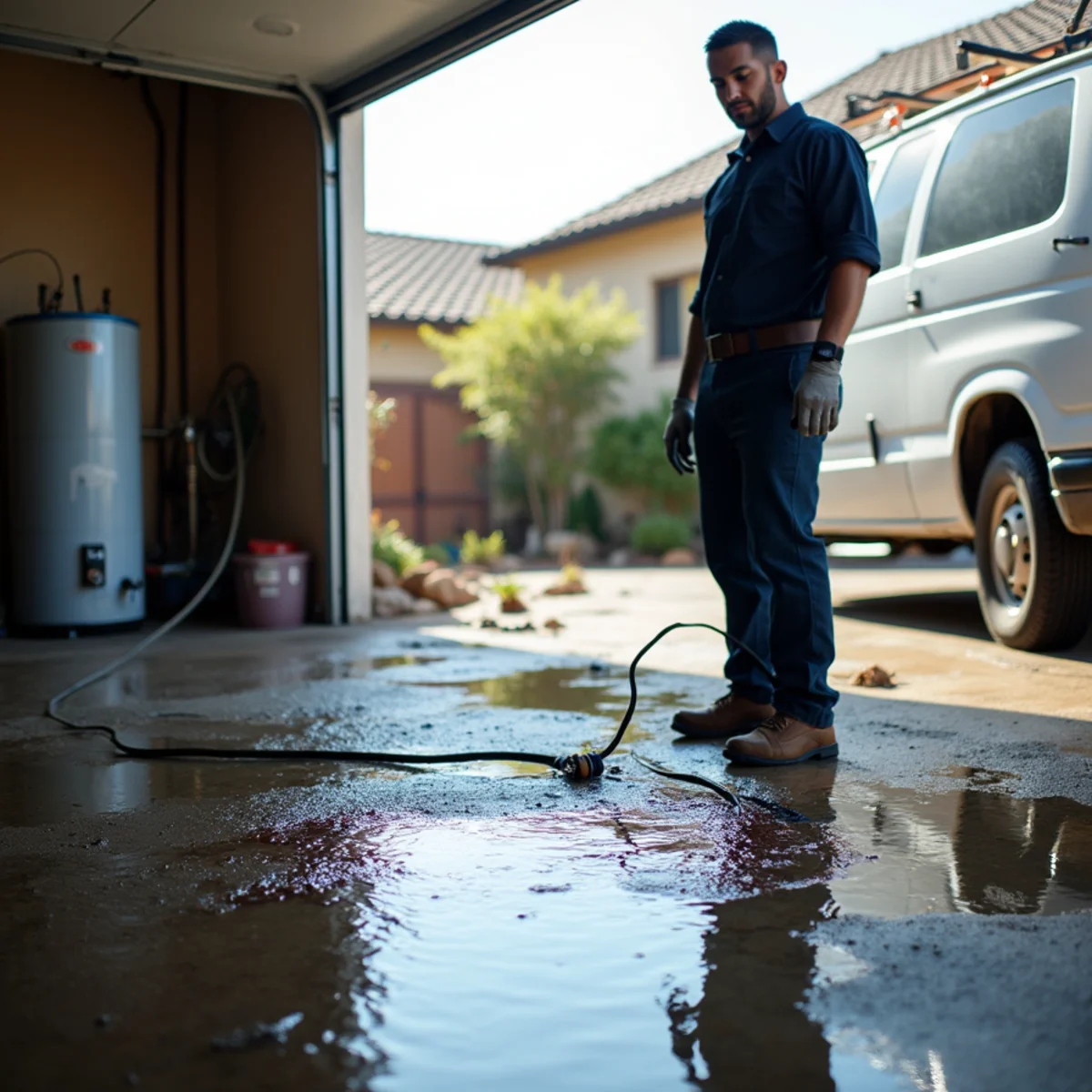

For a retail tenant, water damage is not just a repair — it is closed doors, ruined inventory, and every dark day costing you sales. A supply line above a stockroom, a roof leak over the sales floor, a failed sprinkler, or a backup from a shared drain can shut down a store in minutes. In a busy center like Broadway Plaza or Sun Valley Mall, it can affect the neighbors on either side of you too.
Speed and coordination are what limit the loss. This response plan lays out what to do in the first hour, who to call in what order, and the lease questions that decide who pays. Keep it where your staff can find it, because the manager on shift is usually the one who has to act first.
The first hour: stop, protect, document
What your staff does in the first sixty minutes sets the size of the whole claim. Train whoever opens and closes on these steps.
- Stop the source if it is safe — shut off the fixture valve, or call mall facilities to kill the water to your unit.
- Protect people first: rope off wet floors, and if water is near outlets or the panel, cut power to the affected area.
- Move inventory up and out of the water — onto pallets, upper shelves, the back office, anywhere dry.
- Document everything before you move much: photos and video of the water, the source, and the damaged stock, with timestamps.
- Call for Commercial Water Damage Restoration right away — extraction in the first hours is what saves flooring and fixtures.
Who to notify, and in what order
Retail water damage almost always involves more parties than a home. Getting the calls in the right order protects both your recovery and your lease position.
- Mall or center management and facilities — they control the shared systems and need to know immediately.
- Your restoration contractor, to start extraction and drying.
- Your insurance carrier or broker, to open a claim and get an adjuster moving.
- The upstairs or adjacent tenant if the water came from their unit — and document that it did.
- Your district or regional manager, per your company's incident policy.
The lease question: who actually pays?
In a commercial lease, responsibility usually splits along a line the lease itself draws. The landlord typically owns the building structure, roof, and common systems; the tenant typically owns their build-out, fixtures, and inventory.
That means a roof leak over your floor is often the landlord's structural problem, while your damaged stock and interior finishes fall to your business's property and interruption coverage. The details live in your lease's maintenance, insurance, and casualty clauses. This same structure-versus-contents split drives the commercial water damage claims we document every week.
Business interruption: the cost nobody plans for
The restoration bill is rarely the biggest number. The lost revenue from being closed usually is. Business interruption coverage is meant to fill that gap, but only if you can document what the closure cost.
From the first hour, keep a running record: the date and time you closed, the hours or days you stayed dark, damaged inventory with values, and any spoiled or unsellable stock. Adjusters pay on evidence, not estimates, and the tenant who documented cleanly gets paid faster.
- Log the closure time and the reopening time to the hour.
- Photograph and list damaged inventory with its cost.
- Keep every invoice from the cleanup and any temporary measures.
- Track staff hours and any payroll paid while you were closed.
Reopening fast without cutting corners
Every day closed is lost sales, so the pressure to reopen is real — but reopening over wet materials trades a short delay for a mold problem in a month. The structure has to be verified dry, not just dry to the touch.
A commercial crew works to the IICRC S500 standard: extract, set air movers and dehumidifiers, and monitor moisture daily until the framing and substrate hit target. A reputable restorer can often stage the work so part of your floor reopens while drying finishes in the affected zone — the goal is fast and dry, not fast or dry.
Serving Broadway Plaza, Sun Valley, and the East Bay's retail centers
We work in and around the county's major retail centers, from Broadway Plaza in Walnut Creek to the stores at Sun Valley Mall in Concord. That means we know the access, after-hours, and facilities-coordination realities of working in a mall, not just a house.
If your store takes on water, the clock starts immediately. Call (201) 277-9344 and we will mobilize a commercial crew to extract, dry, and help you document the loss so you can reopen as fast as the structure allows.
The lease clauses to read before the next leak
Read three parts of your lease before you ever need them, because they decide the money quietly. The waiver-of-subrogation clause determines whether your insurer can pursue the landlord, or theirs pursue you, and it is standard in retail leases; it changes who ultimately absorbs the loss. The continuous-operation and co-tenancy language can affect your rent obligations while you sit dark. And the casualty clause spells out how long the landlord has to repair the structure before you can abate rent or walk away.
On the business-interruption policy, two details catch tenants out. Most BI coverage carries a waiting period, often forty-eight to seventy-two hours, before it pays, which is exactly why documenting the closure from the first minute matters. And when the water started next door but the center closes your corridor, look for 'civil authority' coverage, which can pay when access is cut off by someone else's loss. Settle the after-hours access and shut-off-key question with facilities now, too, so a crew is not waiting on a manager at midnight. Our commercial water damage restoration team coordinates that mall access as part of the response.
Frequently asked questions
Water Concord
IICRC-certified water damage restoration, based in Concord and serving all of Contra Costa County. We answer 24/7 — if you’re dealing with water damage right now, call (201) 277-9344.