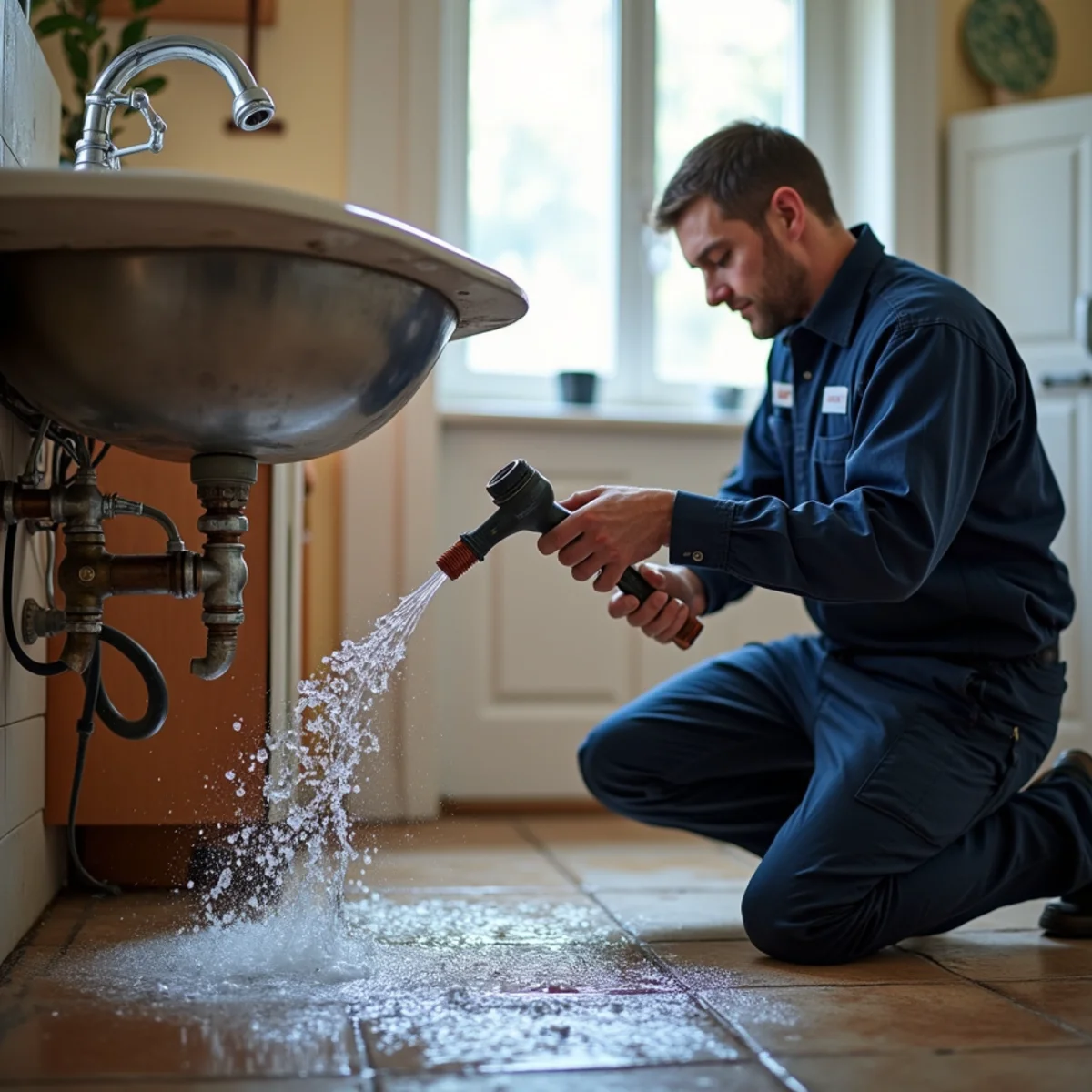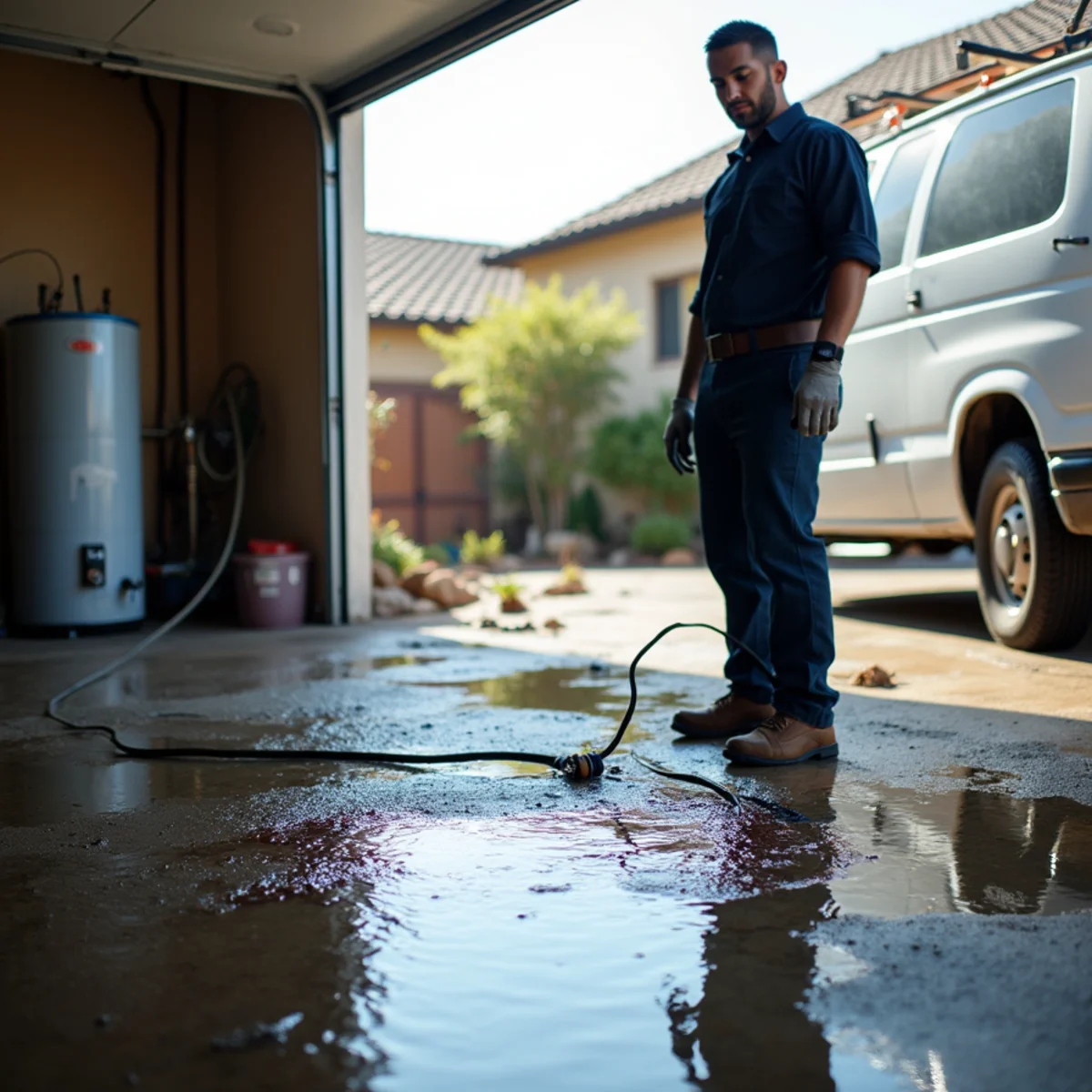
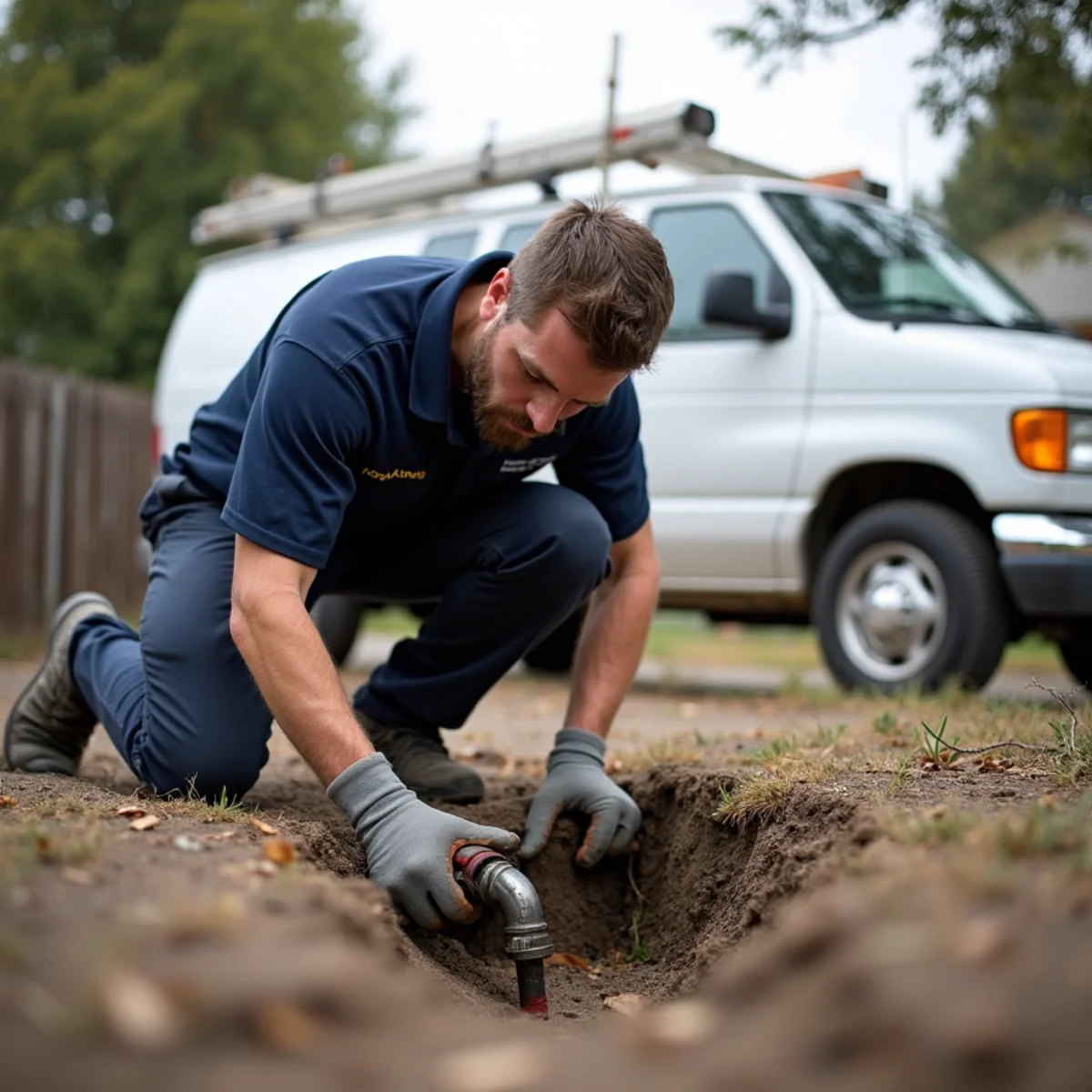
A slab leak forces a hard question fast: do you fix the one pipe that failed, or replace the whole aging system before the next one goes? Under a Concord slab, that decision can mean the difference between a targeted repair and a project that touches the entire house.
There's no single right answer — it depends on the age of your plumbing, how many leaks you've had, and what your insurer will cover. This guide lays out how spot repair and a full repipe actually differ, the factors that drive each cost, and where a homeowners policy tends to help. No fake price tags, just the real levers.
What a slab leak actually is
A slab leak is a break in a water line running beneath your home's concrete foundation. In Concord's postwar tracts, those lines are often original copper or galvanized steel, and decades of hard East Bay water have thinned them from the inside. When one finally weeps or bursts, the water has nowhere to go but up — into the slab, the flooring, and the walls.
You might notice a warm spot on the floor, a spike in your water bill, the sound of running water with everything shut off, or unexplained damp carpet. Those are classic signs of slab leak water damage, and they rarely resolve on their own.
Option 1: Spot repair
A spot repair targets the single failed section. A plumber locates the leak with acoustic and pressure equipment, opens a small area of the slab or reroutes that one line, and closes it back up. It's the least invasive option and the fastest to complete.
Spot repair makes sense when the leak is isolated, the rest of the plumbing is sound, and you've had only one failure. What drives the cost:
- Access. How deep the line sits, and whether it's under tile, hardwood, or a slab that has to be cut and repoured.
- Location. A leak under an exterior wall or a kitchen island is harder to reach than one near an open floor.
- Detection. Precise electronic leak location keeps the opening small and the cost down.
- Water damage already done. Extraction and drying of the affected flooring and drywall are separate from the plumbing fix.
Option 2: Whole-house repipe
A repipe replaces the home's supply lines entirely, usually rerouting them overhead through walls and attic rather than back under the slab. It's a bigger project — days, not hours — and it means opening and patching drywall throughout the house.
A repipe earns its cost when spot repair is just delaying the inevitable. Consider it when:
- You've had multiple slab leaks. Two or three failures in the same original system usually signal more coming.
- The plumbing is original and past its life. 1950s–70s galvanized and early copper are at the age where the whole run is suspect.
- Water quality is degrading. Rusty or discolored water points to pipe corrosion, not just one bad spot.
- You're already renovating. If walls are open, the incremental cost of repiping drops.
Does insurance cover a slab leak?
Here's the distinction that trips people up. Homeowners insurance in California generally does not pay to fix the pipe itself — that's considered a maintenance and plumbing cost. What it often does cover is the resulting water damage: tearing out and drying the wet flooring, drywall, and structure, and sometimes the cost to access the leak, meaning breaking and repouring the slab, even when the pipe repair isn't reimbursed.
So on a typical covered slab-leak claim, you might pay out of pocket for the plumbing repair or repipe while insurance handles the extraction, structural drying, and rebuild of what the water ruined. A full repipe done purely to upgrade aging pipes — with no sudden loss — is almost never covered, because there's no accident, just wear.
Every policy is different. Some include access coverage that pays to reach the leak; others exclude it. Read your policy language on slab leaks and tear-out, or ask your agent directly.
How to decide in an older Concord home
Start with a real diagnosis. Have the leak located precisely before anyone cuts concrete — guessing turns a small opening into a big one. Then weigh three things: how many leaks you've had, the age and material of your plumbing, and what your carrier will cover for the damage.
If it's your first leak in otherwise healthy plumbing, spot repair plus proper drying is usually the smart call. If it's the second or third in a 60-year-old galvanized system common to the Monument Corridor in Concord, paying to repipe once often beats chasing leaks one at a time. Either way, get the water out and the structure dried first — that part protects your home regardless of which plumbing path you choose.
Where slab-leak claims are won or lost: the tear-out line
On a slab-leak claim, the biggest dollar figure is often the one people forget to fight for: access. Breaking the concrete to reach the pipe and repouring it can cost more than the plumbing repair itself — and many California policies include 'tear-out' coverage that pays to access a covered leak even when the pipe repair is excluded. That language is frequently already in your policy; you just have to point to it and ask.
Two moves protect that coverage. First, have the leak located precisely and get the plumber's report to describe a discrete, sudden failure rather than long-term corrosion — the wording on that invoice shapes how the adjuster reads the loss. Second, keep the removed section of pipe; it's your physical evidence if the cause is ever questioned.
Then separate the two scopes for your adjuster: the plumber's line-item for the pipe, and the restoration scope for the covered water extraction and structural drying of everything the leak soaked. Blending them into one bill invites a blanket denial of the whole thing.
One honest caveat: tear-out and access provisions vary widely between carriers, and some exclude them outright. Read your policy for 'tear-out' or 'access,' and if the language is unclear, have your agent confirm it before the concrete work starts.
Frequently asked questions
Water Concord
IICRC-certified water damage restoration, based in Concord and serving all of Contra Costa County. We answer 24/7 — if you’re dealing with water damage right now, call (201) 277-9344.