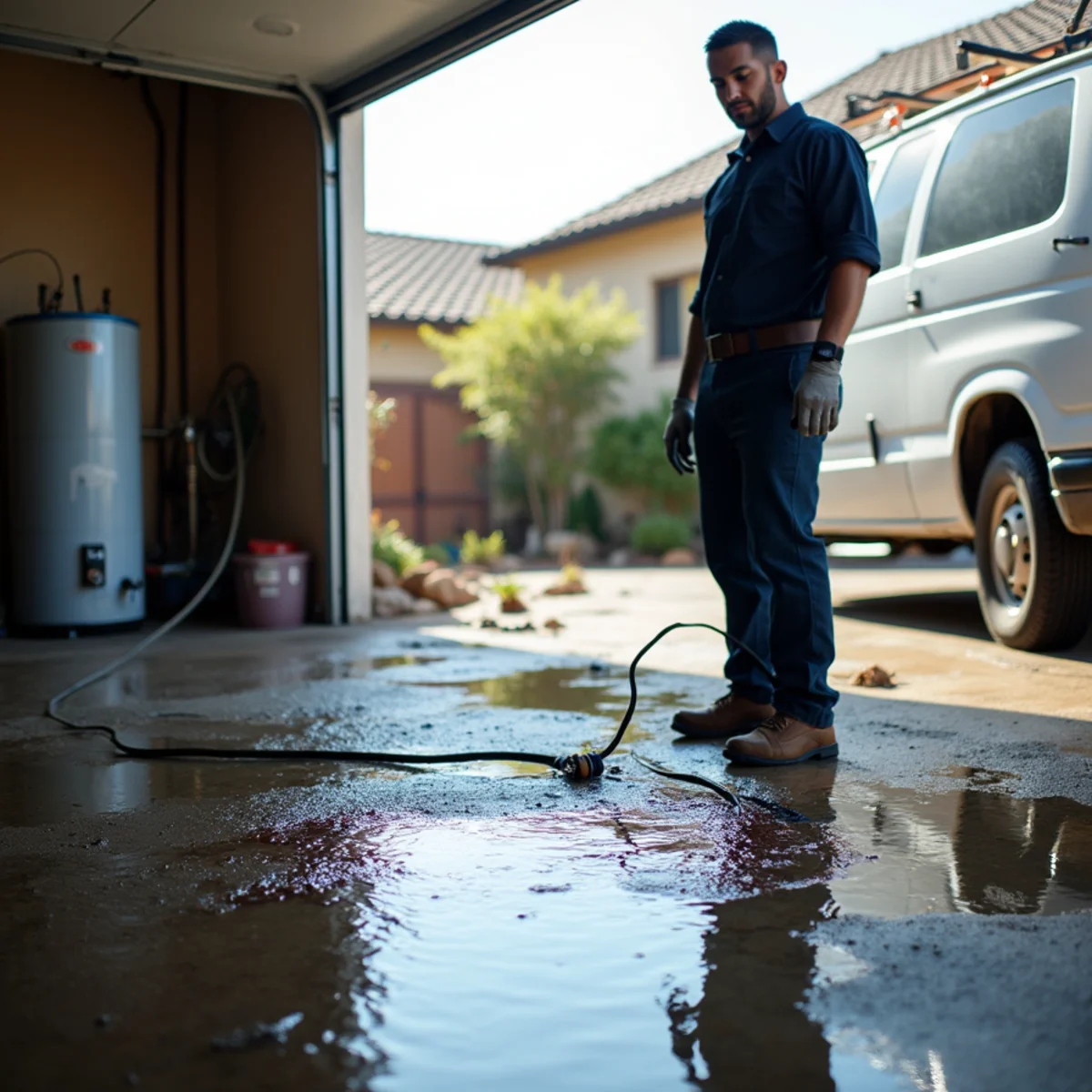
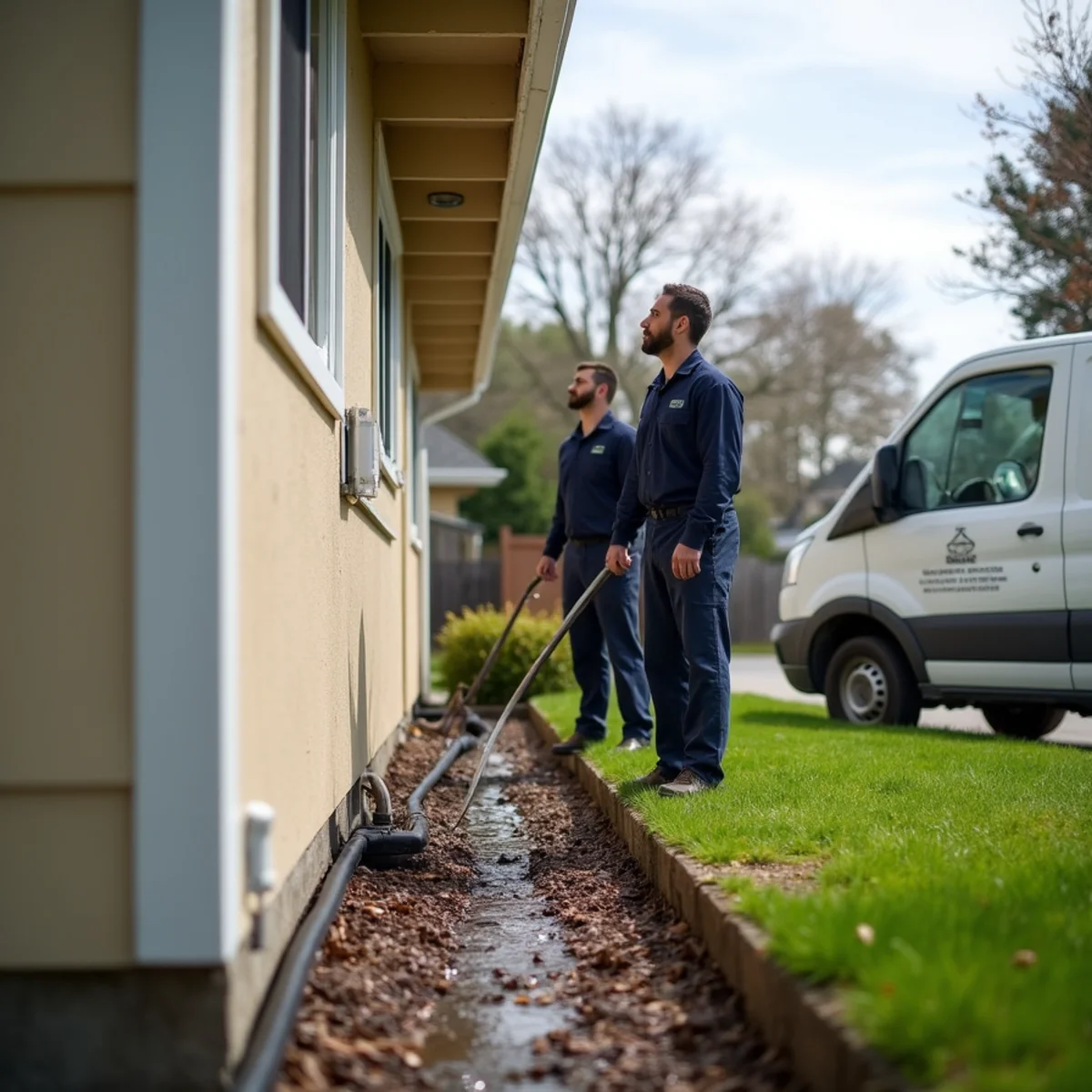
Every winter we get calls that start the same way: 'It has been raining for three days and now there is water in the garage.' Nine times out of ten the roof is fine. The problem is drainage — clogged gutters, downspouts dumping at the foundation, and a yard that slopes toward the house instead of away from it. The water had nowhere to go but in.
Contra Costa County gets most of its 18 to 22 inches of rain in a concentrated December-to-March window, often in intense bursts. Your home's drainage has to move all of it away from the structure. This checklist gets that system ready before the first storm tests it.
Clean the gutters completely
Gutters only work when they are clear. A single summer drops enough leaves and grit to block a downspout, and a blocked gutter overflows exactly where you do not want it.
- Remove all debris by hand, then flush each run with a hose to confirm it flows to the downspout.
- Look for sagging sections and low spots where water stands, and re-pitch them toward the outlet.
- Reseal leaking seams and reattach any gutter pulling away from the fascia.
- If trees overhang the roof, plan to clean the gutters twice this season, not once.
Aim the downspouts away from the house
A clean gutter that dumps straight down at the foundation just relocates the problem. The water pools, saturates the soil, and finds its way into the crawlspace or under the slab.
- Extend every downspout to carry water at least four to six feet from the foundation.
- Use splash blocks or buried drain lines on the sides that pool.
- Make sure discharge points slope away and do not send water toward a neighbor or back to the house.
- Never let a downspout drain into a flowerbed set against the wall.
Fix the grading and yard drainage
The ground around your home should fall away from it — the rule of thumb is about six inches of drop over the first ten feet. Over the years, soil settles and beds get built up, and the slope quietly reverses.
- Walk the perimeter during a storm if you can, and note where water pools against the wall.
- Regrade or add soil so the ground slopes away from the foundation on every side.
- Clear area drains, channel drains, and swales of mud and leaves so they can carry water off.
- Keep mulch and soil a few inches below the siding and weep screed, not piled against it.
Check the low points: crawlspace, basement, garage
Water that gets past the yard collects at the lowest point of the house. In Contra Costa County that is usually a crawlspace or a garage slab.
Look for old water lines on the walls, chalky efflorescence, or a musty smell — all signs water has come in before and will again. If your low point floods, fast response matters, because standing water in a crawlspace feeds mold and rot under the whole house. Our Storm Damage Cleanup crew handles exactly these situations across the county.
- Confirm any sump pump runs and its discharge is clear.
- Clear the crawlspace vents of debris so trapped water can dry.
- Store garage items up on shelves or pallets, off the slab.
The neighborhood angle: creeks and hardpan
Local geography matters here. Much of the county drains through Mt Diablo Creek and the engineered Walnut Creek flood-control channel, and yards near those systems can back up when the channels run high. Newer hillside developments in places like Clayton sit on clay and hardpan soils that shed water fast, sending sheet flow toward the homes downslope.
If you are below a hill or near a creek, pay extra attention to the uphill side of your property. That is where the water arrives, and where a clear swale or a French drain earns its keep.
If the water gets in anyway
Even good drainage can be overwhelmed by a true atmospheric river. If storm water gets inside, move belongings up and out, and start extraction quickly — mold can begin within 24 to 48 hours of standing water. Call (201) 277-9344 for same-day help drying the structure before the damage spreads.
The buried pipe nobody thinks to check
The drainage failure we find most often is invisible from the yard: the underground pipe that carries a downspout away from the house. In many Contra Costa homes the downspouts drop into a buried line running to the street or to a pop-up emitter in the lawn, and over the years those lines pack with roots, silt, and crushed sections. The gutter above can be spotless while the pipe below is blocked solid, backing water up and out right at the foundation. A clean gutter is no proof the water is actually leaving the property.
Test it before the season. Run a hose into each downspout for a few minutes and confirm water actually surfaces at the emitter or the street outlet; if little arrives, the buried line needs clearing, or replacing if it has collapsed, and a plumber's camera settles which quickly. Rank the rest of your fixes by cost, because the cheap ones usually win: clearing a line or adding a longer surface extension solves most pooling, so save the French drain or full regrade for the spots that still fail afterward. When a blocked line has already put water inside, our storm damage cleanup crew extracts and dries the low point before it reaches framing.
Frequently asked questions
Related pages
Water Concord
IICRC-certified water damage restoration, based in Concord and serving all of Contra Costa County. We answer 24/7 — if you’re dealing with water damage right now, call (201) 277-9344.