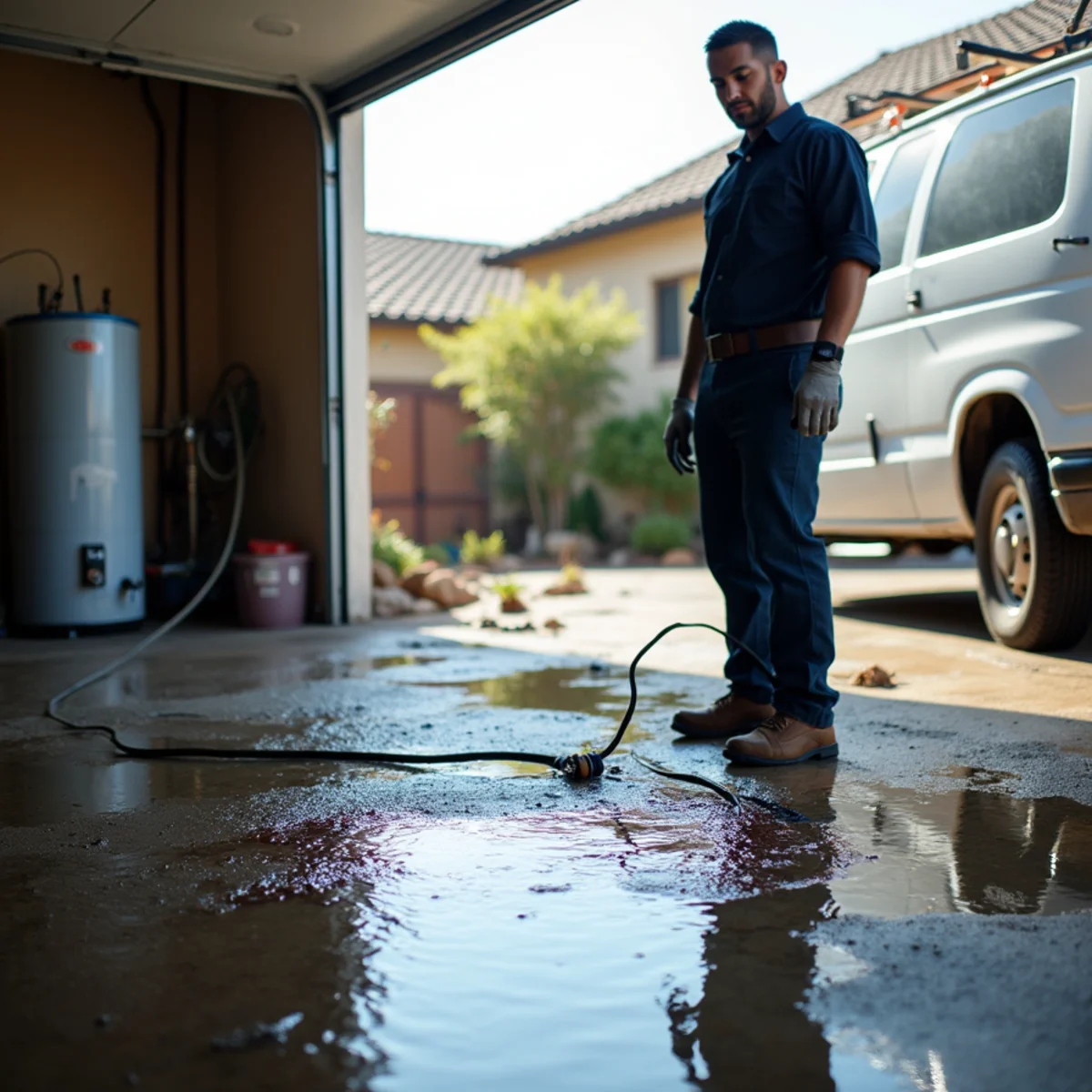

Concord's rainfall total sounds modest on paper: 18 to 22 inches in an average year. What the annual number hides is the timing. Nearly all of that rain falls in a tight window from December through March, and increasingly it arrives in concentrated bursts as atmospheric rivers park over the Bay Area for days. A quiet, dry autumn can flip to a saturated, storm-battered winter in a single week.
That concentration is exactly why homes here get caught off guard. Systems that coasted through nine dry months — the roof, the gutters, the yard drainage — get tested all at once. This is a practical, Concord-specific readiness guide, with extra attention to hillside neighborhoods like Concord Hills where slope and runoff add their own wrinkles.
Why the calendar matters more than the total
Eighteen to twenty-two inches spread evenly across a year would barely register. Compressed into four winter months, the same water arrives faster than the ground and the drainage can always absorb it. Soil saturates. Once it does, additional rain runs off instead of soaking in, and runoff is what finds its way into garages, crawlspaces, and low-side rooms.
The trend is toward more concentration, not less. Atmospheric rivers — narrow bands of moisture that stall over Northern California — can drop several inches in a day and stack one storm on the next with no time to dry out between them. The home that shrugs off a single storm can struggle when the third one lands on already-soaked ground. It is that back-to-back sequencing, more than any single record downpour, that produces the flooded garages and crawlspaces we respond to every winter.
The roof and gutters carry the first load
Your roof is the largest surface catching all that rain, and your gutters are the only thing directing it away in an organized way. A single clogged gutter turns into a sheet of water spilling down an exterior wall or pooling at the foundation. Before December, clear every gutter run, confirm the downspouts flow freely, and extend the discharge away from the house.
On the roof itself, a lifted shingle or a tired flashing that never leaked in the dry season will leak in a sustained storm. Water that gets past the roofing shows up as a stained, sagging ceiling — often over the course of one long wet night. Catching those weak points in October is far cheaper than a ceiling water damage repair in January.
Hillside homes have a steeper challenge
Neighborhoods built into the slopes, including parts of Concord Hills, get the benefit of a view and the burden of gravity. Water moves fast downhill, and it collects at the uphill side of homes cut into a grade. Retaining walls need working drainage behind them, hillside lots need swales and drains that are actually clear, and the uphill foundation wall is the one to watch for seepage.
For hillside owners, pre-season drainage work is not optional maintenance — it is the difference between shedding a storm and channeling it into the garage or crawlspace. Saturated slopes also raise the stakes for slope stability, which is one more reason to keep water moving and away.
The pre-rain checklist
Work through this before the first December storm, then spot-check midseason:
- Clean gutters and downspouts and extend discharge at least several feet from the foundation.
- Inspect the roof for lifted shingles, cracked flashing, and worn seals around vents and chimneys.
- Clear yard drains, area drains, and culverts so they are ready to move water, not choke on leaves.
- Check the grading around the house and correct any spots where soil slopes toward the walls.
- Test a sump pump if you have one, and know where your crawlspace access is.
- Seal gaps around windows, doors, and where utilities enter, especially on the weather and uphill sides.
Have a first-hour plan
Preparation reduces risk; it does not eliminate it. When water does get in during a storm, the first hour decides how big the loss gets. Know where your main water shutoff is, keep a wet/dry vac and towels accessible, and have a number to call for extraction before you need it. Water spreads and wicks into materials fast, and mold can begin within 24 to 48 hours.
If a storm overwhelms your defenses, our storm damage cleanup crews serve Concord throughout the rainy season, extracting water and drying the structure to standard. Storm water is treated as potentially contaminated, so quick, correct cleanup protects both the building and the people in it. A garage or crawlspace that took on a few inches of runoff is a routine job when it is caught early, and a much larger one once the water has wicked up into the walls.
Two upgrades that pay for themselves in one storm
Two low-cost upgrades quietly prevent the worst rainy-season losses, and both address the same blind spot: the failure that happens while you are asleep or away. The first is a battery backup for your sump pump. Winter storms and power outages arrive together here, and a sump running on grid power alone quits at the exact moment the water is rising. A battery or water-powered backup keeps a crawlspace or basement pumping through the outage — the difference between a dry slab and a flooded one on the same night.
The second is a leak-and-flood sensor, ideally one tied to an automatic main shutoff. A cheap sensor on the crawlspace floor or beside the water heater texts you the moment it gets wet; a smart shutoff valve closes the main on its own. For a home left empty during a holiday trip in peak storm season, that is the whole ballgame. One scheduling note: book roof and gutter work in October, because the good crews fill up the instant the first storm lands — and a stained, sagging ceiling in January is a far costlier fix than the ceiling water damage repair a fall tune-up would have prevented.
Frequently asked questions
Related pages
Water Concord
IICRC-certified water damage restoration, based in Concord and serving all of Contra Costa County. We answer 24/7 — if you’re dealing with water damage right now, call (201) 277-9344.