You spot a dark patch in the corner of the bathroom or along a baseboard, and the question is immediate: is this the harmless stuff I can wipe away, or the serious kind that means trouble? People use 'mold' and 'mildew' interchangeably, but they behave differently, and telling them apart changes what you should do next.
The short version is that mildew stays on the surface while mold grows into materials. That distinction decides whether you reach for a sponge or pick up the phone. Here is how to tell black mold from mildew, why the difference matters, and when a spot crosses the line into a job for professional mold remediation — a common question in humid, older units around the BART station area of Concord.
Mildew: surface-level and manageable
Mildew is a form of mold, but a mild, surface-dwelling one. It shows up as a flat, powdery or fluffy patch — usually white, gray, or yellowish, sometimes turning brown or black as it ages. You find it in damp, humid spots: shower tile and grout, windowsills, the corners of a poorly ventilated bathroom. Crucially, it grows on top of a surface rather than into it.
Because it sits on the surface, mildew is genuinely something a homeowner can handle. Cleaned promptly with an appropriate cleaner and good ventilation, and with the underlying humidity addressed, it wipes away without lasting damage to the material underneath.
Mold: deeper and structural
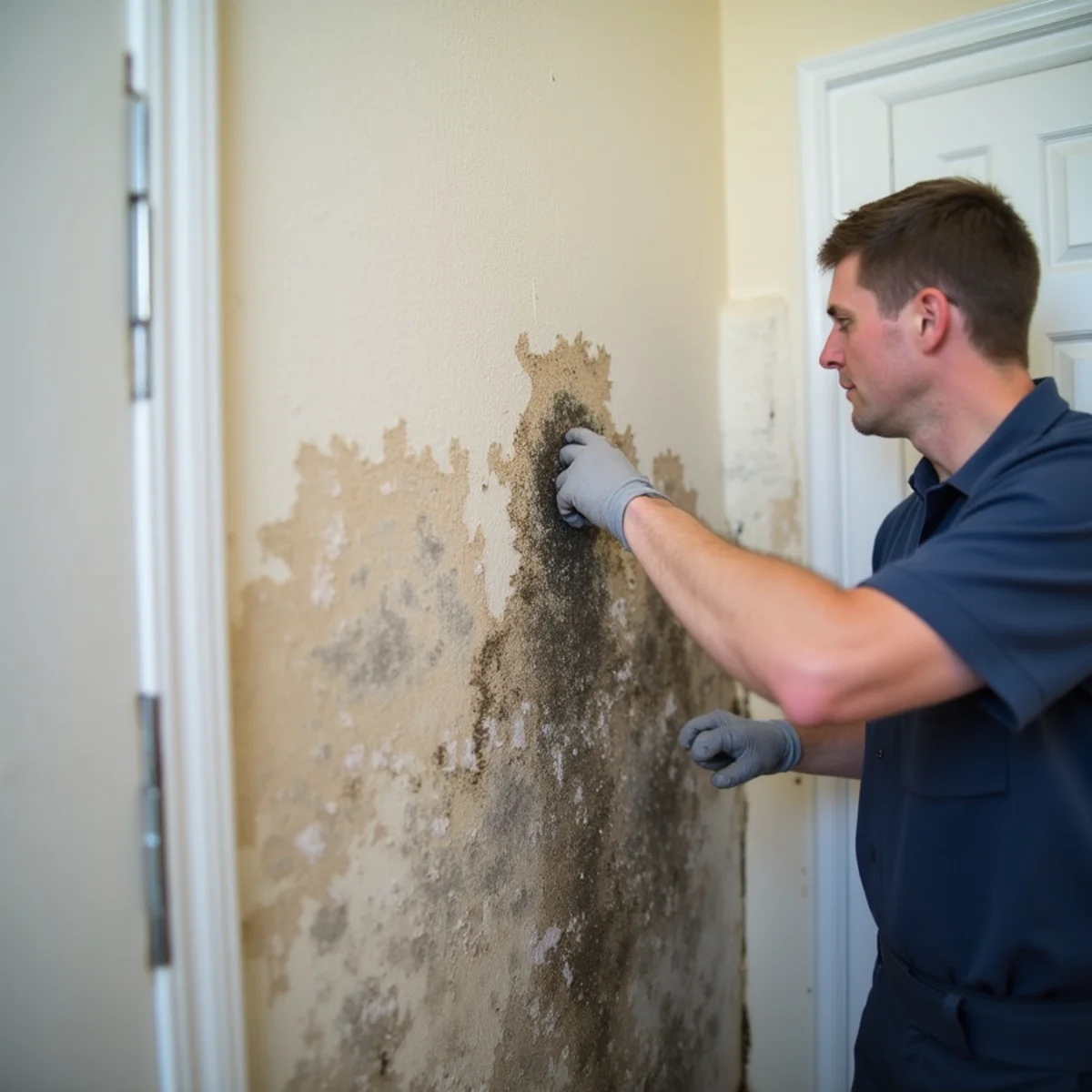
What people call 'black mold' is a different animal. It tends to look fuzzy, slimy, or raised rather than flat and powdery, and its color is often a darker green-black. More important than color is behavior: mold penetrates the material it grows on, sending structures into drywall, wood, and other porous surfaces. That is why it comes back so fast when you only wipe the surface — the roots are still inside.
Mold also signals a bigger moisture problem. Mildew can come from everyday shower humidity, but a spreading mold colony usually means sustained dampness from a leak, a drying job that was never finished, or hidden water in a wall. The mold is the symptom; the moisture source is the disease.
How to tell them apart
You can usually make a reasonable call from a few characteristics without a lab:
- Texture — mildew is flat and powdery; mold is fuzzy, slimy, or raised.
- Color — mildew is often white, gray, or yellow; structural mold trends darker green-black.
- Location — mildew clings to surfaces like tile and grout; mold digs into drywall, wood, and porous materials.
- Depth — wipe it: if it lifts off cleanly and does not return, it was mildew; if it stains, spreads, or comes back, it is mold.
- Smell — mold usually carries a stronger, more persistent musty odor.
The bleach myth
A common instinct is to reach for bleach, and for surface mildew on non-porous tile that can be reasonable. On porous materials with real mold, it is a mistake. Bleach lightens the color so the spot looks gone, but it does not reliably kill growth rooted inside drywall or wood, and its water content can even feed the colony deeper in the material. You end up with a clean-looking wall and a mold problem that quietly continues.
That is the trap with mold: the surface can look handled while the colony lives on inside. Cosmetic cleaning is not remediation, and treating a structural mold spot like a stain is how it keeps coming back.
When to call a pro
A small patch of surface mildew is a homeowner job. Certain situations call for professional mold remediation instead of a sponge:
- The growth covers a large area — the EPA suggests professional help beyond roughly ten square feet.
- It keeps coming back after cleaning, which means the roots or the moisture source remain.
- It followed a water leak or flood, so growth is likely inside walls and materials.
- There is a strong musty smell with no visible source, suggesting hidden growth.
- Anyone in the home has respiratory issues, allergies, or a weakened immune system.
The BART station angle: older units and humidity
The neighborhoods around the BART station area of Concord include a lot of older apartments, condos, and rentals — buildings with aging bathrooms, dated ventilation, and the kind of trapped humidity mildew and mold both love. In a unit with a weak bathroom fan and single-pane windows, surface mildew is a near-constant maintenance chore, and a hidden leak in a shared wall can turn into structural mold before anyone notices.
For residents and property managers here, the practical rule is simple: stay on top of surface mildew with cleaning and ventilation, but treat recurring growth or anything tied to a leak as a signal to look deeper. Catching the difference early is what keeps a wipe-down from becoming a wall tear-out.
Pro insight: recurring mildew is a dew-point problem, not a dirt problem
When the same mildew returns in the same corner month after month, scrubbing harder is treating the wrong thing. That spot keeps growing because the surface there is cold enough to drop below the dew point — the temperature at which humid bathroom air condenses into liquid water on the wall. Give a cold surface a film of condensation every day and mildew has the standing moisture it needs, no leak required.
The fix is to break the condensation cycle, and the technique pros rely on is timing more than product. Run the exhaust fan during the shower and for a solid 20 to 30 minutes after, so the humid air is actually removed instead of settling onto cool walls; a humidity-sensing or timer-controlled fan does this for you. Warming or insulating the cold surface — often an uninsulated exterior wall or a single-pane window reveal — removes the condensation for good.
To find that cold spot we use a thermo-hygrometer or a thermal camera rather than guessing. If cleaning and better ventilation still do not stop it, that is the signal the moisture is coming from inside the wall, and the honest next step is mold remediation rather than another round of scrubbing.
Frequently asked questions
Related pages
Water Concord
IICRC-certified water damage restoration, based in Concord and serving all of Contra Costa County. We answer 24/7 — if you’re dealing with water damage right now, call (201) 277-9344.